
In Beziers, We Write Our Names in Dust
Murder, massacres, and the meandering path of time
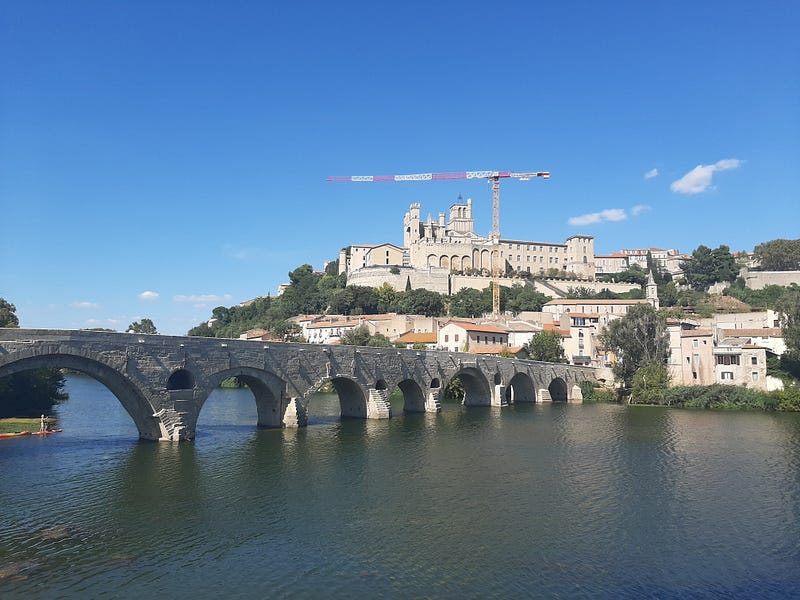
The murder didn’t happen here
It was in St Etienne du Rouvray where teenage terrorists cut a priest’s throat. It’s a long way from there to here, long enough for the rolling green fields of northern France to give way to the wild wind and fierce sun of the South.
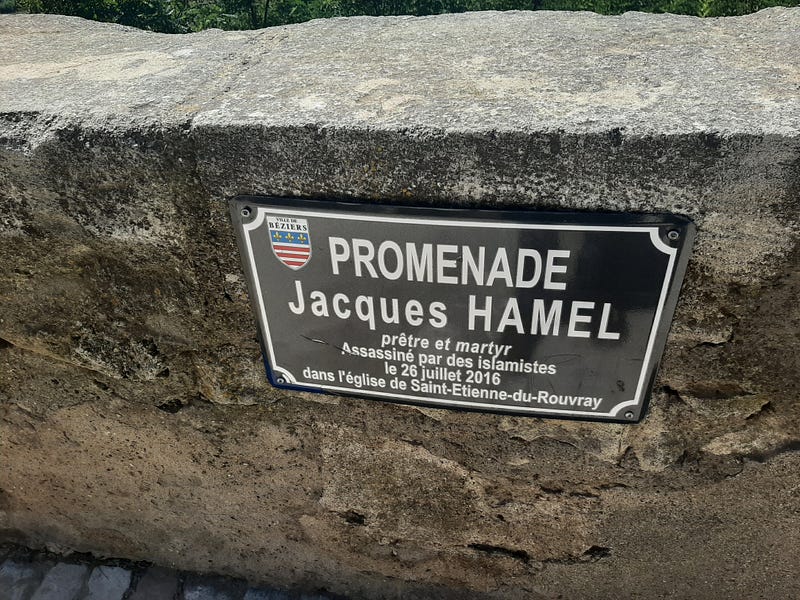
But in Beziers, the glorious terrace in front of the Cathedral with its stomach-clenching view over the River Orb toward the Espinose Mountains has been named after the murdered priest.
They call him a martyr. They call him a saint. But priests in Beziers were not always so honored.
Beziers cathedral is very old
At least in a chain-of-custody kind of way. The windswept hilltop with its commanding view of the river valley is an obvious place to look for God. So the Romans built a temple here when the town was theirs. They carved straight roads through sun-drenched soil and planted vines to make wine. The small change they dropped shows up now at antique stalls along Allees Paul Riquet.
But gods, we all know, rarely reward their worshipers. The pagan temple became a church, and then in the Middle Ages, the church became a ruin.
In 1209, crusaders took the town and burned it in the first major military action of the Albigensian Crusade.
Back then, this wasn’t France. The sunny South was ruled over by a mix of different bishops and nobles, with a culture completely different from that of the more northerly Kingdom of France. Maybe that was the real reason why the Kingdom of France began a crusade against the heretical Cathars who lived in Languedoc.
When the crusading army reached Beziers, the town's Bishop tried to negotiate. He was told Beziers would have to give up its Cathar heretics. Unable to do that, the bishop instead proposed to lead the town's Catholic population away from the brewing battle to spare their lives, but the vast majority of the town’s Catholics chose to stay and die.
The crusading army quickly overwhelmed the town. Residents sheltered inside the Cathedral, the biggest and strongest building occupying the highest point in the city, but the Crusaders burst in and killed them all. Women, children, and priests included. Then, they burned the church to the ground.
The Cathedral’s vaulted ceiling, the English-language guide on my cellphone claimed, “burst open, like a grenade telling the story of the croisades [crusades].”
The Cathars had to go, you see. The same logic that dictates the priest Jacques Hamel be murdered while celebrating Mass demanded that the Cathars be wiped out. When the Crusaders said that righteous Catholics were indistinguishable from blasphemous Cathars, the chilling order came back, “Caedite eos. Novit enim Dominus qui sunt eius.”
Kill them all. Let God sort them out.
Even praying to the right God won’t save you if you do it the wrong way. Or even if you do it the right way, but keep the wrong company.
The church was soon rebuilt. And then vandalized again during France’s spasm of violent atheism in the 18th century, when no God was the right one. And just like they did 600 years before, believers built the Cathedral back again.
But the vandals didn’t go away. They outlast even gods.
There’s nothing like a train journey to get you thinking.
As the train pulled into Beziers, I stood behind a young woman near the door. The hot weather justified the tank top she was wearing, if not the fingerless black gloves she paired it with. Her left arm was striped with the angry red remnants of ancient self-harm. Both upper and lower arm were patterned with a hundred vicious little scars like the embers of a burning building, graffitied with past pain.
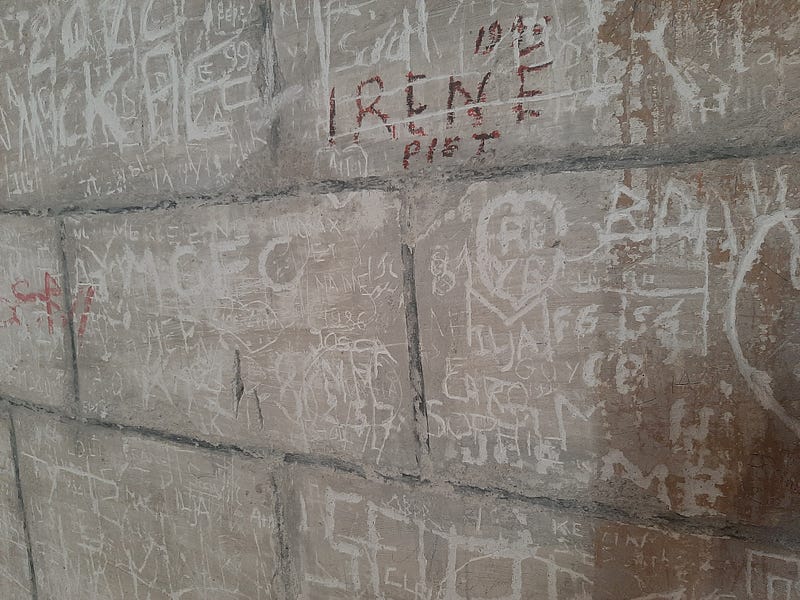
In the cloister of St Nazaire, old tombstones and gargoyles and fractured columns are set into the walls. The few remaining relics of the ancient church that used to be there before the massacre. And the columns and tombstones and walls are scratched everywhere with names and dates, the too-human impulse to add our story to something else. A hook in time to catch the lip of the future as it swims unseen under everything we do.
Some of the graffiti is younger than my underwear. Some of it is older than my parents.
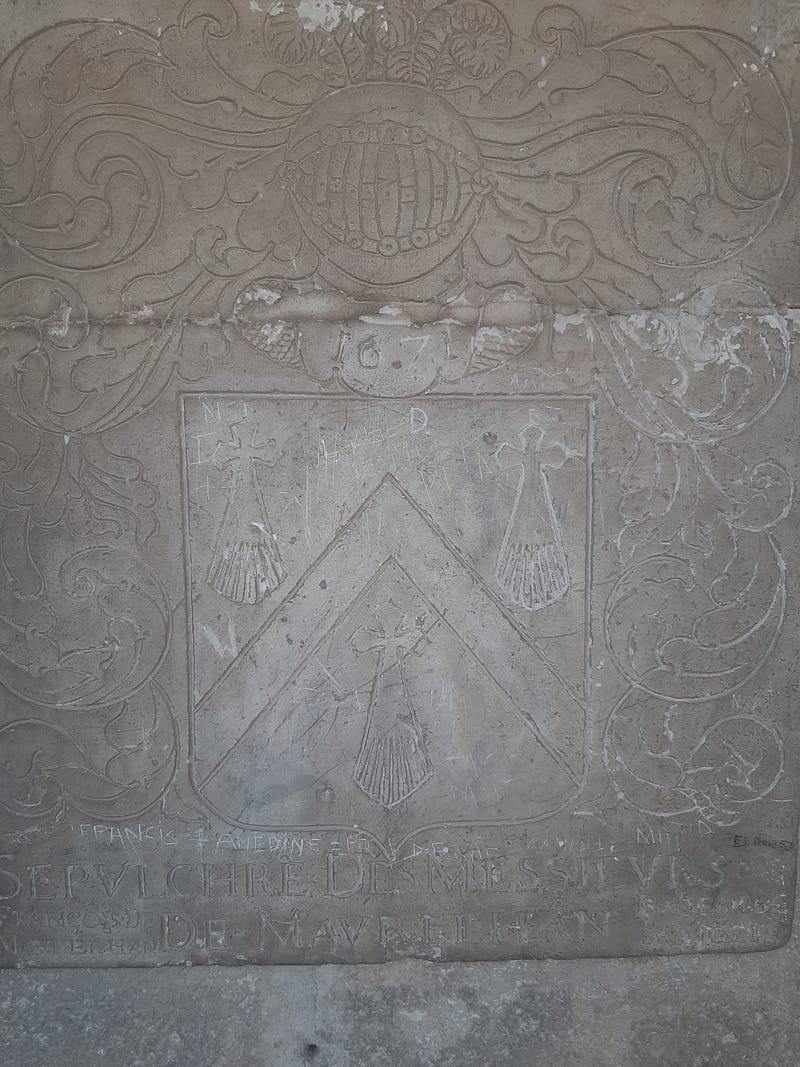
The tombstone of the noble De Maurelhan family, older than the United States, shows white scars where Francis and Amedine decided to carve their names into the monument.
You can almost hear it, along with the static hiss of the speakers tucked discreetly around the church for tonight’s light and music show. The thousand whispered names of the vanished.
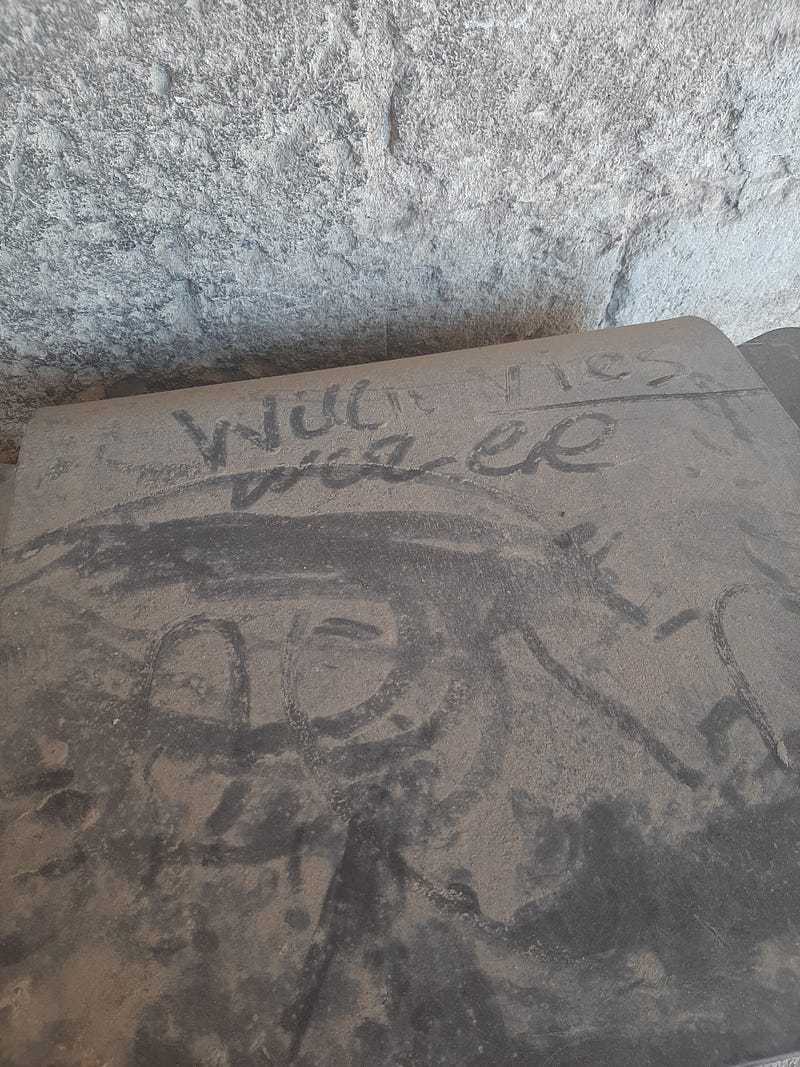
Not everyone is willing to deface a part of history with their name. In the thick dust on top of a garbage bin in the cathedral's cloister, someone had scrawled, Will Vies woz ere.
Some scars are more easily wiped away than others.
The Romans only built straight roads
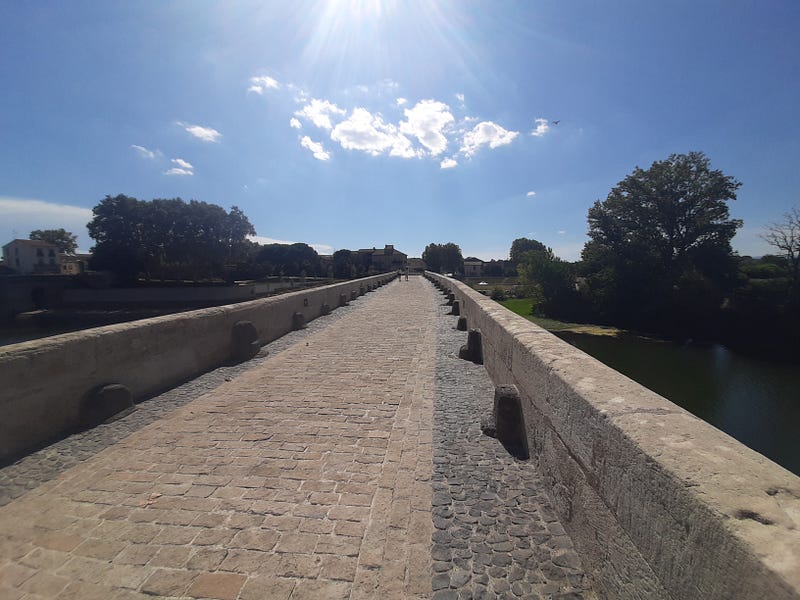
But in medieval France, history began to meander. Pont Vieux, in the shadow of the Cathedral, winds its way over the Orb, its irregular arches bearing a bridge deck that bends this way, then that, looking for a safe place to land. High above, the Cathedral. Below, ducks and paddle boards and dark fish moving sleepily in the shallows.
This was the only way to Beziers in the Middle Ages. This was where the Crusaders entered the city on their murderous business. A bridge the Romans would’ve been ashamed of, but it served its purpose for eight hundred winding years.
On the other side of the bridge, there’s an amphitheater where concerts are held, with the lit-up Cathedral as a backdrop. But this isn’t a Roman amphitheater where beasts roared and men died. Not that Beziers didn’t have one.
There’s a part of every French city that becomes suddenly North Africa. That’s where the arena is, or what’s left of it. One Mediterranean civilization yields to another, and the Roman sun is the same as the Carthaginian one, even if the gods are different.
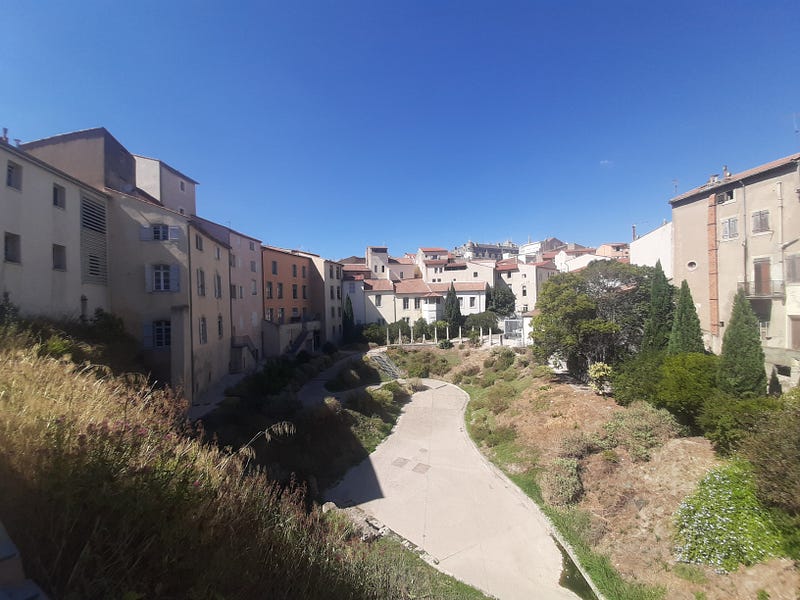
Cats lounge on shaded doorsteps. Women wear veils and men wear thawbs. Kids play soccer, chattering in Arabic under signs sternly forbidding ballgames in French. This is where the Romans had their amphitheater. A sunken park in a residential district where the houses shelter under medieval arches and the ancient columns hold up the sky.
Above the door of a pharmacy, an LED sign declares the temperature. Thirty-six degrees Celsius. That’s 96.8F if that means more to you.
Even in this heat, the old stones of Beziers feel nothing. But we do.
And yet, we outlast them.
It’s quiet, but it’s there
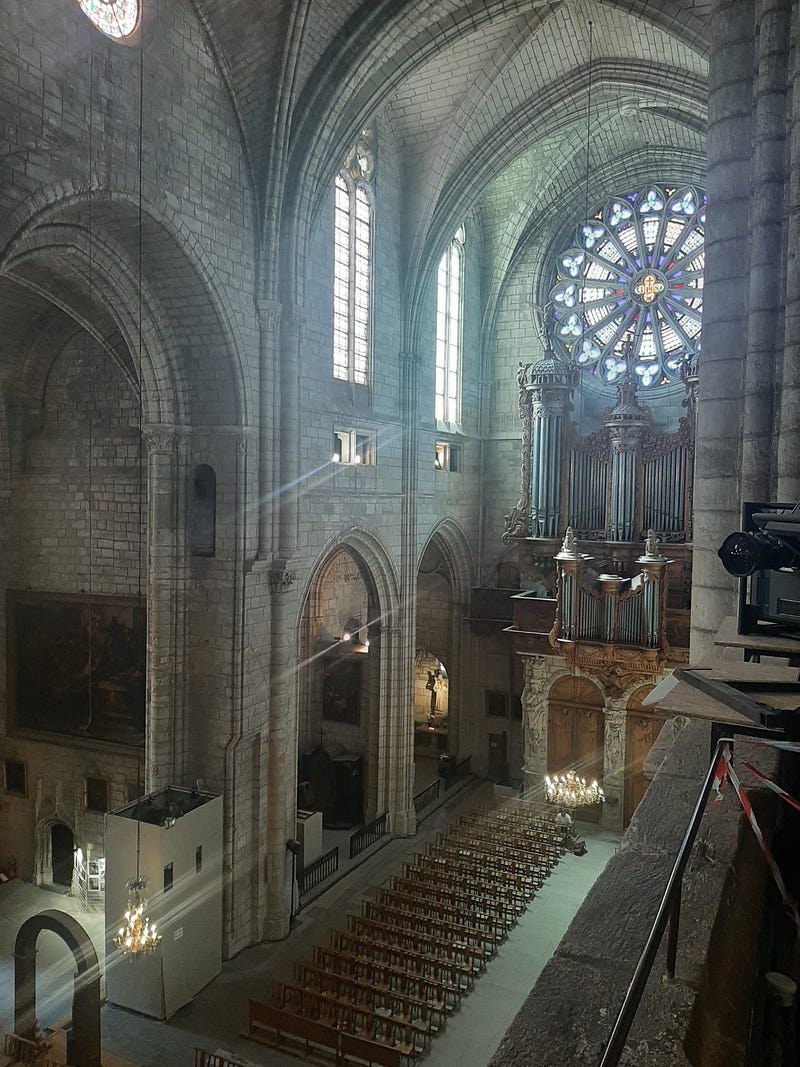
On summer nights, St Nazaire Cathedral is lit up, bathed in an electric glow and echoing with music. But in the daylight, the same speakers give off that faint hiss of next-to-silence, the radio radiation of the start of time playing in the colored light of a church that seems suddenly young.
A sparrow swoops through the shafts of sunlight streaming through stained-glass windows. Trapped, maybe, and doomed to die like a martyr under the vaulted ceiling.
Or maybe it’s at home here, along with the defaced tombs and timeworn saints.
The road from there to here is always crooked.
It’s built on the irregular backs of the vanished, those who killed and died for Gods whose names we don’t remember. Those who cut elderly throats to please a vicious god they made in their own image, and those who cut themselves to give expression to some deeper wordless pain.
We all want to plug ourselves into history. To leave our mark on the world, like Jean Antoine Injalbert’s name carved onto a statue outside the Cathedral.
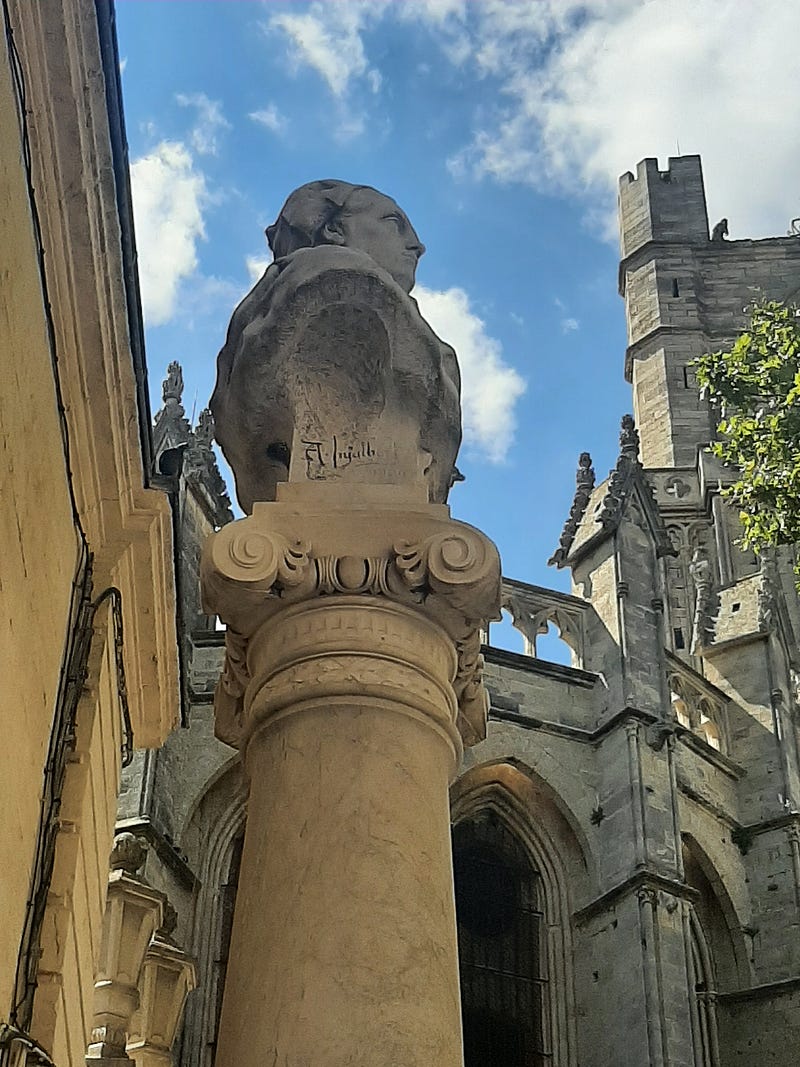
The crab creatures that will inherit the world after us may never know how we wrote in stone, or why. The wind will slide harmlessly off their impervious shells, their claws made to hold on, not to release.
Not to put something out into the world, even if it’s only a name whispered among the static or a bright red bead of blood welling up from beneath your own pale skin.
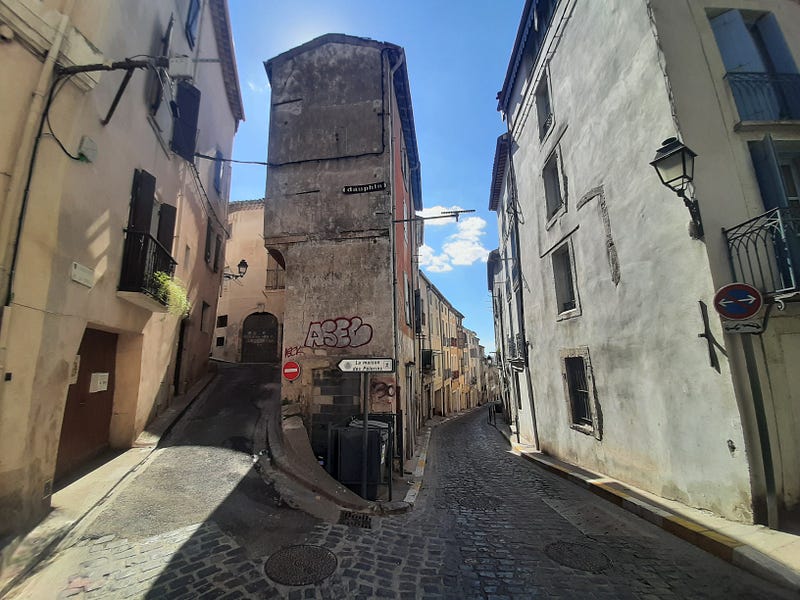
But all our names are written in dust. The streets are named for murdered priests, not their killers, but that too is temporary. One day, this latest version of Beziers Cathedral will be gone too, and all the scars and names it bears vanished forever.
Time will follow its crooked road somewhere else.
Somewhere far from here.
© Ryan Frawley 2022
All proceeds from this article will be donated to Doctors Without Borders/Medecins Sans Frontiers.


