
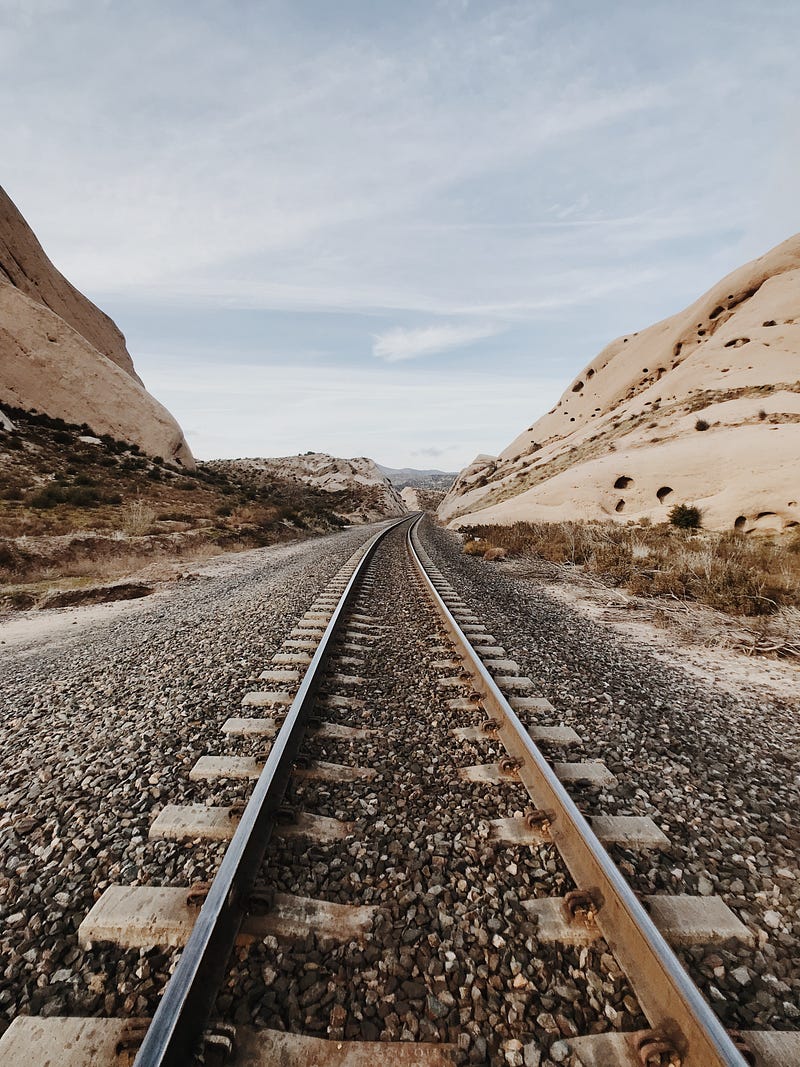
“Our culture calls us to do large things, famously, as fast as possible.” — Ger Jones
In an era of technological affluence, information on anything conceivable is available at a fraction of a second. Despite the innumerable archives at our fingertips — ironic as I sit here and type this all out on my computer — we are undeniably less informed, infinitely more distracted and divided, and increasingly incapable of important relational and conversational skills. Technology, in all its good as one of the primary purveyors of progress, has in many ways eviscerated us and exacerbated many timeless societal issues (i.e. comparison, anger, impatience, pride, laziness etc.).
With all the resources open to us, it’s a wonder how so much regression has occurred next to the overall progression. Maybe it’s a mass-collective decision paralysis, or a loss of organizational skills among the never-ending organization apps, or laziness that comes as a byproduct of the immediacy in which we receive answers to our questions. I’ve been thinking on these past months of my own journey in relation to technology and, specifically, social media. Constantly being surrounded by other people and things that inspire us simultaneously inhibits and encourages our creative flow.
It’s in this cavern I’ve found myself all too often these last months and, if I’m being honest, intermittently over the years. Social media encloses us in a fabricated world of highlight reels. True, some use social media as a means for their livelihood and it has been a source of community. However, we so often lose sight of how to be creative in our own unique way and begin taking on the idiosyncrasies of those whose lives (appear to) exhibit true success. I know I have certainly run adrift to the temptation to be someone I’m not more times than I can count. We do it because we want to matter; we desire our voices to be heard; we want to be recognized. In an era where we broadcast our best moments to the casual onlookers of the world, we have misconstrued true worth with likes, retweets, comments, followers, and fans.
I haven’t stated anything new and I don’t intend by any means to argue that wanting recognition for the things we create is inherently bad. My point is quite contrary to that notion: I believe the desire to be recognized is good and true (and, I’d argue, simply a facet of our desire to be loved and have purpose). However, what technology has done is made it appear that the successes “appear out of nowhere” or happen with incredible rapidity. How many times have you heard “that artist/actor/celebrity/individual came out of nowhere!”? Truthfully, all the time no one noticed them they have been working that second job to pay rent on that apartment they hate in that neighborhood they wish was safer and closer to their social circles that they just want to be appreciated by and have a connection with or at least to someone important because it’s who you know that matters…
On and on we spiral down the perpetual drain of precipitance.
My point is this: the pressure to do and produce things rapidly has decreased the quality and authenticity of our creative output and in turn stultified our desire to create anything at all. I’d argue that while the creative originality has consistently dropped, the temptation of imitation has steadily risen. It’s in this struggle I’ve personally been learning the difficult lesson that good things take time — real, actual time, development, and an intentional tending to. It seems like a simple idea yet we’re quick to forget it by doing everything in our power to hurry things along. It’s as if we have to be somewhere rather than “here” assuming “there” will be better; we will be happier because; life will be more meaningful if; I will matter more when, etc.
I read a quote the other day that said “patience is the unsung hero of creativity” and it hit home in the simplest yet most profound way. Patience isn’t something widely encouraged in a first come, first served industry. But, I think we owe patience more praise than we give it; far more. I began to ask myself how I create, in what circles I thrive in, what it is about social media that inhibits that process and how I can be a steward of patience amid it all.
What if we took the time to step away from the endless voices demanding our attention and mental energies and created something we believe to be beautiful and true to ourselves? What if, even when we resurfaced into the digital world with our idea and found it already created or discovered a similar mode previously pursued, we reached out to the creators in search of collaboration instead of comparison — filled our cups with community instead of self-doubt?
I’d be willing to bet that if we allotted just the smallest inkling of patience and diligence to research the things we believe about this world, how we relate to it, and in what ways we can be our own person in a copy/paste saturated society, we would come back refreshed, more eager and excited to create, and more confident in what we produced. We would also likely have some different ideas about what success truly means.
When the end of the line comes, I’m coming to believe patience and persistence are success — they make us who we are; for the rest will be ashes.