
In an Age of Distraction, Spend Your Attention Wisely
Stop trying to multitask and actually do one thing at a time.
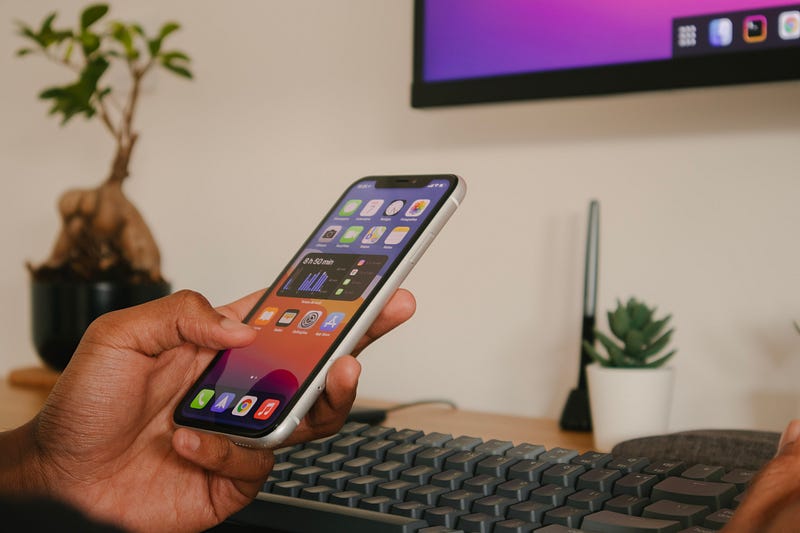
Modern life throws hundreds of distractions at us every day. Texts, instant messages and emails await us as soon as we wake up. For those old enough to know how to leave a voicemail, those also exist!
In a culture that prizes constant availability, and being busy, one may ask: to what should I pay attention, and what should I ignore? How should I sequence my work? What thing(s) do I focus on?
Both common sense and psychologists agree that multitasking is inefficient, stressful, and ineffective. Therefore, single-tasking would seem to be the obvious choice for how to spend any available working time. Most knowledge workers, however, seldom focus on one thing.
Ask yourself (honestly) when the last time was that you turned off all notifications and spend an hour heads-down on something. Probably, it was a very long time ago, or if you tried recently, you likely failed. Many of us feel guilty and anxious when we are not reachable, so we default to being available when we should be focused.
The Cost of Distraction
Really doing one thing at a time means not doing other things. If you are writing a report, you are not answering Teams messages. At least in the short term, there are consequences of being unavailable. Perhaps your client becomes impatient or frustrated if their timeline is shorter than yours. In most cases though, if something is that important, the person should try multiple ways of contacting you, or simply go to someone else who may be available.
Said differently, each each missed activity for message, has a cost and some risk. In almost every case though, the costs of delay or never responding at all are negligible. People can follow up with you, or perhaps what was urgent yesterday, becomes forgotten in a day or two.
I’m not suggesting that you should ignore your emails or messages. Especially in a world where remote working has become much more prevalent, always being unavailable is a sure route to being fired.
What is necessary though, is balance. Being intentional about when you check email and checking it less often can be as relaxing as meditation. Better to check in periodically and spend the rest of your time tuning into the task or meeting at hand. If you are really focused on the right thing, you will spend less time doing it right once, rather than doing it poorly only to have to fix errors afterwards.
Inbox Zero?
It is tempting to create some neat list of decision rules to apply to one’s inbox, however that is defined today. With an ever-expanding array of social media and messaging apps, the whole concept of an inbox is anachronistic.
As this New Yorker article shows, ideas such as inbox zero have become irrelevant as the volume and velocity of information has grown exponentially.
Overflowing inboxes have only worsened the sheer ambiguity of knowledge work. When you are waiting on a clarification from several people, and no one is responding, the best follow-up system fails. This has led to people questioning of the benefits of personal productivity and hustle culture as desirable per se.
Blurred Lines
One unfortunate consequence of remote and hybrid working is the blurring of lines between work and life. I frequently joke that before the pandemic we used to talk about bringing our whole selves to work. These days we bring our selves, our family and our home.
These blurred lines call for some boundary setting. No one will set your boundaries for you, or tell you when to check email, or not. And again, as tempting as it is to say that once you close your laptop you are done for the day, the world operates on its own schedule.
Sleep may be a better analogy for a healthy way to approach work in the post-Covid era. Sometimes we have to wake up early or stay up late. Doing so one or two nights in a row may not be that bad for our health. However, prolonged periods of sleep deprivation have been linked to obesity, irritability, and in the extreme, death.
Work and life share some commonalities with sleep. If you work more than a certain amount of hours per day you will not have enough time to take care of your family or your personal needs. If you don’t work enough, you will not have enough money to afford anything.
Therefore, while on any particular day, work and life can be unbalanced, in the long term the deficit must be paid. Just as sleep deprivation causes harm and even death, so does leisure deprivation. There’s a word for that in Japanese — Karoshi. It means death through overwork.
With the above in mind, we may be better served by looking at our lives in the longer-term. Rather than worrying about full inboxes or unread messages, perhaps we should just be more present and conscious about the task at hand.
Every minute we spend on this planet is precious. Spend yours with care and intention.