
Living In France: The Mediterranean Climate Isn’t All Blue Skies and Sunshine
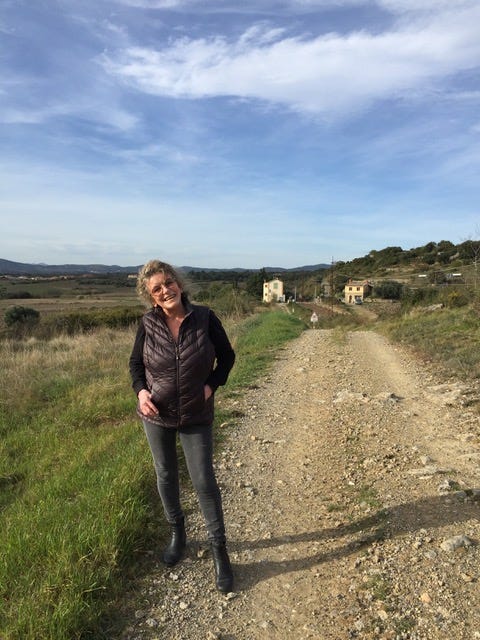
I live in the Languedoc area of southern France. A vast region bordered by the Mediterranean Sea to the east and the Pyrenees and Spain to the south. It’s wild and rugged garrigue — or scrubland — of dwarf oak, thyme, rosemary, lavender, gorse and broom.
There are also miles of beaches including a nudist one, but mostly there are vineyards.
Miles and miles of them, about three times the combined area of Bordeaux.
Someone told me, it is posisble to walk all the way to Spain without leaving the vineyards. I believe it — so far, I haven’t been tempted to find out.
Eight years ago when I first moved here, I knew nothing about the Languedoc (now incorporated into the even larger Occitanie region) and only slighty more about wine or winemaking.
Vendange , for example, the French word for harvest, meant only the name of a jug wine I’d bought in supermarkets back in the States.
But living in one of the seven winemaking villages of the Faugeres appellation ( a legally defined administrative area) has improved my knowledge of wine and all that goes into making it. My next-door neighbour is a winemaker and, within a short walk of my house, there are several other domains and, of course, vineyards all around.
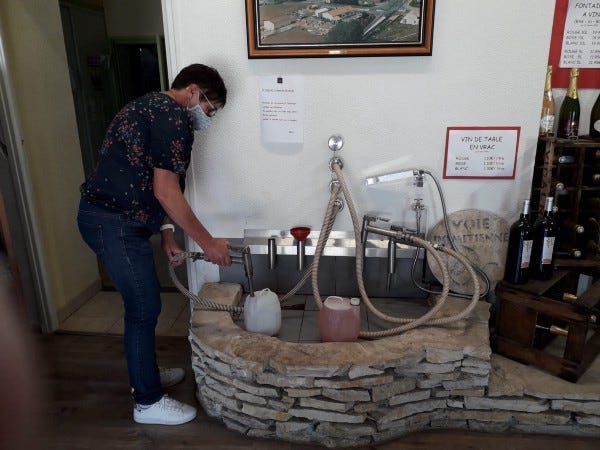
My palate is slightly more refined too — although my budget mostly runs to the cheaper en vrac, wine that you pump, gas station style, into your plastic bidon. Classier than box wine and some of it is surprisingly good.
Life in these villages tends to follow the seasons. Quiet and, like the vines, seemingly dormant in the winter months with leafless trees and shuttered windows, perking up in spring, lively in summer then winding down in autumn, readying once more for the long winter nap.
“I’d be bored, bored, bored,” a California friend said when I described my life here. “What do you find to do?”
I didn’t say ‘watching the seasons change,’ because I wasn’t sure she’d understand, but I can truthfully say I’ve never felt bored. Observing the changes, I’m keenly aware of the important role the different months play in the life cycle of a vine and the havoc an unseasonal event — such as a mid-May frost can create on newly formed buds.
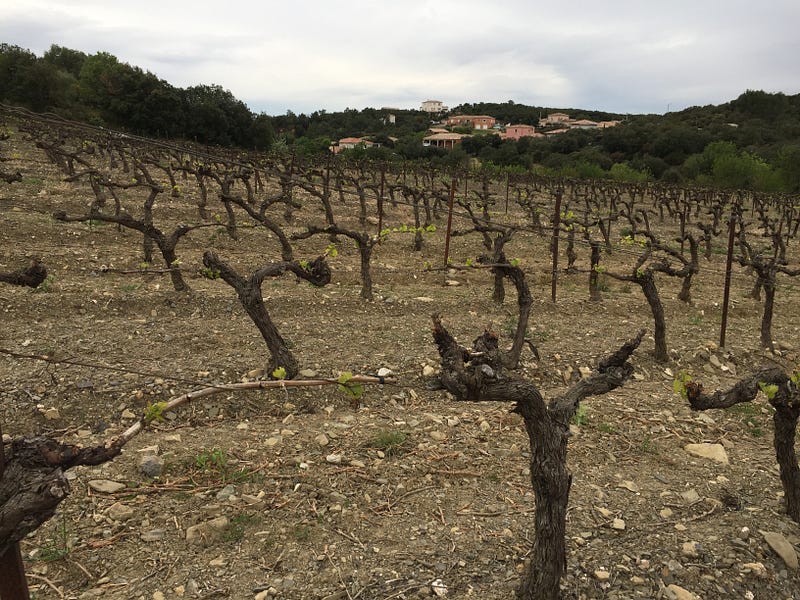
As I write this, it’s November. The notorious Languedoc winds are blowing, temperatures have dropped and rain is in the forecast. I add layers of clothing for my daily walk through the vineyards and am keenly aware that winter is around the corner. But even in the darkest coldest months, when the gnarled and leafless vines look more like twisted iron than plant matter, I understand that this period of dormancy is a vital part of the growing season.
While all seems quiet above ground, beneath the surface things are happening. Instead of directing their energy towards producing fruit and leaves, winter is when the vines focus on strengthening their root systems, soaking up soil nutrients and preparing for the emergence of new shoots in spring.
It’s also a busy time for the winemaker; all the vines must be pruned before the first buds begin to show around the third week of March. Wait too long and the sap rises — or as my winemaking friend puts it, ‘the vines cry.”
On my walks, I see solitary figures hunched over the vines, bundled up against the cold winds. But when I sympathised to a winemaking friend about having to work outside she shrugged. Cold weather is necessary to remind the vines not to wake up too soon.” Bourgeonnement, the term for precocious buds that emerge from their protective cocoons while there is still a chance of frost, or even snow, can be disastrous.
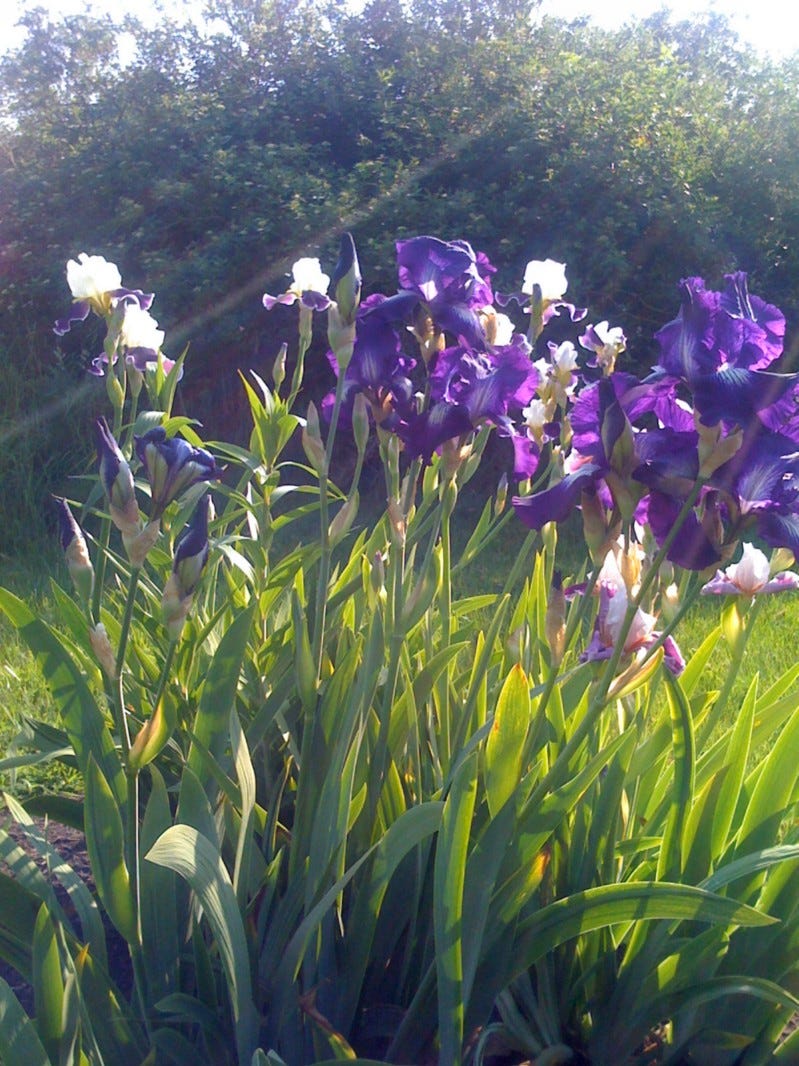
Flash forward to spring and Mother Natures spreads her vast and colourful carpet. Clouds of almond and cherry blossom, wild purple Iris and pink rock rose bloom along the roadsides and fields glow with scarlet poppies. The migrating birds return from Africa and the vines unfurl bright green leaves. Although mornings and evenings can still be cool, the sun hints at the warmth of the summer months to come.
Tiny grapes, hardly bigger than a pin head begin to form and from May to mid September will expand and slowly ripen under the hot sun. Veraison, another French term I’ve learned since living here, occurs as the fruit ripens and develops sugars. I find it hard to resist a few intensely sweet, sun warmed samples.
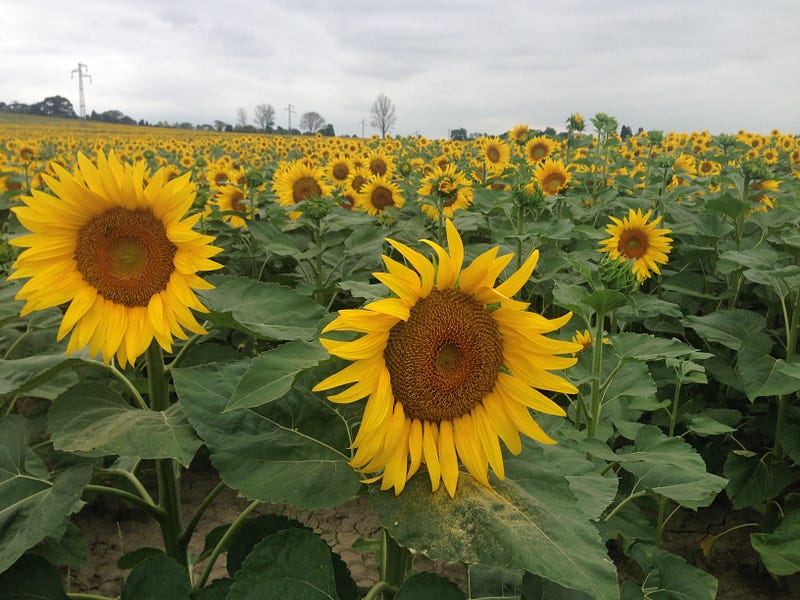
Summers are beautiful in this Mediterranean region with cobalt blue skies and fields of golden sunflowers reminiscent of a Van Gogh painting. Tourists also love the hot sunshine. Outdoor cafes serve chilled pale pink wine, boys on motor scooters, careen through the villages like drones of angry bees and village bulletin boards are festooned with neon coloured notices announcing music festivals and fetes.
Dependably long, hot summer days with little if any rain are one of the reasons many ex-pats, especially British, have second homes in this region. In my small village, the population swells noticeably and the weekly markets are full of English speakers browsing the colourful vegetable stalls or shopping for cool and inexpensive cotton clothes, mostly white.
As July drifts into August, the days are a little shorter and the blistering heat lets up a few degrees.
In some vineyards, the grapes are almost ready to pick and, within a few weeks, the harvest, or vendange will be in full swing. This is the most important event on the winemaker’s calendar. The culmination of a year’s work.
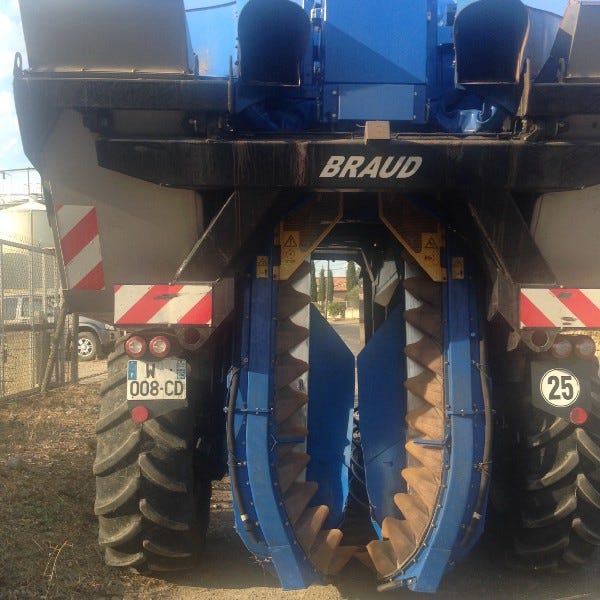
Gigantic blue mechanical pickers, the size of double-decker busses, lumber through the vineyards, ancient tractors brimming with navy blue grapes clog the narrow village roads. Even the air seems to smell like wine, drifts of just crushed grapes wafting out from cellar doors.
Unfortunately for winemakers, who must get the crops picked, September is also the start of the rainy season. While some years, the rains are mild, torrential autumn rains, known as Mediterranean episodes, have been disastrous, flooding vineyards and creating destruction.
For the most part though, autumn is a glorious time; Leaves on the vines change to shades of red and gold glowing like stained glass in the soft sunshine. Figs and olives ripen and the flocks of tiny black swifts and house martins that filled the summer skies leave on their long migration to Africa.
By November the vivid colours of summer and autumn fade to monochrome. with and miles of gnarled black vines and pearly grey skies almost the same colour as the doves that perch on my balcony. A treat around this time of year is a distant glimpse of the snow capped Pyrenees.
Christmas lights in the villages and towns and glittering marches des Noel are welcome infusion of colour and holiday cheer — as is the scent and taste of vin chaud (hot spiced wine) sold everywhere.
Before I came to live in this part of France, I imagined Mediterranean areas as all beaches and sunshine. Living here, in my village surrounded by vineyards, I understand that there’s definitely more to the story.