
A Generation of Intelligent Students Who Don’t Know How to Learn
Unconventional learning, gaps in our education system, and how to navigate learning as an adult.

Captain Fantastic is a movie about a family who lives in the woods, isolated from the rest of society. A father teaches his six children to be self-sufficient: hunting and foraging, providing academic material above their “reading level”, and challenging them with physical exercises. In doing so, the kids are more knowledgable, analytical, practical, and stronger than their respective peers who grow up in more “traditional” households. Naturally, these kids are uneducated about pop culture and brand names. However, they can synthesize, summarize, and explain a myriad of topics such as classic literature, string theory, and the Bill of Rights.
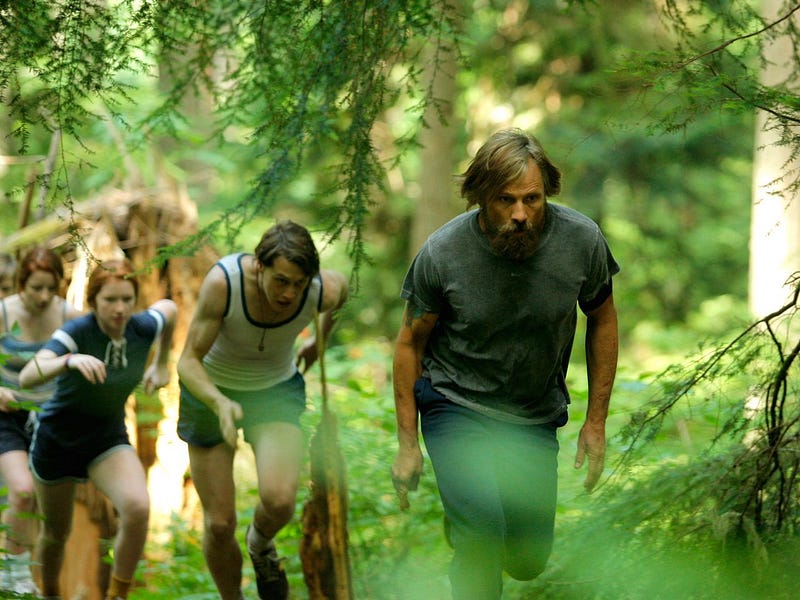
For the rest of us, put through either public, private, or charter education systems, we are unable to relate to these kids. Being homeschooled without the distractions of social media, despite their isolation from other peers their age, we are shown that our current educational system creates unproductive habits. Even for the most privileged students placed through the New England boarding school-Ivy League university pipelines, the gaps created by our educational system challenge adult learning.
School favors the “intelligent”, not the hard-working.
Our educational system naturally favors the “innately intelligent”: the students who were able to understand a foreign concept as soon as it was introduced. Whether or not this came from outside help available to the privileged — the extra tutoring sessions that developed superior reading, analytical, and quantitative skills from a young age — is not the point. Naturally, there is inequality of education across income levels, and while absolutely important, cannot be addressed in the near future, nor by this article. Rather, I’d like to bring your attention to our education system’s rewards mechanism that creates a generation of students of above-average “intelligence” who don’t know how to learn.
Our high school transcripts and test scores are submitted to colleges, while our college transcripts are submitted to our employers. Because our academic accomplishments are bound by score-based metrics, and not how we reached these metrics, there is no difference in the eyes of higher education between the boy who studies 10 hours a day versus the girl who barely goes to class. The final grade is all that matters.
However, this metrics-based standard creates the ability for young students to drift by their schooling without developing learning skills transferable across various disciplines as the curriculum exponentially becomes harder.
Not needing to study means we don’t understand how to learn.
Learning and studying are mutually exclusive concepts we often lump into one. Their key difference is the inherent motivation for wanting to learn, as opposed to wanting to study.
From a young age, students are taught that studying leads to academic success. However, for students who realized they simply could learn (without studying), this gap paved a dangerous road of poor study skills: procrastination, guesstimating, and relying on the grading system as a direct reflection of their skills. This isn’t even the most damaging trend, since habits are able to be refined and developed.
From elementary until high school, we are spoon-fed information that exactly reflects the tests we take. If we could understand the curriculum without dedicating outside hours, our only daily responsibility was to pay attention for the eight hours of class we were in. There is a clash between relying on innate intelligence versus dedicating time and effort. For the very first time, students are forced to grapple with the decision of choosing to study or not.
The most concerning trend is that students confuse our need to study with our desire to learn. For 15+ years, our education system has shown us that our lackluster efforts outside the classroom are sufficient to “get by”. Therefore, without developing study habits, I’ve gradually lost my ability to learn actually difficult concepts. Failing to consciously understand how my younger self learns best feels, I am still struggling to sharpen my critical thinking, analytical, and quantitative skills.
Students don’t recognize what helps us learn.
Lacking awareness about the specific tools students use to grasp a concept means that we are unable to purposefully recycle and upgrade these tools to approach the difficulty of higher-level academia. This, in turn, leads to us feeling discouraged in the face of academic challenges. In addition, we don’t know what’s best for our learning either: two recent studies conducted at the U.S. Air Force Academy and Bocconi University showed that university students evaluate their teachers more positively when they learn less.
It sounds obvious: people inherently enjoy subjects that come easier to them, but even highly-intelligent university students accustomed to a certain level of academic rigor prioritize innate ability over effort — according to leading Stanford University psychologist Carol Dweck.

UCLA educational psychologist Robert Bjork reports that students attribute learning to the ease with which a related task is completed. This is especially problematic because our university curriculum requires 3–4 times the amount of time spent per subject as time sitting in a lecture. In fact, with efficiency and productivity as key facets for students’ goal-setting and time management, we see time-consuming tasks that require effort to be less “efficient” for our learning. In reality, this is completely irrational and counterproductive.
Learning as an adult requires a completely different approach.
Many of us still do not know how to learn but feel like it’s too late to develop skills from scratch. This is especially problematic in an age where the average half-life of a skill set is 5 years. Simply said, in 5 years, a skill you’ve learned is half as valuable. Yes, there is plenty of literature suggesting that students don’t know how to study either, but more importantly, we feel insecure about our inability to process new concepts and synthesize information.
However, adult learning is completely different from learning in school. Despite these gaps in learning as a younger student, the characteristics of adult learning allow for even adults educated up to an elementary level to self-learn.
Some key distinguishing characteristics of adult learning:
- 70% of adult learning is self-directed. This means that planning, implementation, and evaluation of learned material are carried out by ourselves.
- The need for adult learning is often triggered by an external stimulus: either a life cycle development or even a traumatic crisis in their lives.
- Motivation must be self-conjured to overcome learner’s resistance, which may have developed from years of poor self-image as learners, seemingly irrelevant curriculum, and a general rejection of the traditional education system we feel has failed us.
It is dramatic to imply that an internal crisis is needed to trigger that spark for adult learning. However, we should remain hopeful that whatever previously failed us — or what systems allowed for our self-destructive habits — to learn no longer exists. All we require is self-direction and a targeted motivation behind self-learning. The “bad” news is that we now fully bear the responsibility of being “unable to learn” as an adult since the older we become, the more ridiculous this notion is.
Tough-love mantras that work for me
As a third-year undergraduate student, I have no justifiable excuse as to why 20 years of “elite” education is wasting away in my brain. This year, I’ve given myself the task of attending my classes for the sake of learning. It’s a difficult time to start, considering the nature of Zoom University and how unengaging my weekly 100-hour screen time is.
Cue a couple pearls of wisdom that might work for you:
- It’s important to get over your imposter syndrome. You’re not dumb. You just don’t spend enough time trying.
- A little bit of competition never hurt anyone. Life isn’t a zero-sum game, but you’ve become a quitter, which is worse than a loser.
- Other people don’t always do better because they’re naturally smarter. You just don’t see the amount of effort behind their results.
- Starting is the hardest part. Stamina trails closely behind. Knowing this, just dive in headfirst and do what you need to do.
What I used to do vs. what I do now
In the past, I used to think of tasks I wanted to accomplish. However, I now make daily to-do lists that actually specify particular exercise sets or lectures to watch. This sounds so simple and obvious, right? To write down what you want to accomplish? Not only does this provide routine accountability, but something about crossing off a task jolts my Type A personality that has been waiting to come out for years.
I used to look at answers before attempting problems myself. This made me complacent, lazy, and a little arrogant: assuming I could understand advanced mathematics principles simply from looking at 1–2 lines of answers. I now pause my lectures and attempt the problem before hearing my professor explain the process. This has developed discipline and patience. Sometimes, I don’t get it, and that’s okay. But at least I tried, and this was the hardest part for me.
I used to think of the absolute bare minimum I could do to reach Point X. Now, I think what I can do with Information Y if I reach Point X. “Do I really need to watch this lecture to pass this exam” has turned into “how relevant is Information Y in the context of this class and my future career?” Sometimes, the answer reminds me how outdated university learning feels, but it makes me critically re-evaluate the value of my education besides tuition money.
Although there are fundamental flaws in our education system, we as adults must find a way to overcome our childish avoidance. Research shows that those of us who feel as if we don’t know how to learn are not alone. However, we must hold ourselves accountable for self-teaching new subjects relevant to our jobs, personal development, and to better our society holistically.