
Managing Customer Relationships with CRM
It's cheaper to retain customers than it is to attract new ones, so it pays to look after them.

Wouldn't it be great to have a tool to help us track our interactions with customers to understand their needs better?
And manage ongoing relationships with our customers as well as customer leads.
It is cheaper to retain customers than to attract and convert new ones.
Meaning we're more profitable!
This blog explores Customer Relationship Management — explaining how it works and the benefits of using CRM.
What is Customer Relationship Management?
Customer relationship management (CRM) is a strategic business approach to managing interactions with existing and potential customers.
Grounded in the foundations of relationship marketing, CRM is often used to describe technology-based systems that manage customer information and solutions.
“Relationship marketing theory provides the foundations of CRM, which is “the process of acquiring, retaining, and partnering with selective customers to create superior value for the company and the customer.” (Parvatiyar & Sheth, 2001)
The focus is on customer retention through streamlined processes and staying connected to customers to improve relationships. Firms manage and analyse their interactions with past, current and potential customers.
Firms can use numerous customer communication channels to compile data, including a company's website, telephone, email, live chat, and social media.
The ultimate goal of CRM is to increase sales.
A Brief History of CRM
Customer relationship management dates to the 1970s. Initially, businesses used surveys to evaluate customer satisfaction. As computer technology developed, companies used spreadsheets to categorise and analyse data and create lists of customers, which became the basis for database marketing.
In the 90s, CRM evolved as more prominent tech companies such as Oracle got involved and created customer software solutions, including sales force automation and customer service.
With the advances in the internet, the early 2000s saw CRM migrate into cloud technology, meaning users could access it online from any computer.
Being online also removes the burden of installing and updating software, keeping IT costs lower and highly flexible for businesses to upgrade as they grow.
Industry-specific software or full-customised CRM was also replacing standardised CRM options to meet businesses' needs further. Industry data suggest Worldwide spending on CRM will exceed USD 110 Billion by 2027.
“Uncertain markets and dwindling brand loyalty are critical factors which are leading service-based firms to adopt CRM as a business strategy.” (Dewnarain, Ramkissoon, & Mavondo, 2019)
The Benefits of CRM
A customer-centric business strategy allows firms to create and maintain relationships with their target market. CRM is a vehicle for this.
With rising customer acquisition costs and increasingly price-sensitive customers (They do not like to pay more), creating long-lasting, mutually beneficial relationships is key to increased customer retention.
The better we provide solutions to customers, the more chance they will remain loyal, increasing their lifetime value to a firm.
CRM is a comprehensive approach to providing customer solutions.
CRM keeps and organises information about leads and customers and every interaction that takes place. If customers regularly interact with multiple people on your team, it allows everyone in a firm to keep track of conversations.
“Organisations today must focus on delivering the highest value to customers through better communication, faster delivery, and personalized products and services.” (Chen & Popovich, 2003)
Some of the direct benefits to businesses of using a CRM are:
- Increased ability to target profitable customers
- Enhanced salesforce effectiveness and efficiency
- The marketing and sales teams function together more cohesively.
- We have improved customer service effectiveness and efficiency.
- Products/services customised to individual customer needs and preferences.
- Communication channels are integrated into a single platform.
- Increased responsiveness to changing customer needs
- Improved data to more precisely segment customers based on their characteristics
- Individualised marketing based on customer behaviours
- High opportunities to cross-sell and up-sell customers
The Functions of CRM
The underlying function of CRM is to build customer relationships and to manage these as they mature through distinct stages. Firms keep a database of customer information to understand better those customers and better meet their needs.
CRM helps firms analyse their customer data to identify sales opportunities and manage customised marketing campaigns from a central location.
Integration
For large organisations, one of the most significant benefits of CRM is that everybody has access to the data, making it easier to collaborate across teams and the entire customer lifecycle.
Sales, marketing, and customer support become integrated and automated.
Every detail about individual customers is kept, such as who they are and their interaction with the firm.
Knowing these details helps everyone do their job better as it provides context about customers' needs and situations, so one staff member can pick up the conversation where the last one left off.
Firms can manage inquiries across channels without losing track of conversations.
“To some, it meant direct mail, a loyalty card scheme, or a database, whereas others envisioned it as a help desk or a call centre.
Some said that it was about populating a data warehouse or undertaking data mining; others considered CRM an e-commerce solution, such as the use of a personalization engine on the Internet.” (Payne & Frow, 2005)
Marketing
CRM allows for marketing automation to make it more effective and efficient.
Firms can set up repetitive marketing tasks such as social media posts or email marketing to be sent to groups of customers at various times, with different messages, based on customer segments' individual needs and behaviours.
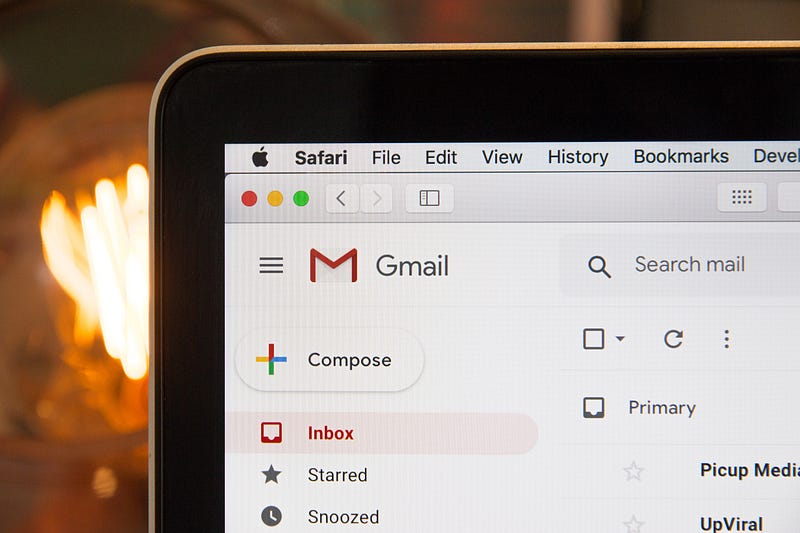
Marketing aims to put the right message in front of the right people at the right time. CRM systems also monitor how customers prefer communication methods.
Daily emails? Weekly emails? Monthly phone calls?
Sales
Automation of the salesforce is another crucial function of CRM. Wherever a customer is in the sales cycle (buyer decision process), firms customise their communication for their situation (assuming we know enough about them).
CRM tracks a customer's history with the company to know as much about them and tailor their communication.
It is critical to categorise recent sales leads accurately, as special sales promotions with different offers can target diverse groups of customers to fit their needs best.
Firms can focus and prioritise the right leads that are likely to be the best opportunities to close profitable deals. Firms do not want to waste time and resources on prospects who will never become profitable customers or clients.
Sales reps can work more efficiently, and sales forecasting becomes more accurate.
Customer Support
Another benefit of CRM is that customers are served better on a day to day process.
Direct customer service technologies mean that support becomes more personalised and automated, and customers are supported through multiple channels.
CRM keeps a record of every customer interaction, the extra insight into customers helping businesses be more constructive with improving their customer service experience and providing better solutions.
Data Analysis
Another valuable function of CRM is being able to analyse customer data collected through multiple digital sources.
Data mining helps businesses to learn more about their target customers.
We can find out where our sales come from, what characteristics our customers have, the best way to communicate with them, and how to best cater to their needs.
We can find patterns in consumer behaviour that inform our decision-making by analysing our data. Identify any potential issues, as well as what is going well.
Analytics provides all sorts of customer information, such as their past sales and how they reacted to previous marketing efforts. If we find out that certain customer groups are not purchasing, we can change our offer.
It can be a trial and error process better to understand their buying behaviour and spending habits over time.
Final Words
In summary, a value proposition is the summary statement of why a customer would choose a company's product or service. It frames how they uniquely provide value to customers.
This article has discussed the importance of creating a value proposition and the steps a business can take to create its own and differentiate itself from competitors.
Thank you for reading.
If you enjoyed the content, you might be interested in this article on enhancing customer loyalty.
Read as many Medium articles as you like!
Non-Medium members can only read 3 articles a month.
If you liked the content and would like to read more articles like this, sign up to become a Medium member for only $5 a month.


