
Imposter Syndrome: Understanding and Overcoming the Plight of Unwarranted Self-Doubt
I have written 11 books, but each time I think, ‘uh oh, they’re going to find out now. I’ve run a game on everybody, and they’re going to find me out. — Maya Angelou

Imposter Syndrome (IS) refers to an internal psychological pattern where individuals doubt their accomplishments and possess a persistent, often irrational, fear of being exposed as a “fraud.” Despite evident success, individuals with IS remain convinced that they do not deserve all they have achieved. They attribute their accomplishments to external factors such as luck or timing, rather than to their own ability, intelligence, or efforts. First identified by psychologists Pauline Rose Clance and Suzanne Imes in 1978, imposter syndrome is not classified as a mental disorder, but it can cause significant psychological distress (Clance & Imes, 1978).
The prevalence of imposter syndrome is widespread and can affect anyone regardless of their social status, work background, skill level, or degree of expertise. While early research focused primarily on high-achieving women, further studies have indicated that men are equally susceptible (Sakulku & Alexander, 2011). Moreover, imposter syndrome has been studied in a variety of populations, including ethnic and racial minority groups, where it may intersect with experiences of discrimination and stereotyping (Cokley et al., 2013).
I have spent my years since Princeton, while at law school and in my various professional jobs, not feeling completely a part of the worlds I inhabit. I am always looking over my shoulder wondering if I measure up. — Sonia Sotomayer
Understanding Imposter Syndrome
Imposter syndrome is multifaceted and can be influenced by personality traits, family expectations, social conditioning, and behavioral causes. It often operates on a spectrum, from mild feelings of self-doubt to a debilitating fear of exposure. The complexity of IS may stem from high familial expectations and overprotective parenting styles, leading individuals to question their own abilities (Thompson et al., 1998). Societal and cultural standards that emphasize achievement can also exacerbate feelings of inadequacy, particularly in those who are trailblazers in their field or belong to underrepresented groups.
Several factors can trigger imposter feelings, including but not limited to new academic or professional environments, promotions, and recognition of expertise. Researchers have suggested that imposter syndrome can be more acute in environments that emphasize competition and perfectionism (Parkman, 2016). Social psychologists theorize that imposter syndrome can be related to traits such as neuroticism, perfectionism, and the need for external validation (Bernard et al., 2002).
Manifestations of Imposter Syndrome
Imposter syndrome can manifest in a variety of ways, including but not limited to a pervasive pattern of undermining one’s achievements, a tendency to overwork, a state of constant anxiety over being “found out,” and the inability to realistically assess one’s competence and skills. These manifestations can have significant consequences, such as chronic stress, burnout, and even mental health issues like anxiety and depression (Matthews & Clance, 1985).
The phenomenon can also lead to paradoxical behaviors. On one hand, individuals may avoid taking on new tasks for fear of failure; on the other hand, they may drive themselves to work harder to prevent others from discovering their “inadequacies,” thus reinforcing the imposter cycle. This may explain why imposter syndrome is particularly prevalent among high achievers who strive to meet increasingly high standards due to their own insecurities (Leary et al., 2000).
Some years ago, I was lucky enough invited to a gathering of great and good people: artists and scientists, writers and discoverers of things. And I felt that at any moment they would realize that I didn’t qualify to be there, among these people who had really done things.
On my second or third night there, I was standing at the back of the hall, while a musical entertainment happened, and I started talking to a very nice, polite, elderly gentleman about several things, including our shared first name. And then he pointed to the hall of people, and said words to the effect of, “I just look at all these people, and I think, what the heck am I doing here? They’ve made amazing things. I just went where I was sent.”
And I said, “Yes. But you were the first man on the moon. I think that counts for something.”
And I felt a bit better. Because if Neil Armstrong felt like an imposter, maybe everyone did. Maybe there weren’t any grown-ups, only people who had worked hard and also got lucky and were slightly out of their depth, all of us doing the best job we could, which is all we can really hope for. ― Neil Gaiman
Theoretical Perspectives on Imposter Syndrome
The literature on imposter syndrome has incorporated a number of theoretical perspectives to explain its development and persistence. From a cognitive-behavioral perspective, imposter feelings are considered the result of dysfunctional thought patterns, where individuals with IS continually discount or challenge their accomplishments and abilities (Young, 2011). These thoughts lead to a cycle of negative thinking that becomes self-reinforcing. Cognitive restructuring techniques are often used to address these thought patterns in therapy.
Another perspective is rooted in the social learning theory, which suggests that imposter syndrome develops and persists due to the internalization of societal beliefs about competence and success. Individuals develop their self-perception as imposters through observation and mimicry of role models who may exhibit similar behaviors or express feelings of inadequacy (Bandura, 1977). From a sociocultural standpoint, imposter syndrome can be viewed as a response to systemic structures and societal pressures that value certain achievements or characteristics above others. Underrepresented groups in academia or corporate environments may be more prone to developing imposter syndrome due to minority status stress and the pressure to prove themselves in predominantly white or male-dominated fields (Peteet et al., 2015).
Strategies for Overcoming Imposter Syndrome
Overcoming imposter syndrome involves changing thought patterns, developing a more realistic assessment of one’s abilities and accomplishments, and building a supportive professional environment. Various strategies have been proposed to mitigate the effects of IS.
Cognitive-behavioral Techniques: Cognitive-behavioral therapy (CBT) can be effective in addressing the distorted thinking patterns associated with imposter syndrome. Through CBT, individuals can learn to challenge and replace negative thought patterns with more realistic and positive ones (Clance & O’Toole, 1987). Techniques such as journaling success and positive affirmations can be self-administered forms of modifying the cognitive distortions inherent in IS.
Mentorship and Support Systems: The role of mentorship is vital in providing individuals with real-life counterexamples to their imposter beliefs. By observing and interacting with mentors who share their experiences and vulnerabilities, individuals with IS can gain a more realistic perspective of success and competence (Young, 2011). Support groups and networks can also offer a sense of belonging and affirmation, which may mitigate feelings of being an imposter.
Educational Interventions: Providing education about imposter syndrome can be a powerful tool in normalizing these experiences. Awareness that imposter feelings are common and that they do not equate to a lack of competence can be liberating (Parkman, 2016). Academic and professional institutions can play a role in this educational process by incorporating discussions about imposter syndrome into training and development programs.
Fostering a Growth Mindset: Encouraging a growth mindset, as defined by Carol Dweck, in which skills and intelligence can be developed through dedication and hard work, can be beneficial (Dweck, 2006). This perspective contrasts with a fixed mindset, where abilities are seen as static, which may contribute to imposter syndrome. Individuals with a growth mindset are more likely to view challenges as opportunities to grow rather than as threats to their self-image.
Implications and Future Directions
The implications of imposter syndrome are wide-reaching, influencing not only the well-being of individuals but also the productivity and diversity of the workforce. Organizations and educational institutions are increasingly recognizing the impact of imposter syndrome and are seeking ways to support affected individuals.
Future research could explore the longitudinal effects of imposter syndrome on career development and mental health. Additionally, there is a need for studies that examine the effectiveness of specific interventions across different populations. Understanding the cultural dimensions of imposter syndrome is also a growing area of interest, as globalized work environments bring diverse populations together.
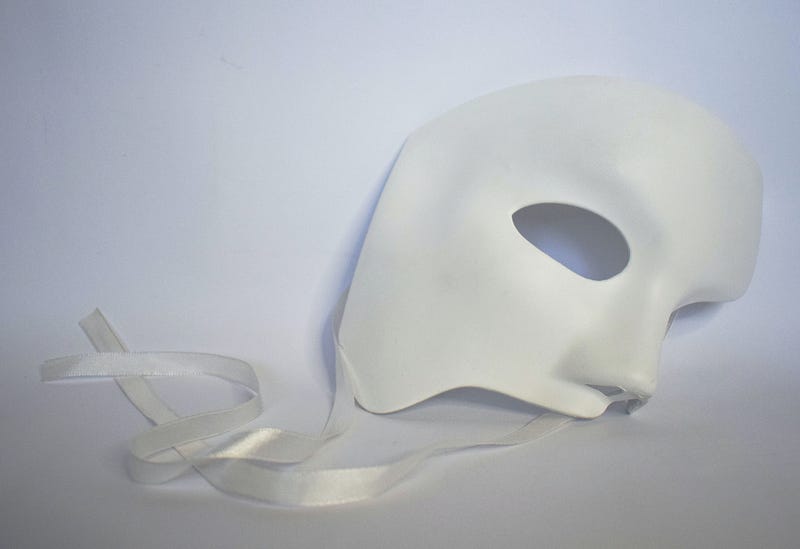
Imposter syndrome is a complex phenomenon that continues to attract attention from psychologists, educators, and corporate leaders alike. While it is not a formal diagnosis, its effects can be profound, influencing an individual’s career trajectory, sense of well-being, and productivity. Continued research and intervention development are necessary to better understand and mitigate the impact of imposter syndrome.
References
Bandura, A. (1977). Social learning theory. General Learning Press.
Bernard, N. S., Dollinger, S. J., & Ramaniah, N. V. (2002). Applying the big five personality factors to the impostor phenomenon. Journal of Personality Assessment, 78(2), 321–333.
Clance, P. R., & Imes, S. A. (1978). The imposter phenomenon in high achieving women: Dynamics and therapeutic intervention. Psychotherapy: Theory, Research & Practice, 15(3), 241–247.
Clance, P. R., & O’Toole, M. A. (1987). The imposter phenomenon: An internal barrier to empowerment and achievement. Women & Therapy, 6(3), 51–64. https://doi.org/10.1300/J015V06N03_05
Cokley, K., McClain, S., Enciso, A., & Martinez, M. (2013). An examination of the impact of minority status stress and impostor feelings on the mental health of diverse ethnic minority college students. Journal of Multicultural Counseling and Development, 41(2), 82–95.
Dweck, C. S. (2006). Mindset: The new psychology of success. Random House.
Leary, M. R., Patton, K. M., Orlando, A. E., & Funk, W. W. (2000). The impostor phenomenon: Self-perceptions, reflected appraisals, and interpersonal strategies. Journal of Personality, 68(4), 725–756.
Matthews, G., & Clance, P. R. (1985). Treatment of the impostor phenomenon in psychotherapy clients. Psychotherapy in Private Practice, 3(1), 71–81.
Parkman, A. (2016). The imposter phenomenon in higher education: Incidence and impact. Journal of Higher Education Theory and Practice, 16(1), 51–60.
Peteet, B. J., Montgomery, L., & Weekes, J. C. (2015). Predictors of imposter phenomenon among talented ethnic minority undergraduate students. The Journal of Negro Education, 84(2), 175–186.
Sakulku, J., & Alexander, J. (2011). The imposter phenomenon. International Journal of Behavioral Science, 6(1), 73–92.
Thompson, T., Davis, H., & Davidson, J. (1998). Attributional and affective responses of impostors to academic success and failure outcomes. Personality and Individual Differences, 25(2), 381–396.
Young, V. (2011). The secret thoughts of successful women: Why capable people suffer from the imposter syndrome and how to thrive in spite of it. Crown Currency.