
IMPOSTER SYNDROME
Do you sometimes feel that all that you’ve achieved was just a matter of “timing”, “luck” etc.? Or do you feel that you are not that smart, clever and intelligent as people think of you? Or do you think that you will be soon exposed because you were “faking” all of this time? Or you feel that you don’t belong the place you are? Or you don’t deserve what you got? Or do you think you are a “FRAUD”?

If you feel any of them then, probably you are the victim of imposter syndrome at one point or the another. Now that you know about this, you don’t have to feel insecure or bad. This is a very common thing. It is just that it remains unaddressed and some people don’t even know if something like this even existed. Let me give you an example. You must have heard about Sheryl Sandberg. She is the COO of Facebook and runs an organization named “Lean In”. In one of her interviews, she shared, “There are still days when I wake up feeling like a fraud, not sure I should be where I am.” Famous people like Serena Williams, Neil Armstrong, Lady Gaga and even Emma Watson have gone through this.
WHAT IS IMPOSTER SYNDROME ?
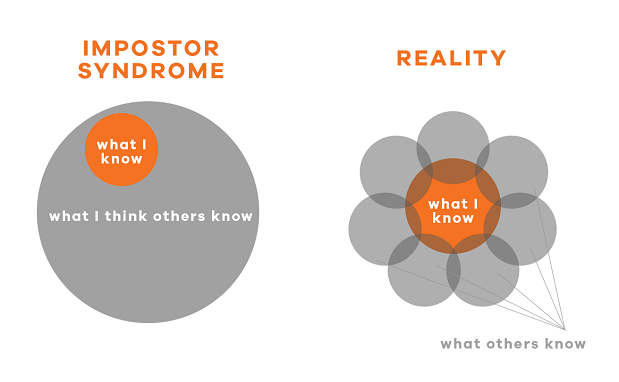
According to Wikipedia, Impostor syndrome (also known as impostor phenomenon, impostorism, fraud syndrome or the impostor experience) is a psychological pattern in which individual doubts their accomplishments and has a persistent internalized fear of being exposed as a “fraud”. In other words, it is the feeling that you are not qualified for the success you have or the work you are doing, and the fear that you will be discovered as a fraud. “It was all luck”, “Maybe they should have selected somebody else”, “I may not be able to this”, “I am just not so smart to be here” and the list goes on. It is a feeling that makes you think that you don’t deserve all this. It is a lack of self-confidence. You are anxious. You start doubting your thoughts, achievements, accomplishments.
WHY IS IT ?
Impostor syndrome is the domain of “High achievers”. People who always want better, who just don’t want to settle for “mediocrity”. They tend to set a high bar. I agree that things like these will help you grow, learn and you will do something amazing. But then, you’ll have to deal with its side effects or the negative aspects of it. I know you don’t want to look arrogant flaunting your achievements but you need to OWN them. You need to start giving yourself credit. We generally tend to praise others and are just self-deprecating about our own. Another reason why this happens is when you start expecting a lot from yourself and as a result of which you are under pressure.
WHAT ARE THE DIFFERENT CATEGORIES OF IMPOSTER SYNDROME ?
According to the book, “The Secret Thoughts of Successful Women: Why Capable People Suffer From the Imposter Syndrome and How to Thrive in Spite of It”, there are five different categories namely,
- The Perfectionist: People who always think that they could have done better. They lack satisfaction and they are rarely happy with what they’ve achieved. They set high goals for themselves. People like them should try to consider their mistakes as constructive feedback and learn from them instead of doubting themselves.
- The Superwoman/man: People who always think that they are not a “good fit” tend to do more work to be satisfied. They push themselves and as a result of which they harm their mental health. People like them should stay away from external validation and should nurture their inner confidence.
- The Natural Genius: These are more or less like the perfectionist. The only thing that differs is that these people want everything to be correct in the first try. After all, they are considered as people who can do everything with ease and faster. People like them should not beat themselves up when they don’t reach their impossibly high standards. They should identify specific, changeable behaviors that they can improve over time.
- The Soloist: People who think if they ask anything, others are going to find out that they don’t know anything and they are just “fraud”. People like them should understand that being independent and taking someone’s help to prove your worth are two very different things.
- The Expert: People who want ticks in all the checkboxes fall under this category. They will never feel that they know enough. They always fear of being called as inexperienced and unknowledgeable. It is true that there’s always more to learn. But the tendency to endlessly seek out more information can be a form of procrastination. You should start practicing just-in-time learning. This means acquiring a skill when you need it.
WHO FACES IT ?
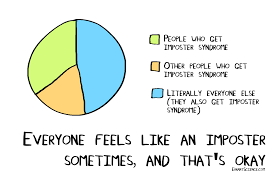
Now let us talk about people who are more prone to it. There is an interesting yet shocking fact about it. It is that 70–80% of people have reported feeling this way at some point. They are highly successful people, young professionals, and college students. This is more often faced by minorities. Women tend to face it more as compared to men.
WHAT ARE THE EFFECTS OF IT ?
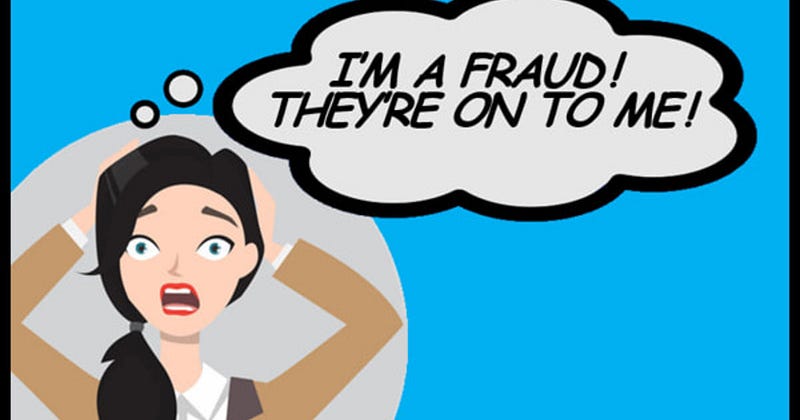
Imposter syndrome has some adverse effects on one’s life and career. They are:
1. You are on really higher levels of stress.
2. You lack self-confidence.
3. You have an adverse effect on aspirations.
4. You have a detrimental effect on personal relationships.
5. You inhibit the ability to enjoy one’s success.
6. You become very hard on yourself.
7. You start to fear to take risks.
8. You are afraid to fail.
9. Because of all these, you are not into much innovation.
10. You just don’t want to come out of your comfort zone.
HOW TO DEAL WITH IT ?

Now that you know much about it, let us take a look at how to deal with it.
1. Stop Comparing yourself: Have you gone through someone’s social media profile and been envious of their “perfect” life? But did you realize that no one puts posts about their failures and rejections? There you go. You only know one side of the story. Everyone has different journey; different destinations and you have nothing to do with it. No matter how much you do, there will always be someone better than you.
2. Stop talking down to yourself: Stop putting pressure on yourself. Stop demotivating yourself. If you think that you are not good enough then, you are going to face many barriers in your growth and you won’t be able to grab every opportunity nicely.
3. Focus on your value, not perfection: No one is perfect but everyone is different. Everyone brings a different set of values to the table. You have a different journey, different perspective, different thought process and this are more than enough.
4. Find your superpower: Everyone has that “special” power with them which makes them different from others. You need to find your superpower and work on it.
5. Make your pump-up playlist: This is an amazing one. When you feel low or you feel demotivated or you feel you are not going to make it, listen to this playlist. This will motivate you and give you the power to do what you want to.
6. Be Yourself: You need to be yourself. You need to accept the way you are. If you don’t know anything, accept it. You shouldn’t be fake to look the best.
7. Know that you are NOT alone: As I told you earlier, this is very common and you shouldn’t stress much about it. You are not alone in this and you can beat this.
8. Stop idolizing people: Part of the reason people suffer from imposter syndrome is that they reach the level of their idols and simply cannot believe that they could fill their shoes. People who appear successful from the outside are not superhuman, and they are not necessarily better than you.
9. Learn the art of Moving on: Being extremely fearful of failure and criticism, constantly worried about making mistakes and disappointing people, or tending to brood over past mistakes are signs of unhealthy perfectionism. Focus on your efforts rather than outcomes.
10. Accept your success: Try to internalize your success and we were given the opportunity that others weren’t. Opportunities come to those who expose themselves to them.
11. Treat things as an experiment: Let us take an example to understand this. Now that I have written about Imposter Syndrome, if you people are not going to like it, I won’t start saying things like “I failed that nobody liked it” and “the world hates me”. Right? It is just that you don’t want to know about it. Similarly, think everything as an experiment. If it goes good then, amazing but something goes wrong you don’t have to start crying over it.
12. You need to keep telling yourself that “You belong there more than anyone”: The problem of lack of self-confidence can only be solved with this. You need to accept the fact that you belong here and only here. You only get what you deserve. It is not about one thing that decides your fate. Maybe you’ve read some good books or some good articles etc. which helped you through the process. You are at the right place.
13. Find a person to talk about it: You need to talk. You need to tell what you are going through. If you don’t do this, your growth is at stake. Find a person with whom you can share about it.
14. Assess your abilities: If you have long-held beliefs about your incompetence in social and performance situations, make a realistic assessment of your abilities. Write down your accomplishments and what you are good at, and compare that with your self-assessment.
15. Take Baby Steps: You don’t have to do everything at once. Take baby steps. Make short term goals and keep following them
16. Use Social Media moderately: As I told above about the LinkedIn example, you should use social media moderately. There are times when you will just get demotivated when you’ll see people of your age doing something amazing. But again, nobody posts their “failure stories”. Use social media wisely.
17. You should know that failing doesn’t mean you’re a failure. It just means that you’ve tried and that didn’t work out. You should try differently. Try to see what were the shortcomings and improve them.
18. The definition of success is SUBJECTIVE: Can you define success? Nobody can! It is highly subjective and depends on one’s perspective. So, make sure what you’re chasing after is yours and yours alone, not someone else’s ideal.
19. You need to be comfortable with what you’ve achieved.
20. Accept that it is “IMPOSTER SYNDROME” and you will feel a sense of relief.
CONCLUSION
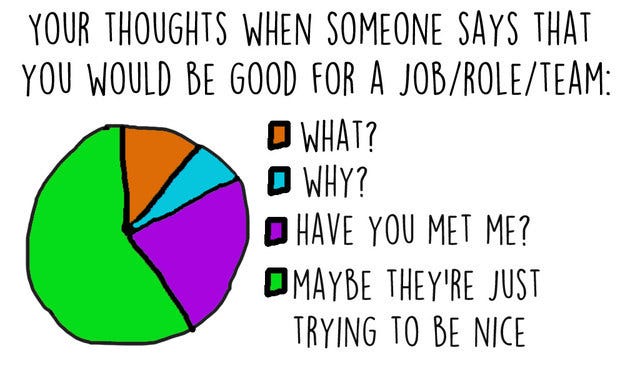
In the end, I would like to conclude that, you are where you are because you have succeeded in various areas of your life and you are not an “IMPOSTOR”. You are better than you think. You are smarter than you think. You are worthy. You are amazing and you deserved every bit of it. Just be grateful.