
Imposter Syndrome 101
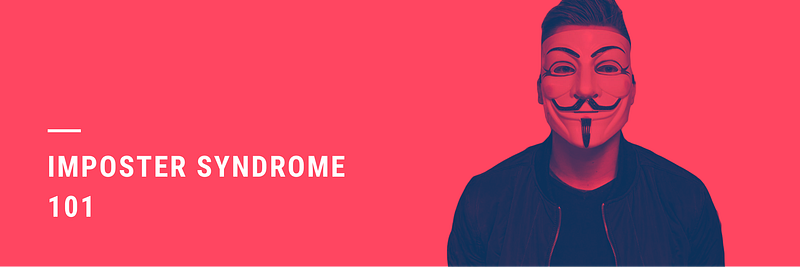
The term was coined in 1978 by two psychologists from Georgia State University while studying high achieving women who, despite their outstanding academic and professional accomplishments, still consider themselves to be "impostors".
If you’re a designer and you had to present some concept you had been working for a client, you probably felt that excruciating feeling before the meeting in which you are sure that you be discovered as a phony and that you’ll be humiliated in front of everybody.
I did. Multiple times and I keep feeling it.
I'm not sure if I have the imposter syndrome because I don't consider myself a high-achiever but I definitely feel like I'm a fraud sometimes and I think that it exerts a bad influence on how I make my decisions. Ultimately I've been catching myself doing things such as:
- Not sharing my work with the fear of being discovered;
- Not expressing my truly ideas and opinions with the fear I don't have the credentials;
- Giving up little by little some of my earliest dreams because I felt I was not capable;
- Not leading initiatives with the fear of rejection.
So a little time ago I decided to search the internet for help and for my surprise a lot of people I admire have said they have experienced imposter feelings. And some of them even say they still feel it, even today.
Knowing that many talented people do feel insecure has helped a lot. I would love to share some of their thoughts on the subject with you right now. I also highly recommend you to read their original posts!
Julie Zhuo, Product Design VP at Facebook
Negotiations and confrontations are hard for me because I care so much about being likeable. I believe I am where I am because of luck — for instance, winning that science fair project even though I know in my heart of hearts my work was kind of bullshit.
Source: The Imposter Syndrome
Erika Hall, Co-Founder of Mule Design
When it comes to selling your skills and getting a job, remember that everyone has their own basket of self-doubt snakes slithering around inside. And the most talented people often have the biggest and slitheriest. Everyone’s career is a mix of merit and luck. When you acknowledge this, you can get past the doubt, and past the ego, and focus on what you want to accomplish.
Source: We’re All Imposters (so be a good one!)
Cap Watkins, VP of Design at BuzzFeed
In my experience, the folks who find a way to embrace that feeling are the ones who deliver the most value. Imposter syndrome makes people more conscientious of their choices, lowers egos and makes them more open to other points of view.
Source: Stop Worrying and Love your Imposter Syndrome
Dealing with it
Being aware of when you engage in feelings of imposter and reading stories you can relate to are great ways of coping with it. But I was eager to try something more "real" let's say.
So one day driving home from work, me and my good friends Greg Milani and Lucas Lazaro decided to create a bet. It consists of publishing a post per week. Whoever doesn't accomplish it, would have to pay $50 to the other two. Yeah, I know, not a very adult behaviour — haha but it has worked somehow and this very text you guys are reading is my second one!!
We are trying to force ourselves to simply ignore our inner demons and to get ourselves out there. We are trying to just do things and not wait for the perfect time and condition. We are trying to do real things and to face real reactions — good and bad — and learn from them, instead of already assume that the thoughts presuming how inadequate we are, have indeed some accuracy.
It's been very fun to do that so far, especially to feel a little more empowered and satisfied for having done something real about it. It's very hard to overcome self-doubt thoughts and insecurities but I'm very happy to give myself a try.
And then you realize the worst thing that can happen is people telling you are an imposter, which you've always thought being the truth. So, in the end, either you confirm your suspicion or you realize you're not that bad.
Both ways, you learn! :)
Thanks for reading! If you enjoyed it, hit that 💚 below. Would mean a lot to me and it will earn you credits when you face the Last Judgement.
PS: Special thanks for Greg, Lucas and Edmar for helping me to review the draft.


