
Important Perspective on Direct Benefits of Eating Right
This is What Happens When Vegetables Are Important
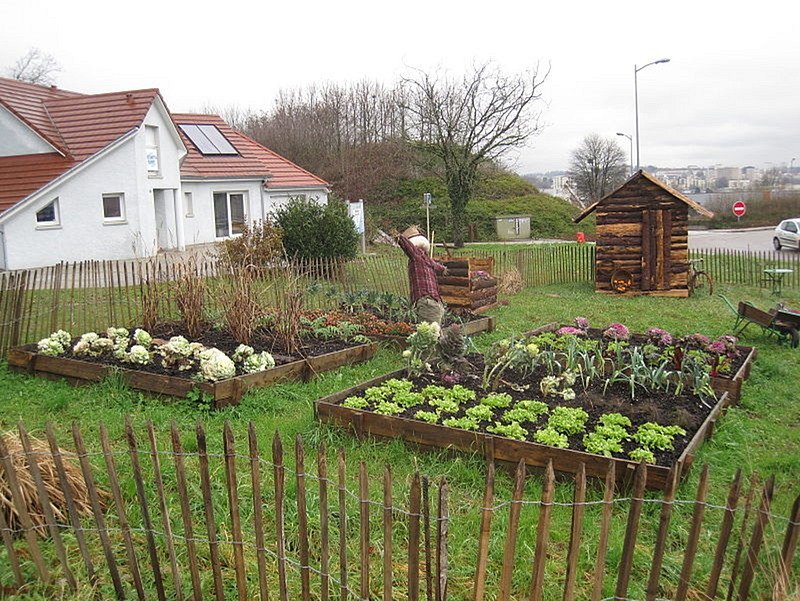
Dear Reader,
Writers on Reciprocal have been provided with a writing prompt by our dear Dr. Preeti Singh. She wrote an article, and it is worth your time to read it. I did and I loved it. Hope you will as well. Her article is titled: Vegetables Bring Joy to Life.
The prompt she provided was the same as the title of her article. She says writers who want to use this prompt can write about their likes and dislikes of vegetables. Or they can tell how they grow a vegetable at home or write anything relating to a vegetable. So, I have decided to give it a go. I am hoping you will enjoy the read.
Introduction
I can remember as a kid gardening with my family while living in Ohio, Colorado, Virginia, and Minnesota. Our family consisted of Mom and Dad, me, and my three siblings. I have an older sister, a younger sister, and a younger brother. We had a great upbringing and were taught respect and responsibility.
One of the ways that I was taught this was through various chores that needed to be completed. One of those chores was planting a garden with the entire family participating. We grew a plethora of different vegetables. We grew beets, sweet corn, potatoes, squash, cabbage, carrots, tomatoes, green beans, pumpkins, and radishes. Produce from our gardens was incredible!
Family Gardening Experience
Mom and Dad would choose where the garden would be located. They also decided what to grow in the garden. They did a great job of that by making sure that the vegetables they chose were ready to be picked at different times.
This allowed us to have fresh produce all summer long. Of course, the weather was a big consideration, we needed to plant seeds for vegetables that would not wither and die when it got too hot or dry.
One of the first things we needed to do was to prepare the soil. We did this by tilling the ground so that the vegetables could grow. We had a rototiller that was used for the heavy lifting of the soil, we also had shovels, hoes, and rakes to prepare the ground even more than we were able to do with a rototiller. It was a lot of work to get this done and that is why the entire family made up the work party.
Once the ground was prepared, we then planted the seed. This is something that takes precision so that the plants have plenty of space to grow once they have germinated and poked their heads up out of the soil.
We did not just go throw seeds around just anywhere. We were meticulous with the placement of the seeds because we knew how important that was going to be when the vegetables were ready to pick. This was one of the most important steps.
We also fertilized the garden so that the plants were boosted well during their season of growth. When finished we had neat rows of vegetable seeds planted and the rows were marked by placing the empty seed packet over a stick at the end of each row.
We also left room between the rows so that when we wanted to pick ripe vegetables, we could get to them. This also helped with the task of weeding around the plants.
We kept pest and disease spray on hand to combat bugs or diseases that the plants could be affected by. Most of the time it was not needed.
At first, the seeds started to show by just peeking their heads up past the soil. It was at this time that weeds also began to grow. We did not want our plants to have to compete with a weed bed to produce the best vegetables, so some additional work had to be done. We picked weeds around each of the plants and attempted to keep our garden as weed free as possible.
We also watered the garden several times each week, esp. important when the weather was hot and dry. It was amazing to watch the garden grow, and the taste of the vegetables was second to none. I believe our family was healthy because of the vegetables that we grew in our garden.
Several weeks after planting, the seeds germinated and grew into the plants that we used to feed our family.
I cannot remember a single year when I was growing up when we did not have a fresh vegetable garden. Mom and Dad to this day still have a garden that they tend. They are in their 80s now so that is a testament to their thoughts on whether to keep a garden. I know we sure enjoyed the fresh vegetables that were grown.

Alaska Gardening

When I joined the military, I missed gardening fresh vegetables. Several years later in life, I got married and my wife and I and our three children had a garden behind our home where we lived in Alaska. We spent 7 years there and loved having the fresh vegetables from our garden.
Alaska has a shorter growing season than many other places so the vegetables that could be grown there were not as varied as we would have liked. That said, the size of the vegetables that grew would blow your mind.
Alaska has its state fair in Palmer, Alaska at the end of August and the first part of September each year. This is an area in Southcentral Alaska about 35 miles north of Anchorage.
It is known for world record-sized cabbages and other vegetables that are displayed each year. In 2010, the giant vegetables that were exhibited included a 46-foot, 8-inch gourd vine, 39-inch bean, 83-inch gourd, and 1,101-pound pumpkin.
The beauty of this valley where the fair is held is something to behold, the vegetables grown are tremendous despite the shorter growing season. The valleys are shaped by three mountain ranges: The Alaska Range, the Talkeetna Mountains, and the Chugach Mountains. Glaciers carved the valleys and left thousands of lakes.
Types of Vegetable Gardens
What most people may not realize is that there are many different types of vegetable gardens. The types are dependent upon at least three variables. The first is the acreage cultivated for space to use for gardening. Second, the method of cultivation must be considered. The third variable is the purpose of vegetable production.
Kitchen Garden
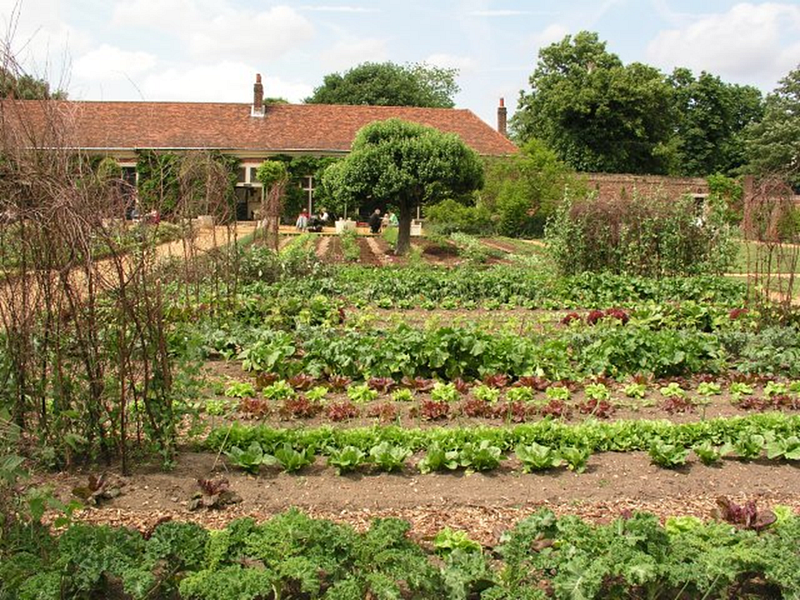
The kitchen garden is defined as the growing of vegetable crops in residential houses or the vicinity to meet the vegetable requirements of the family throughout the year.
Commercial growers sometimes produce crops that may seem insect and disease free by using pesticides that may lead to serious health hazards. Raising your kitchen garden to produce healthy and residue-free vegetables has got an added advantage.
The most fundamental determinant of the success of a kitchen garden is its location. A good place to locate the garden is in the backyard of the house. Second, it should be near the water source. Third, it should receive sunlight for most of the day.
Living in cities, the size, shape, and location may already be pre-determined. Under such situations, whatever space is available has to be utilized. If the garden is located outside the house a fence all around will be helpful in the protection of the garden from critters.
Some other considerations for the kitchen garden include:
The rectangular shape is preferred to the square one.
The layout should allow access to all parts of the garden.
Quick-growing fruit trees like papaya, kagzi-lime, and others should be located on the north side of the garden so that they do not shade other crops.
Climbers, like cucumbers and peas, can be trained on the fence.
Several sowings or succession of sowings of one crop, for example, fenugreek, radish, okra, cauliflower, etc., at short intervals, should be done to ensure a steady supply of vegetables for a longer period.
Ridges that separate the beds should be utilized for growing root vegetables like radishes, and turnips.
The inter-space of slow-growing crops such as cauliflower, cabbage, and eggplant should be used for quick-growing crops like turnip, radish, and leaf beet.
The selection of crops for a kitchen garden depends on two factors (1) the size of the garden and (2) the choice of the family.
Remember to check the growth zone where you want to raise your garden and then grow vegetables suitable to the growing region to ensure a good yield.
The cultivars should be selected according to their suitability for the region and season. Preference should be given to those crops where freshness is important from the edibility and food value point of view. Crops like tomato, chili, beans, peas, salad crops, and leafy vegetables are good choices to consider.
Market Gardens
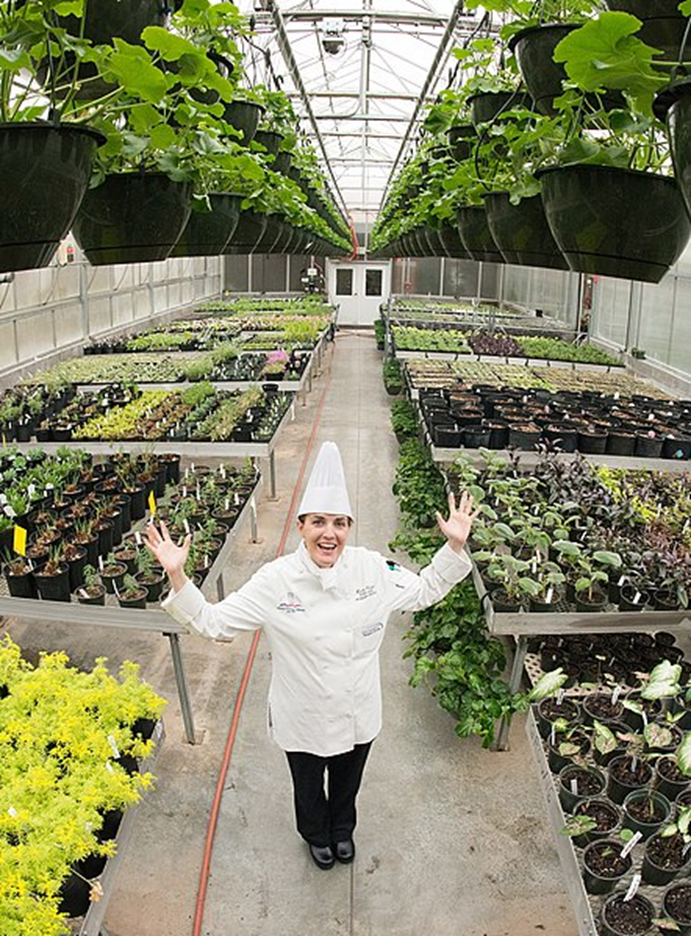
Farms that supply vegetables to consumers in the local market are called market gardens. People living in cities may not have the space for a garden or the time to devote to taking care of it.
Vegetable production used in market gardens must be sent to nearby markets as soon as possible. A nearby market with reliable transportation is very important. Because of the expansion of cities, the market garden could be located 6–8 miles from the city.
Farmers adopt intensive cultivation to earn maximum profit from small to medium garden plots. The soil must be fertile, and when used for gardening the fertility needs to be replenished with the application of organic manure.
Municipal compost and sewer water are also important sources of restoring soil fertility. To fetch the best price in the market, farmers adopt the cultivation of off-season vegetables. However, the grower needs to be well-trained to succeed in this specialized type of farming.
The grower also needs to develop good marketing skills as no middleman is involved in the disposal of the produce. Decomposition of the green matter and the compost added to replenish depleting soil fertility changes the soil reaction to acidity. It is therefore important to get the soil tested from time to time. Application of lime is desirable if the soil pH turns acidic.
Truck Garden
This is an extensive type of gardening where one or two crops are grown in large quantities to feed distant markets that could be located hundreds of miles away from the growing area. This involves middlemen in marketing the vegetables.
Because of large-scale production, farming is mechanized. Perishable vegetables must have special attributes to withstand distant transportation.
Garden For Vegetable Forcing
Forcing involves growing vegetables outside of their normal growing season. It was developed to supply farm fresh vegetables to consumers for most of the year. In developed countries like the USA, Japan, Canada, and parts of Europe, glass house structures are constructed for vegetable forcing. In a glass house, temperature, light, carbon dioxide, and relative humidity are controlled.
The cultivation of vegetables under these protected conditions ensures better quality, uniformity, and extended availability.
Some cheap but efficient polythene structures have been designed to produce summer vegetables in the winter months. During extreme summer, desert coolers and sprinklers are installed to reduce the temperature.
Vegetable forcing can also be adopted without any provision or structure when specific production techniques or varieties of certain vegetables bred for growing in the off-season are available.
Vegetable Garden for Processing
This is vegetable gardening or farming that produces vegetables to supply the processing industry. Vegetables produced are processed for canning, freezing, and dehydration. This is different from fresh market vegetable production. The vegetables meant for processing are grown in fields under naturally occurring conditions.
A significant quantity of vegetables meant for fresh market consumption esp. tomatoes, bell pepper, cucumber, and lettuce are grown in greenhouses where the environmental conditions are artificial and manipulated. For processing, one or two varieties or one or two crops are grown on a large scale to produce in bulk.
The varieties are selected so that there is a continuous supply of raw material to feed the processing units for a longer period. There are specific varieties for processing purposes. There are different varieties for different processing methods like canning, freezing, paste, powder, and juice.
Vegetable Garden for Seed Production
This type of farming is adopted in large areas to produce vegetable seeds. Locations prone to rain at the time of crop and seed maturity are avoided for seed production. Areas infested with diseases, esp. seed-borne ones, are also excluded from seed production.
To maintain genetic purity, the field for seed production should be free from volunteer plants. Beehive boxes are often placed inside the seed production blocks to enhance pollination and seed yield.
Insecticides are sprayed during morning and evening hours when bees are inactive.
Vegetable Garden for Export
Many vegetables are imported and exported from one country to another. These include onion, potato, okra, baby corn, tomato, pickling cucumber, chili, French bean, bitter gourd, and bottle gourd.
Among fresh vegetables, are okra, cucumber, processed vegetables, dehydrated onion, garlic, and processed cucumber and gherkin. The Agricultural and Processed Food Products Export Development Authority (APEDA) has identified asparagus, celery, sweet pepper, sweet corn, pea, and cherry tomato among nontraditional vegetables for export.
For export, the product should be true-to-type as per the declared variety and standards, uniform in shape, size, and color, and free from chemical residues. Vegetables should be graded and packed in good-quality boxes of appropriate sizes.
Health Benefits of Eating Vegetables
Vegetables are one of the best foods to eat for helping to ward off inflammation. Potassium-rich foods help reduce blood pressure and fiber helps your heart.
Fiber intake from high-fiber foods such as grains, fruits, legumes, nuts, and vegetables are great for your heart and gut, they keep you full and reduce the risk of developing diabetes.
Basil, corn, red peppers, spinach, and broccoli offer eye-protecting carotenoids. Tomatoes help protect your skin from sunburn. Kale and avocados help keep your skin more elastic. Cucumbers and celery have high water content and help you meet hydration goals.
Heart disease is the leading killer of men and women in the United States. Vegetables provide potassium and fiber, helping to keep your heart healthy and helping keep your weight in a healthy range.
Vegetables are low in calories and high in fiber and nutrients, they help fill you up and minimize blood sugar spikes during meals. Vegetables are full of cancer-fighting nutrients and antioxidants that reduce the risk of cancer.
Vegetables, esp. leafy greens keep your brain sharp. They are part of the MIND Diet, designed by researchers to reduce the risk of Alzheimer’s disease and dementia.
Antioxidants and folate provided by vegetables are key nutrients for your brain. Vegetables have Vitamin C as a key ingredient. They help keep your immune system strong.
If you liked this article, please clap for it, mark yourself as a follower of mine and join me on my journey in writing as I contribute to various publications on medium.com.
The more time people spend reading my articles, the more it encourages me to continue writing. Many thanks for taking the time to read what I have written. Get access to unlimited articles here on Medium!
Your small membership fee supports Terry Day and other writers you read. You’ll also get full access to every story on Medium. What a bargain!
Where else can you read articles written by artistic and creative authors on so many different topics for $5 a month?
If you are not yet a medium member, please consider membership ($5 is a steal), and please mark yourself as one of my followers. My account on Medium is @tday597706. Many thanks in advance for your support!
Please join my email list, this allows you to be notified as soon as I post something new. My success in writing is dependent on readers like you who appreciate and support my writing. Thanks so much for taking the time to read and support me.
I would like to thank Dr. Pretti Singh for this writing prompt. It allowed me to be productive despite not feeling it.
Shoutout to William J. Spirdione and his article Flowers Speak in Colors, Shapes, and Fragrance. This is a very good read, and the pictures of the flowers are outstanding! https://readmedium.com/flowers-speak-in-colors-shapes-and-fragrance-3f18d84168f5
Shoutout to Monoreena Acharjee Mahumdar for her article titled And She Dies to Bloom and Blooms to Die. I was mesmerized by the beauty of the words of the article and the pictures of various flowers that she shared. https://readmedium.com/and-she-dies-to-bloom-and-blooms-to-die-c9d905cace50


.jpg)