
Mythology
Immortality Could Soon Be a Reality (Part 1)
For Sumerians, immortality was not a choice. It was a fact.
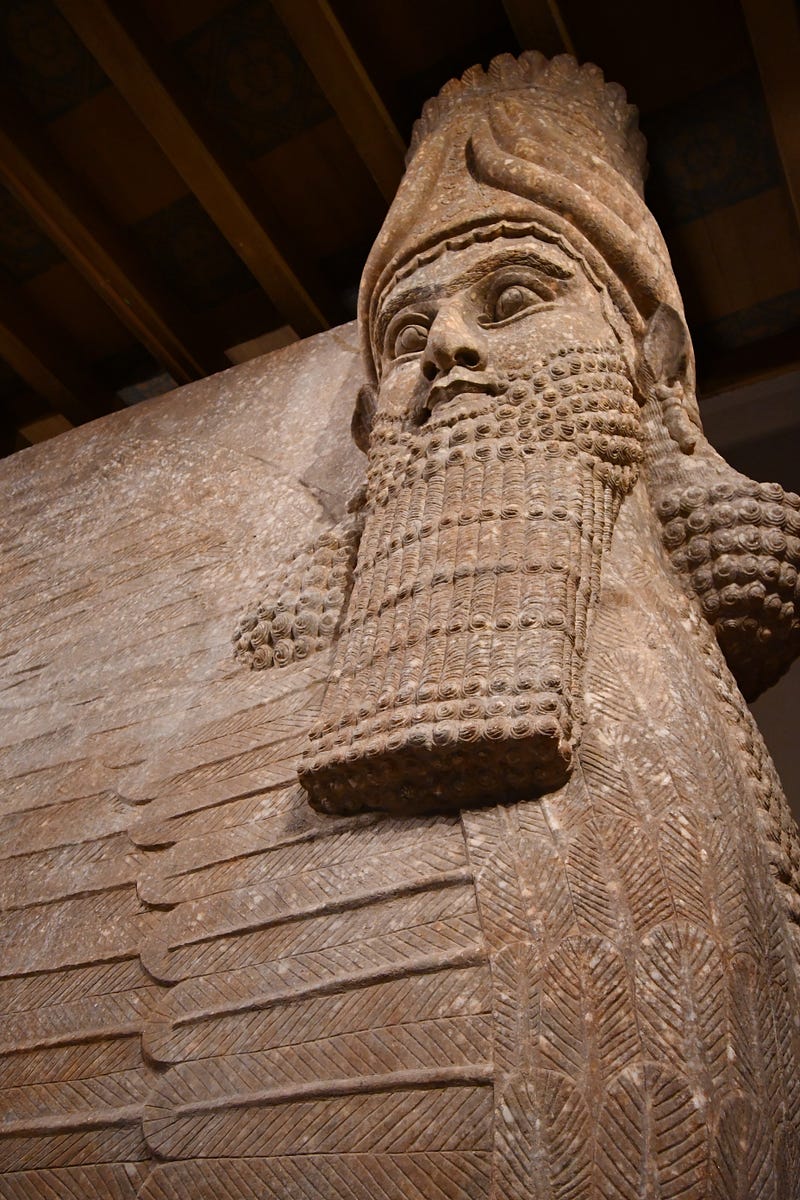
Death will soon be a sickness for those who cannot prevent it. Modern medicine and advanced genetics will soon open the path to biological immortality. Yet, this is only half of the problem because you will have to be doing one thing to enjoy immortality.
Let`s first see how immortality was perceived throughout history.
Sumerian mythology has some elements which are similar to those of the Heavenly Religions. One of them is the Garden of Eden and the creation of the first man, Adapa. He was created as an aid to gods and was therefore called, Lulu Amelu — the working man.
You did not hear me wrong. Even before the Old Testament, Sumerians had a very detailed version of the Garden of Eden and the first man, Adam.
The Sumerian gods had created Adapa in their own image with only one exception. They did not grant him immortality because some of the gods in Anu (known as Zeus in Greek mythology) and other gods were afraid that men would reproduce and grow into millions, develop new capabilities and skills, and one day become like them.
The Sumerian gods ruled for thousands of years according to the myths.
They were called by the historians the pre-diluvial kings or kings before the 26th century BC. However, the historians think that these long periods of time are nothing but a mistranslation of the texts or exaggeration of the writers of the texts due to their love for their gods. The reigns of these kings were measured in units of “sar” (1 sar covers a period of 3600 years) and “ner” (a ner covers a period of 600 years).
“After the kingdom descended from heaven, the Kingdom was in Eridu. In Eridu, Alulim became king; he ruled for 28800 years.”
- Alulim in Eridu: 8 sar (28800 years)
- Alalgar in Eridu: 10 sar (36000 years)
- En-Men-Lu-Ana in Bad-Tibira: 12 sar (43200 years)
- En-Men-Ana (?)
- En-Men-Gal-Ana in Bad-Tibira: 8 sar (28800 years)
- Tammuz (Dumuzi, the shepherd) in Bad-Tibira : 10 sar (36000 years)
- En-Sipad-Zid-Ana in Larag: 8 sar (28800 years)
- En-Men-Dur-Ana in Zimbir: 5 sar and 5 ner (21000 years)
- Ubara-Tutu in Shuruppak: 5 sar and 1 ner (18600 years)
- Then lived Utnapishtim (Noah in the Old Testament)
They ruled for more than 200 thousand years in total. Then the great flood swept over and Utnapishtim (Noah in the Heavenly Religions and Ziusudra or Atrahasis in post-Sumerian mid-eastern texts), who is the father of Utnapishtim in the Epic of Gilgamesh, built a ship and saved the humankind from perishing, following the orders and guidance of Enki, the son of Anu who created the first man, Adapa.
For Sumerians, immortality was given. It was a matter of granting this right to their newly created human aids or not. Moreover, as Adapa`s generation reproduced and grew into big populations, the Sumerian gods liked the daughters of the first men and married them later on, giving birth to a generation that was half-man and half-god. This is very well explained in the Book of Enoch.
The Book of Enoch is an ancient Hebrew apocalyptic religious text, ascribed by tradition to Enoch, the great-grandfather of Noah.[1][2] Enoch contains unique material on the origins of demons and Nephilim, why some angels fell from heaven, an explanation of why the Genesis flood was morally necessary, and prophetic exposition of the thousand-year reign of the Messiah.
This half-man and half-god generation ruled the Sumerian world and each king lived for thousands of years interestingly. It is not sure if the first 10 Sumerian kings were the Sumerian Gods (Annunaki) or not. Some scholars state that each king was paired with a half-man-half-god descendants of Adapa.
Let`s look at the Old Testament now.
Please note that the Babylonian Exile in 585 B.C.E. ended 50 years later according to the historians or 70 years later according to the Bible experts. But, the Babylonian myths were integrated later into the Old Testament by Ezra soon after he returned to Jerusalem from the Babylonian Exile.
Adapa or Adam`s bloodline also lived much longer than the modern-day people but their life span was insignificant compared to the first Sumerian gods. They lived less than a thousand years. The New Testament gives a detailed list of how long Noah`s bloodline lived after the Great Flood.
- Adam lived for 930 according to Genesis 5:5
- Seth lived for 912 according to Genesis 5:8
- Enosh lived for 905 according to Genesis 5:11
- Cainan (Kenan) lived for 910 according to Genesis 5:14
- Mahalalel lived for 895 according to Genesis 5:17
- Jared lived for 962 according to Genesis 5:20
- Enoch lived for365 (translated) Genesis 5:23
- Methuselah lived for 969 years according to Genesis 5:27
- Lamech lived for 777 years according to Genesis 5:31
- Noah lived for 950 years according to Genesis 9:29
However, after the great flood, the life span of Noah`s blood declines.
- Shem lived for 600 years according to Genesis 11:10–11
- Arphaxad lived for 438 years according to Genesis 11:12–13
- Shelah lived for 433 years according to Genesis 11:14–15
- Eber lived for 464 years according to Genesis 11:16–17
- Peleg lived for 239 years according to Genesis 11:18–19
- Reu lived for 239 years according to Genesis 11:20–21
- Serug lived for 230 years according to Genesis 11:22–23
- Nahor lived for 148 years according to Genesis 11:24–25
- Terah lived for 205 years according to Genesis 11:32
- Abraham lived for 175 years according to Genesis 25:7
Since Abraham and later Moses, we have been living much shorter than our ancestors. The ancient world was full of wars and fights for power and reign and it was not that easy to find and store food. Therefore, our ancestors were lucky if they could live 30 or even 40 years.
Regardless of how true Sumerian mythology is, modern-day humans are not immortals and we cannot escape death. Our developing science has managed to prolong our life span from an average of 40–50 years to 80ish years over the past century and we expect to prolong it even further to 120 years. This 120-year-long life target is coming from another preassumption because Moses is said to die around that age. However, modern scientists started promising a life longer than 200 years if we can discover and unlock the secrets of our DNAs.
The sky is the limit for science as long as we continue to learn the mysteries and secrets of nature and invent technologies to mimic natural phenomena. The miracles of the past are now nothing but a simple technology in use to serve humankind. Look at our children. They cannot imagine what a black and white screen is like. They cannot imagine a life without electricity and the internet.
Science will surely open the path to a longer life span and perhaps to immortality. Yet, in order to seize such great powers, we have to first know ourselves and become genuine humans because being born as a human does not make us genuine humans. A genuine human is one that lives with wisdom and full self-awareness.
With love,
Kenan
Subscribe to my newsletter to start or accelerate your journey of self-transformation.