
Imagining a Post-Disclosure World
How #Disclosure and Open Contact Can Transform Our World
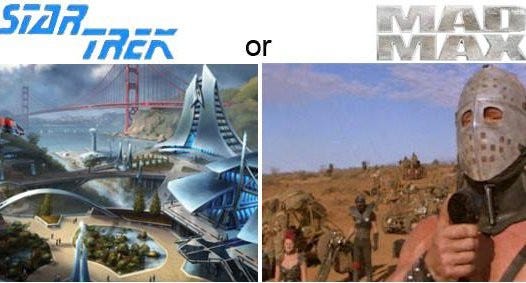
As a futurist, I think a lot about the Post-Disclosure world. There are already technologies and systems emerging around the globe that presage some exiting possibilities for a cleaner, prosperous, more elegant world. And how exciting the possibilities are when we consider what our galactic neighbors might be willing to share with us. Could advanced civilizations help us advance ourselves?
Since I posit that we are living in a designed, socially engineered, deliberately fragmented and divisive dystopia, how can we change the narratives to change our world?
Things are absolutely horrendous on our world. Why aren’t we thinking about how advanced extraterrestrial or extradimensional life might help us? Instead we worry about the implications of contact. We tend to be defeatist based on our own experiences with expansionism and imperialism. What if ET turns out to be like us? What if all sentient life is just like us and prone to war, violence, strife, and discord? What if their agenda includes exploiting and destroying us?
But what if that is not their agenda at all? What if they, like us, have spiritual and humanitarian motivations? What if they can’t stand watching our immature civilization make all of the wrong choices? In the following article I address the contactee/experiencer phenomenon and ponder the messages our direct ET contact seems to be yielding:
Once Disclosure occurs, suppressed and novel (due to open contact) technologies will also be available. But what kind of technological innovation and changes to our planet can we expect?
- Sustainable and clean energies — rejecting fossil fuels for solar, wind, and other renewables. Free or zero-point energy that will change so much on our world, as well as allowing inter-planetary travel.
- Regenerative and augmented medical technologies. Living a pain-free, healthy life is a human right by galactic standards, but it tends to be a source of our greatest pain in life. The human life span will be extended and the quality of life will be increased for everyone
- Unique approaches to urban planning and transportation —more public transportation and personal transport devices, solar-powered bike paths, new personal transportation devices, energy-efficient and clean public transportation like mag-lev technologies.
- Better waste discouragement and management technologies — cheaper and ubiquitous use of compostable ‘plastics’, clean-up tech for oceans, waterways, and the land.
- Urban and hydroponic farming — eliminates pests and plant disease, supporting organic farming, also reduces transportation costs for food.
- Robotics and automation — taking over the world’s least appealing and most dangerous work, while making room for more entrepreneurial, creative and satisfying work.
- Computer and network technologies — using the power of light and electricity to further transform our world into an inter-connected society that contributes to the wisdom of crowds.
- New paradigms for economics and enterprise — new organizational structures that build on principles of cooperation and shared value and profit.
- The knowledge and creative economies — inspiring new forms of work and value-adding in a creation-rich cultural environment.
I sometimes think we might get to this brighter green and more abundant future on our own, but unfortunately this is not the path we are on. Uber-capitalism prioritizes short-term profits and exploitation of planet, people, animals, and resources. We fail to take a sustainable long view because that does not contribute to our current system of economics. Even worse, our system does not adequately hold those accountable who choose destruction over creation and consider investments in people and infrastructure to be undesirable overhead. We might get to where we need to be on our own, but it would require profound changes that existing business and government interests are not wired for. So how could our knowledge of how advanced civilizations work change our own path?
Could Disclosure be the key to getting us to finally make the right decisions about how our world needs to be architected and run? Our Galactic neighbors come from a number of advanced civilizations. How might they encourage us to change, and how might they work with us to ensure that change? Well, that is the question I have been asking. What we need is to fire up our imaginations. Are Utopias or near-Uptopias possible? If so, what does that look like? Can we challenge our most basic and deeply-held assumptions in time?
Since a humanitarian intervention is underway, the Galactics approach this effort in much the same way an aid organization might. They are cultivating relationships on the ground and plan to provide mentorship, guidance and resources to allow us to advance beyond the seemingly intractable problems we struggle with. Based on thousands of channeled messages and my own contact, I have a good sense for how they are planning to approach our planetary upgrade. See the ET Manifesto for more information:
In priority order:
- Attending to the humanitarian and planetary disaster. This means upgrading the quality of life of the extremely poor and the displaced, initially, but will also include dealing with a number of health epidemics like cancer, diseases of civilization like obesity and heart disease, and other preventable diseases. They will also be helping with injuries, using a variety of technologies they are already sharing with us.
- An immediate stop to all wars, conflicts, and hostilities. Part of the intervention effort will involve something many people will find difficult: that we are subject to cosmic laws and cosmic mandates like our own Geneva Conventions, which protect civilians in time of war, prevent the use of ‘dirty’ weapons of war, prohibit torture, and other rules of war. Getting that buy-in is already well underway. The Galactics are using more of a carrot approach, meaning governments and factions will be encouraged to cease hostilities, but they will also work with our security forces to ensure humanitarian casualties cease and nations stop continuous militarization.
- Planetary clean-up and climate change interventions — land, cities, oceans, waterways, and ecosystems. The damage we have done to our planet in the last couple of centuries is leading to a toxic environment that the Galactics feel strongly must be cleaned up. Part of this clean up means migrating the world off fossil fuels and fuels that require fracking or devastating mining practices.
- Increasing quality of life for animal species on the planet. Restoring critical habitats and ecosystems. Protecting endangered species. Building sanctuaries for abused animals. Stopping animal testing. Decreasing nutritional dependence on meat and dairy — helping to create cruelty-free options grown from stem cells.
- Upgrading the standard of life for all — a switch from scarcity economics to abundance-based systems will take some time, but they are on the Galactics’ agenda. A return to ‘sacred economics’ will be an impotant philosophical shift:
Please share!
About the author: Dr. Lisa Galarneau is a socio-cultural anthropologist, futurist, #Disclosure activist, and ET contact advocate.
More Reading:


