CREATIVE ADVENTURES — 45
Imagine You Could Move At The Speed Of Light
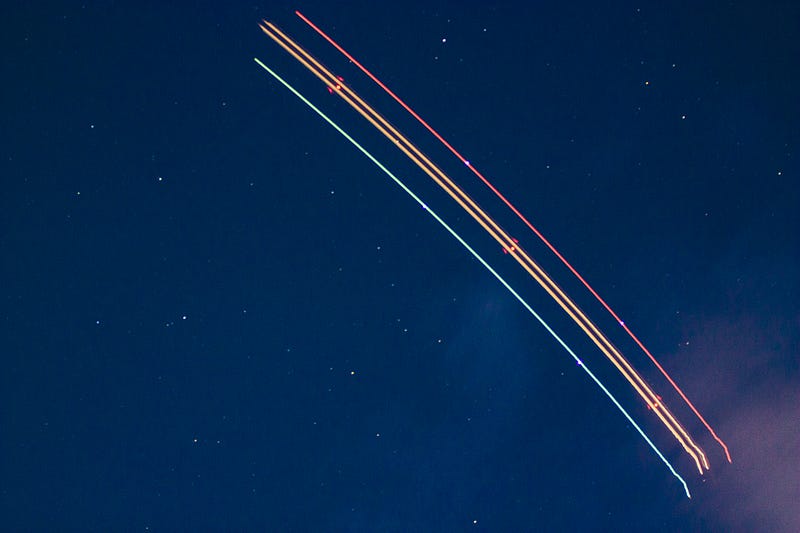
In this thought experiment, you will imagine that you can move at the speed of light. We know that this is not possible, but let’s just imagine, what if.
Please respond to the following questions:
- Where would you like to go? Identify 7 destinations in the solar system (or beyond) you would like to explore. Here are some possible destinations to choose from: Mercury, Venus, Mars, Saturn’s rings, Saturn’s moons (Titan, Enceladus, Mimas, Tethys, Rhea, Dione, Iapetus, etc.), Galilean moons (Castillo, Europa, Io, and Ganymede), Uranus, Pluto, or the Oort Cloud.
- Choose one of these locations and then create a science fiction story where you will be immersed in a new adventure.
- The speed of light in a vacuum is nearly 300,000km per second. At the speed of light, it would take just 8 minutes and 20 seconds to travel from the Earth to the Sun (150m km). However, as objects travel faster and faster, they get heavier and heavier. It is impossible to reach the speed of light even if you apply ever-larger amounts of additional energy. As the object gets heavier, it is harder to accelerate it. Imagine that you are traveling at the speed of light (even though we know this is impossible). How do you feel? Is time frozen for you? How do you experience time dilation — does your clock stop? Do things get weird? How do you experience such singularity? Write a science fiction story describing what happens and how you feel.
- Imagine that you cannot slow down once you accelerated and reached the speed of light. It is impossible for you to stop or slow down. You are headed to an unknown part of the galaxy. What happens next? Write a science fiction story.
- Imagine you are in a spaceship traveling at the speed of light (or close to it). The closest star systems to the sun are more than four light-years away, which means you will need to travel for more than four years to explore any other star system. Which star system would you like to explore? What do you hope to find out there?
- Imagine that you are on your way to Sirius A, which is more than 8.6 light-years away from the sun. You are tasked with exploring this star system and its planets, and whether any form of life exists there. What happens next? Write down a science fiction story.
- Using a wormhole, you will now travel to another galaxy that is far, far away. Where do you go? What happens? Write a science fiction story featuring this adventure.
- Create your own questions and imagination experiments using this theme and its variations.


