CREATIVE ADVENTURES — 18
Imagine You Are Falling Into A Black Hole
Are You Doomed? What Happens Next?
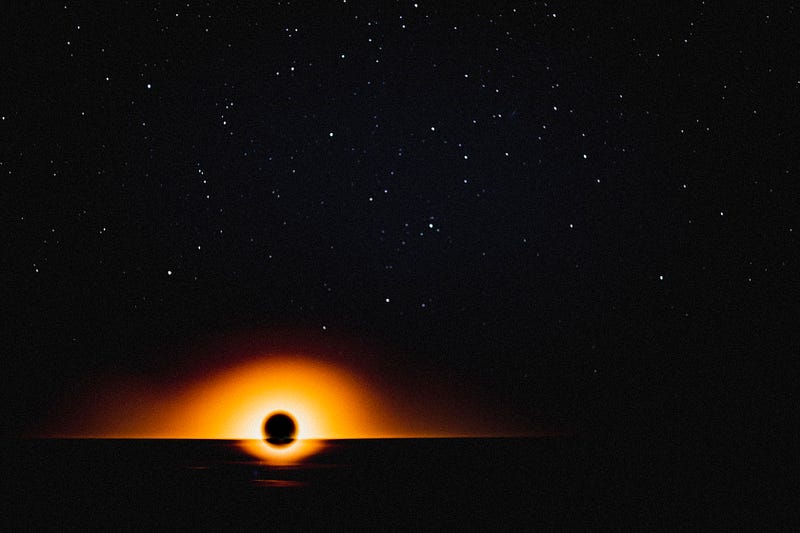
Imagine that the year is 4000. Using the cutting-edge technologies of the day, you have traveled thousands of light-years across the Milkyway. You have witnessed wormholes, the birth of stars, eccentric solar systems, weird planets, supernovas, and the deaths of stars. You decide it is now time to explore what is inside a black hole (a terrible decision). This is your most dangerous mission up until now.
A black hole is a region of spacetime where gravity is so strong that nothing can escape from it, not even light. It is called black because it absorbs all the light that hits it, reflecting nothing. Around a black hole, there is a position of no return, called the event horizon.
In line with Einstein’s relativity theory, a black hole infinitely bends and curves spacetime — the fabric of the universe. This infinite curving leads to singularity.
Eight Imagination Experiments Featuring Black Holes
In this blog, I present you with eight different creativity exercises and imagination experiments, each of which is inspired by black holes.
Please respond to the following questions. Remember that these exercises are not about the realities of physics. Your goal is to exercise your creativity and expand your imagination.
1.Imagine you are orbiting a supermassive black hole at a safe distance. You feel the massive pull of gravity, but there is no light, heat, or warmth of a star. Everything has already started to get weird. Time is distorted and you feel as if something has gone terribly wrong. You feel extremely uncomfortable. You know that you have very limited time before your last exit. Write a story where you are able to safely escape the black hole before you reach the event horizon. What happens next? How do you escape? How do you cope when you come back to Earth? Write about the effects of this singular experience on your body, your life, and your perspective.
2. Imagine that you have missed the last chance for escape — you are now on the event horizon (which is the point of no return). You will have no chance to share your experiences and communicate with anyone in the universe, so now is your chance to imagine and write about this horrific experience. Imagine that your feet are closer to the black hole, so the gravitational pull on your feet is much stronger. As you float towards the center of the black hole, you will be distorted and stretched into a long and thin noodle, which is labeled as ‘spaghettification’. Write down a horror story describing your experiences. What happens next?
3. Continuing on the exercise above, write a poem that describes your last moments as an alive person. You might reflect on themes such as mortality, vulnerability, nihilism, sorrow, hope, hopelessness, destruction, death, and eternity.
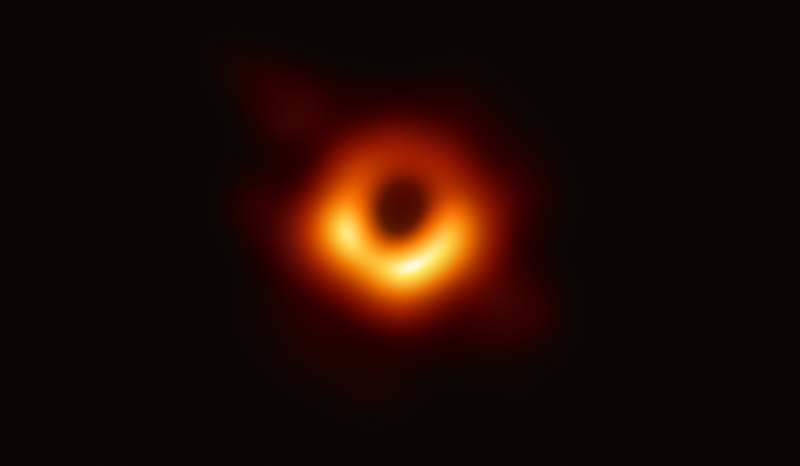
4. Some black holes are billions of times larger than our sun. Imagine you are approaching such a supermassive black hole, which means you will survive longer compared to a small black hole. You are traveling at a great speed, which accelerates even more. At the same time, the passage of time slows down for you. You are now lost inside the black hole. Do not fight it — all efforts are futile. A single point — the singularity — lies in all your possible futures now. It is as if you are landing on the surface of an endless, featureless, empty black planet. The singularity engulfs you like a cold blanket. Normally, what happens within the event horizon stays within the event horizon. However, let’s imagine that the information about you (and your experience) is stored and sent just outside the event horizon. Write a letter to the universe describing your experiences. What would be your last messages?
5. One of the best movies ever made featuring a black hole is Interstellar. In this movie, our heroes pass through a wormhole and land on Dr. Miller’s ocean planet. This alien planet orbits Gargantua — a supermassive black hole in a foreign galaxy. The larger the black hole, the more spacetime is warped and twisted. Due to Gargantua’s massive gravitational pull, every hour on this planet means seven years on Earth. A massive tidal wave hits the spacecraft of our team, leading to a delayed exit. This 3.3-hour delay is very costly for our heroes since 23 years have passed on Earth. Now, it is your turn to create your own story. Write a space opera or a science fiction story that involves a trip near a black hole. As you write, try to plot some unexpected events, twists, or surprises.
6. Black holes are like endless wells — there is no other side. They are so bleak that even the laws of quantum physics break down there. However, they might not be as black and bleak as we think they are. Perhaps they are not eternal prisons, but passageways. Some quantum physicists and scientists argue that black holes might be intergalactic stargates or portals to another (parallel) universe. Science fiction series such as Doctor Who and Fringe frequently use such concepts. Some also suggested that there might be a white hole at the other end of each black hole, i.e. everything falling into the black hole would be spewed out from the white hole. Write a supernatural story where our superhero passes through a black hole and miraculously survives. Although we know that this is simply not possible, we are just speculating for the sake of sheer fun. Do not judge your ideas with your scientific or critical mind — think of it as a way to use your creative muscles for storytelling. For example, you might use an avatar or a hologram to teleport our hero (as opposed to a physical entity, or a biological/material body).
7. We humans are fascinated and terrified by black holes. Where does this obsession come from? Why do we love destruction so much? Why do we love harming ourselves? Think of how much we are vulnerable to self-pity, self-criticism, doubt, negativity, and depression. Aren’t these like psychological black holes that swallow our minds and spirits? Even if we are a star, aren’t we prone to losing all our light (hope) and energy to black holes? Why are our lives so fragile and so full of pain and sorrow? Write a letter to yourself about all the self-defeating things that you do. What are some of your negative habits and how can you replace them with positive ones? How do you stop yourself? How can you get better?
8.The black hole is defined by singularity — it is a point of infinite density in a finite space. Singularity is weird, freaky, and scary. In this exercise, you will think of another manifestation of singularity in our lives: Technological singularity. Kurzweil predicts we might experience technological singularity around 2045. When this happens, machines and robots will surpass all human intelligence. Ultra-intelligent machines will be capable of self-improvement and will design even better machines. So, the first ultra-intelligent machine will be the last invention that humans need to make. Exponential technological changes will lead to an “intelligence explosion” and world GDP will be dominated by non-human agents. The world economy will double every few weeks, leading to exponential wealth and a booming renaissance. The new artificial forms, such as androids and robots, will become the advanced species — making humans look like apes in relation to them. At that point, human-machine symbiosis will probably enable us to learn instantly, plug our minds directly into the cloud, and achieve telepathy. We will operate through our avatars and teleport ourselves anywhere in the Metaverse. Write a science fiction story that describes a typical day your character or hero experiences after such singularity occurs.
If you would like to continue your learning journey about black holes, you may check out the following videos.
Beware: Black hole videos might be extremely addictive and I am not responsible for the countless hours you spend devouring these videos.
Fahri Karakas is the author of the Self-making Studio. You can explore more here.
.


