
I’m Worried About My Bees
And you should be too.
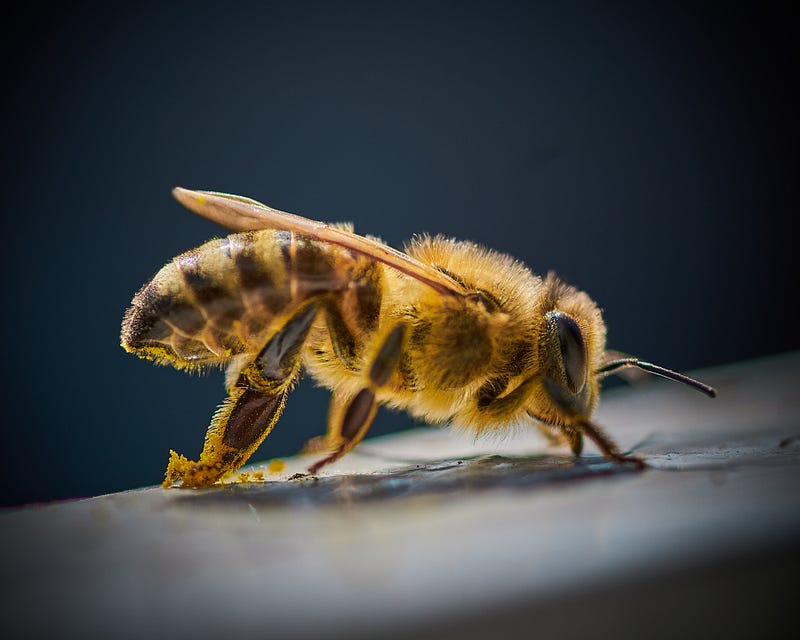
Every visit to check on my honey bees starts with a few minutes of stillness. I squat just to the side of the hive, where the bees hardly notice me but I have a good view of the action at the hive opening. It’s a meditative moment: focused on the present, no monkey-mind distractions in my head, just noting what’s happening. How many bees are flying in with bulging legs of pollen? Are there guard bees on alert at the entrance, fending off robber bees? Is the hive showing a healthy level of activity for this point of the summer?
The meditative feeling continues as I wedge the hive tool between two frames, slowly levering one frame out of the box. My hive tool is a cross between a miniature crowbar and a paint chisel, smeared with beeswax and smelling of honey. Every movement is smooth and unhurried, like tai chi but with consequences. If I startle the bees, they’ll fear that I’m there to steal their honey — and defending their honey is serious business.
Beekeeping: the most frustrating and interesting hobby imaginable
Here in Central Oregon’s high desert climate, honey bee colony survival rates vary wildly. The winters are long, the nectar season is short, and pollen-laden native plants aren’t as plentiful as they should be. A 70% over-winter survival rate means it was a good year for beekeepers. For backyard beekeepers like me, odds are lower than fifty-fifty that I’ll take any honey out of the hive for my own use.
So why keep bees, if not for the honey? Why in the world would I invest the money, time, and emotional energy every year, nurturing thousands of insects that live in a box on my back hill, when I’ll probably get nothing but heartbreak and disappointment in return? Am I crazy? It’s not a cheap hobby: setting up a hive requires a couple hundred dollars, and when a hive doesn’t survive the winter a new starter package of bees can be $150 or more. Beekeeping means hours of research, learning how these incredible insects function. And when they don’t survive, I’m devastated and guilt-ridden.
The truth is that bees are fascinating. A beehive is not made of thousands of individual bees —none of those bees could survive alone. The collective population is one super-organism, with the queen in charge and the worker bees tasked with specific functions that benefit the whole. Together they are fastidious and industrious (except for the few male bees, appropriately labeled drones, who just hang around enjoying sips of nectar and waiting for a chance to romance the queen.) How else could I glimpse into this world of insect dynamics, of collective productivity, of the essential connection between plants and animals species, except through beekeeping? It’s an education well worth the investment. And makes the bonus reward of honey all the sweeter.
Worry about the wild bees, not the honey bees.
Amid all the other environmental issues, stories about pollinators sometimes make news. When they do, it’s honey bees that get all the attention. Colony Collapse Disorder, the plague of varroa mites, the theft of hives from almond orchards. But here is the thing: honey bees are fine. They’ve got beekeepers to feed them and shelter them and medicate them when needed. They are like tiny domesticated honey cows that are cared for by honey farmers in clumsy gloves and giant netted hats. We should all be worried about the wild bees, not the honey bees.
What, you didn’t know there were wild bees? Oregon is home to an estimated 500 species of native bees. Mason bees, mining bees, leafcutter bees, sweat bees, cuckoo bees, just to name a few. Each of those categories includes several subcategories, with specific needs for habitat and foods. And don’t get me going on the bumblebee, a perennial favorite genus that is in dire need of protection.
These are the bees to worry about. The native species searching farther and wider for nectar in our hotter, drier world. These are the critical threads-in-the-fabric-of-life that co-evolved as pollinators so plants can make seeds. We don’t have a hive tool to help check how they are doing, but every one of us, beekeeper or not, can do a few things to help native bees survive. Here are three suggestions:
- Stop using toxic pesticides. Clear that shelf in your garage (dispose of correctly please! that is a whole other topic for another post.) Bee-friendly options for aphids or other problematic pests can be found here.
- Quit mowing your whole yard. Double bonus there! Less work and more bees! Leave a section, a corner, a side yard to grow wild. Add some flowering weeds (AKA native plants) and allow sticks and leaves to clutter it up. Why? Because these are the places ground bees and bumblebees call home.
- Speak up for wild bees! I mean, they can’t exactly talk for themselves. So start the conversation with your neighbors, your homeowners groups, your town policymakers. Educate people on the impact of pesticides and of manicured gardens and monoculture yards. Remind people how adorable bumblebees are. Create a buzz (heh heh heh) on their behalf.
And as you spread honey on your toast in the morning, whether it comes from the hive in your backyard or not — take a moment to meditate on the value of pollination, the tai chi of beekeeping, and the wild complicated beauty of nature.


