
I’m Sick of Seeing My Face Everyday in Virtual Calls
The perfect formula for self-objectification
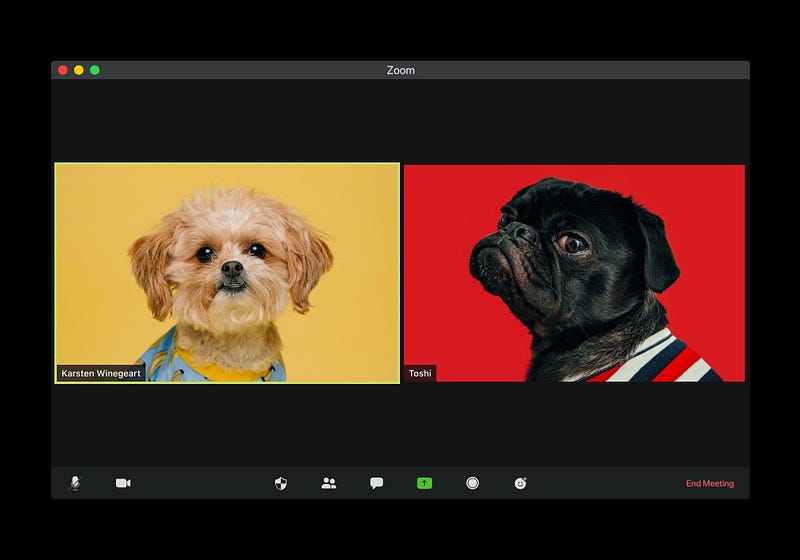
I would like to spend a week without seeing my own face.
What a bold request to have in 2023. I don’t remember when was the last time I had even a day like that. And no, it’s not the mirror in my bathroom the problem.
It’s the laptop and the phone, the most used mirrors in my life.
I want to see how my mom is doing and give her a video call? There’s my own face staring back at me in the corner.
Team meeting to discuss work project? Check your face in the video preview before you even join the meeting.
My eyes look tired today.
I got a pimple here.
My shirt looks not that bad.
Ohhh, I’m getting late for the meeting, press join, join, join!
I know that we can hide self view in some video conferencing tools now, but that’s not the case for all or for phone apps like FaceTime and WhatsApp.
I never have this self dialogue for a real life meeting. I just show up, greet the people I have to meet and focus on the conversation.
But online, I get to have this evil queen moment with the mirror before and during every meeting.
Mirror mirror on the laptop, who is the fariest of them all in this call?
Who??? Really???
You got to be kidding me.
And I’m not particularly interested in my appearance. But having to see my own face every single day since the rise of personal devices, has shifted the relationship with my self-image.
And I don’t know if it’s in a positive or negative direction. Because it’s a mixed bag. Some days I hate my face, some days I love my face (wow, what a very female thing to say).
One thing is for sure, I know my face very well now. And I don’t think it’s a healthy thing. Both hating and loving it is not healthy and creates what they call self-objectification.
Self-objectification is a psychological process in which a person views themselves as a physical object first and a human being second. Both men and women struggle with self-objectification, but it is most commonly seen among women. — Wikipedia
Focusing on my self dialogue about how I look during a video call is self-objectification for me. I’m focusing on my physical appearance, instead of the conversation. Even if the focus is only on generally checking that I look professional. Still, I’m focusing on the appearance.
Adding here the smoothing, softening or colour correcting effects that these tools have added, makes me want to check myself even more.
Why does my skin look that smooth?
Is this how my nose really looks like?
The color of my shirt looks very different there. What is that shade called?
Stop, please. All of these thoughts about my image, just from a boring team meeting.
I purposely deleted my social media, so I didn’t have to take selfies or photos of me all the time. I remember how weird were the days when I would check my Instagram profile, a feed of very polished photos of me, in my best moments.
The problem wasn’t comparing myself with the models there, the real problem was comparing my everyday self with the best-moments self.
I got rid of that, but now I have to watch video selfies of me all day at work.
There’s no escape from this self-centred reality we have built, is there?
I wish I could say that I can shut off this self-objectification tendency and not have the thoughts or the inner dialogue. But I’m afraid it doesn’t work that way. We cannot successfully shut off thoughts anytime we want.
But we can shut off the camera anytime we want.
Which is something I have started doing more. I see many colleagues do the same more often. They must be tired of their own face too.
I have started doing some old-fashioned phone calls as well. It is also nice to be able to do other stuff while I speak, instead of being chained in front of the phone screen (occasionally checking my own face).
Maybe I cannot fully escape the new reality. But can I make it a bit more balanced?
I can at least try.
And would love to hear any strategies that have worked for you. Let me know in the responses.