I’m the Mae West of Affairs
A Different Era But With The Same Gusto
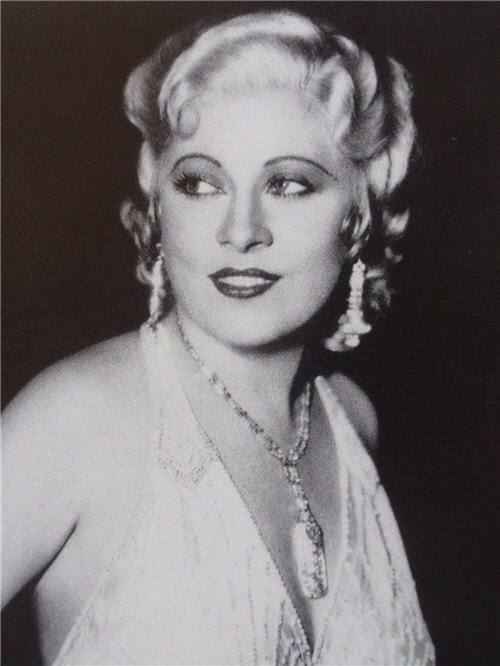
Mae West.
What do you know about her? Brassy blonde, sexy body, darkly painted ruby lips, and pencil thin eyebrows? From another era.
“Who was she again?”
A sex symbol — from the turn of the century. She played breezy women with sexual independence long before women actually had some semblance of liberation.
She fascinates me. Why? Because she was censored for her overt sexuality.
I’m censored too. Nothing I have written has been curated by The Medium. Adulteresses are a little too hot to handle, I guess. She once quipped, “I believe in censorship. I made a fortune out of it.” I wish I could say the same.
She bucked the system by making comedy out of conventional societal mores. I’m doing that in 2020. Albeit, much less successfully. You would think the world hadn’t changed much in a hundred years. We both are fighting the same social stigma.
Women are punished for being too sexual.
“Live and let live is my philosophy…I believe everybody has the right to do his or her own thing or somebody else’s — as long as they do it all in private,” she wrote.
Sounds perfect for adultery.
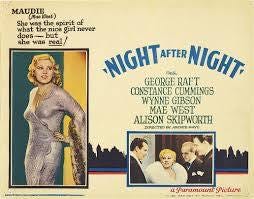
Mae West wrote her own lines for Hollywood. In her first scene for Night After Night, a hat-check girl exclaims, “Goodness, what beautiful diamonds,” and West replies, “Goodness had nothing to do with it, dearie.”
Those one-liners is what we remember her by:
“When I’m good, I’m very, very good, but when I’m bad, I’m better.”
“Is that a pistol in your pocket, or are you just happy to see me?”
“Sex is an emotion in motion.”
“Marriage is a great institution, but I’m not ready for an institution.”
“I used to be Snow White, but I drifted.” My absolute favorite.
“A hard man is good to find.”
“When choosing between two evils, I always like to try the one I’ve never tried before.”
“I believe that it’s better to be looked over than it is to be overlooked.”
“She’s the kind of girl who climbed the ladder of success wrong by wrong.”
“To err is human, but it feels divine.”
“I only have ‘yes’ men around me. Who needs ‘no’ men?”
“I only like two kinds of men, domestic and imported.”
“I never loved another person the way I loved myself.”
“Give a man a free hand and he’ll run it all over you.”
“It’s not the men in my life that count, it’s the life in my men.”
“Too much of a good thing can be wonderful.”
“Anything worth doing is worth doing slowly.”
“The score never interested me, only the game.”
“The best way to hold a man is in your arms.”
“I’m a woman of very few words, but lots of action.”
“I’ve been things and seen places.”
“I’m no model lady. A model’s just an imitation of the real thing.”
“Every man wants to protect me. I can’t figure out what from.”
“When women go wrong, men go right after them.”
“Those who are easily shocked should be shocked more often.” YES.
How many of these quotes resonated with you? Almost 100 years after they were written? I bet quite a few. She was fearless. She went to jail for “corrupting the morals of youth.” She faced countless backlashes from powerful men. Did she back down? NO.
She wrote, directed, acted and was true to herself.
“It’s not what I do, but the way I do it. It’s not what I say, but the way I say it,” she wrote. I say what I mean. I write to please myself — to tell my story yet the moral repercussions are the same even a century later. I have to fend off the haters and the trolls and the censors. In 2020, no less.
Mae West is my heroine. She was the original bad ass. No one else compares.
Subscribe to The Scarlett Letter https://bit.ly/2CMiIbM