
I’m Taking a Break From My Best Friend — 3 Things I’m Expecting From It
And a set of questions to help you reflect on your friendships too
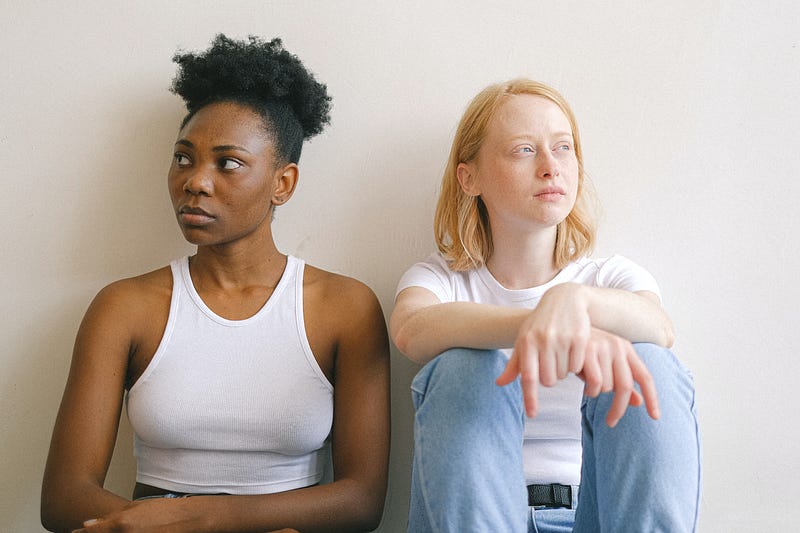
We rarely question our friendships, especially the closest ones.
We’ve been through highs and lows together, and we believe this is enough to stick around forever.
Because someone’s been there for decades, or because they were supportive during bad times, doesn’t mean we’re made to be eternal friends.
Loving each other, and being there for each other, doesn’t always equal to a healthy and sustainable friendship. That’s what I’ve realized lately, and I’m taking a break to see more clear.
I’ll give you the context, and explain what I’m expecting when I choose to be away from my closest friend.
Why I’m doing this
An accumulation of confusing conversations and stressful situations got me to the point of overwhelm.
She’s a dear friend, but our interactions over the last couple of months got me wondering. A lack of direction in her life — and probably in mine too— replicated into our relationship. It’s made my life complicated for a while, and complication isn’t something I want from a friendship.
After weighing the pros and cons during 2 weeks, I decided to take a break.
I haven’t had the courage to tell her the truth though.
As much as I was — and still am — sure about this decision, I didn’t want to hurt her feelings. Here is what I said:
I’m going to retreat, to focus on my wellness and my writing
I’m not making new social commitments, but I’m still interacting with other friends.
What I want is to focus on myself, to find out who I am when she’s not around.
Why you should consider this option too
We learn, we grow, we change. And the people around us too.
But life is such that we don’t always evolve in the same way.
If you’ve reached a point where one of your friendships feels like a burden, it means that something has to change. If you’d rather spend your time and energy on something or someone else, then why not try that, at least for a while?
You don’t need to spot any concrete issue. If the feeling isn’t right, taking a break will at least help you see what’s bothering you exactly.
And if you need a guide or a prompt, let me share with you what I’m expecting from that break, and the questions I use to guide me.
1. A higher sense of self
We rarely are 100% ourselves.
We adapt to people and situations.
If we can’t be ourselves with our closest friends, then who can we be ourselves with?
As I’m evaluating how much of my true self I’ve put in this friendship, I’ve come up with a list of questions. These questions may help you too — and you may find it easier to answer when you’re not constantly in touch with this friend:
- Who am I with this person by my side? Would I behave the same way without them?
- Would I make different decisions if I wasn’t consulting them?
- Do they try to influence me, or take advantage of me?
- Do they take me closer to the person I want to be?
- What do I want out of this friendship?
Before I start a new chapter of this friendship, I need to know if it’s directing me where I would want go on my own.
An example where we differ is that she’s more of a consumer and I’m more of a doer. This doesn’t mean we can’t be friends, but — maybe — we shouldn’t be that close.
When I get annoyed by her consuming, I also get frustrated that we’re not doing instead something that require intellectual or physical effort. In that sense I’m neglecting an important part of myself when I’m with her.
This is an insight I’ve had since I’m on this break. I’m expecting more things to come up in the coming weeks, and I also want to find out what this friendship is really based on.
2. Clarify the basis of our friendship
I want to know if we’re friends for good reasons.
As I’m at the beginning of this experiment, what I’m working with now are question marks. To help me unveil layers, go into different directions, and find out what has made us stick together:
- Would we be friends in a different context? We clicked during a full week of training at work, but would it have been different if we met at a party?
- Why have we stayed in each other’s lives? Is it a desire to be together, or is it to avoid loneliness? (We’ve been through romantic break-ups and periods of singlehood around the same time)
- Have we grown apart, or weren’t we on the same page from the beginning?
- Do we share the same values?
And the list goes on.
I have wonderful never-ending conversations with my friend. What we do best is deep talks. We love to try to understand better ourselves and others. These open-hearted times mean a lot to me.
But are they the only thing we have?
We don’t enjoy the same types of activities. We have different lifestyles. We expect different things from people — I mean men.
Can we be close friends when we don’t see the world the same way?
Answering these questions make me uncertain. I don’t know if and when we’ll reunite as friends. But I know I want to use this experience as a stepping stone to healthier boundaries.
3. Establish healthier boundaries
A blurry boundary was the trigger for the break-up.
We’ve both had flexible schedules for a while, which gave us plenty of room to arrange catch-ups and meet-ups. But lately, she took advantage of this to never confirm anything until the day before or the day itself.
Once or twice can happen, but it got to a point where I see it as typical her. This repetitive rescheduling made me think she didn’t value my time the way she should.
Moving forward I want to make sure that I don’t forget myself in my friendships, that I put myself first in order for these relationships to thrive.
These areas of reflection can help identifying and implementing healthier boundaries:
- Does this relationship help me meet my vital needs? Sleep, rest, nutrition, movement.
- Does this relationship allow regular me-time?
- Is their mutual trust?
- Does this relationship follow my priorities?
I can’t tell yet if I want to get back together after this break. But I know that, if we do, we’ll have to implement a new set of boundaries. One that we communicate clearly and that we stick to.
And this is something I’ll be able to implement in other friendships too.
The takeaway so far
It wasn’t an easy decision to make.
This break is an important step I’m taking in a 7-year relationship. I expect it to help me see clearer by:
- Understanding better who I am
- Identifying what our friendship is based on
- Preparing for healthier boundaries
Like romantic relationships, friendships shape who you are and have a big impact on the way you see yourself.
The quality of your relationships determines the quality of your life, then it’s important to regularly ask yourself this question:
Are you sure your friends are bringing the best out of you?