
I’m on the First Page of Google With My Knowledge Panel — Here’s How You Can Get One Too
Google features me and my expertise. Here’s how I did it and you can too.
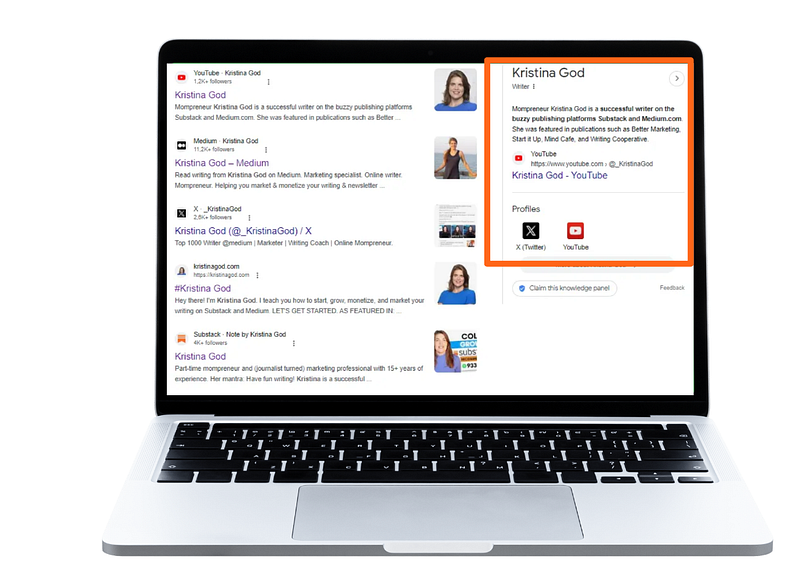
As you may know, I’ve been writing online for more than three years.
As a marketing expert and online writer, I firmly believe that search is crucial to building a personal brand online, being seen, and being read.
That’s why I constantly try to stay up to date on all Google updates and changes that are important to writers and authors, such as the new rich results that many bloggers fret about, or the latest Google updates.
How else could you build an online business (alongside your day job) and advise clients part-time?
After three years, I (finally) have my own Google Knowledge Panel
As a brand manager and consultant, I need to stay on top of everything related to search and the latest SEO strategies for the brands I work for and the clients I work with.
From my experience, I know that SEO writing is crucial if you want to be seen online.
Early on, when I worked for Edelman, the largest comms marketing agency in the world, I learned SEO writing and started creating and optimizing content for various clients.
When I started building my personal brand three years ago, I knew that SEO was about content that was easy for Google and its users to understand.
I know, it takes a lot of effort to dominate the search results for your (personal) brand.
Fortunately, Google wants to show its users the best possible search results and help them find the best answers to their questions.
You are arguably the best authority on yourself, don’t you think?
I write and create on Medium, YouTube, Gumroad, Quora, X, Substack, and TikTok. In addition, I’m in the middle of creating my own website with a blog.
When I set up my accounts and profiles, I took a strategic approach and used my knowledge of SEO to let Google know about me, Kristina God, the writer.
I’ve always been a fan of natural and organic growth — even if it’s slow.
The day you plant the seed is not the day you eat the fruit, right?
So after three years of practicing in public, I was finally featured by Google:
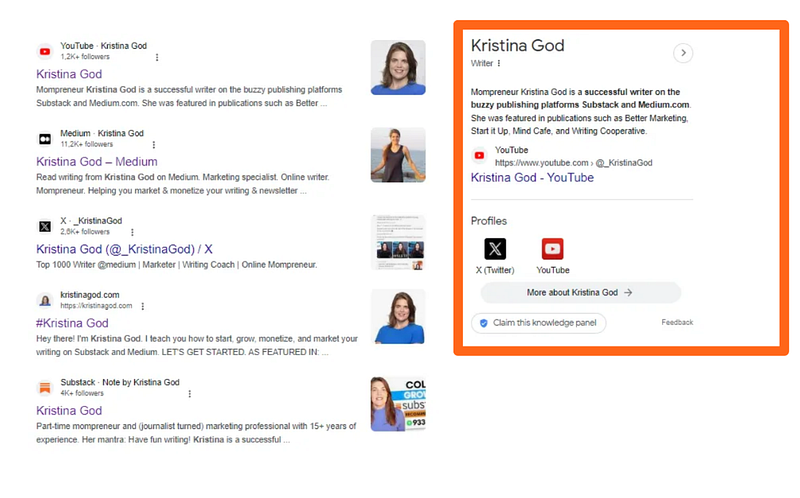
See this information box in the top right-hand corner?
It’s a Google Knowledge Panel about Kristina God, the writer.
It’s a factual summary for people searching Google for my name and personal brand.
The good news is that any writer and author can have a Google Knowledge Panel.
The bad news is that it’s not easy to get one.
Just Google your name or your brand name.
If you have your own Knowledge Panel, let me know in the comments and share the link.
If you don’t have one yet, this article is for you.
SEO experts don’t talk about Google Knowledge Algorithms
I hear most SEO experts talk about the core updates, the core algorithms, the blue link algorithms, and maybe even the video algorithms when they get adventurous.
But I rarely hear anyone talk about “knowledge algorithms” even though they are fundamental for writers and authors to be seen on Google.
The future is about how we train these intelligent robots, because they will get smarter and smarter, and we need to train them yesterday.
That’s why I want to share insights into Google’s knowledge algorithms based on my own strategic journey, my wins and mistakes, and an interview with Jason Barnard, CEO of Kalicube, aka the Brand SERP guy who has a proven track record of creating Knowledge Panels by offering brand SERP and online reputation management.
The 3-step process to get a Google Knowledge Panel
There are three Knowledge Algorithms that you should know.
- The Knowledge Extraction Algorithm
- The Knowledge Vault Algorithm
- The Knowledge Panel Algorithm
Number one is the Knowledge Extraction Algorithm.
This is an algorithm that extracts available information from web pages and then stores it in a well-organized way in a memory location for the next algorithm, the Knowledge Vault Algorithm.
The Knowledge Vault Algorithm goes into the information that the Knowledge Extraction Algorithm has found and “puts it away in little filing cabinets, ” explained Barnard.
Then it reads through and tries to understand what the facts in all of this information that the Knowledge Extraction Algorithm has provided for me.
“If it decides it’s found a fact, it puts the fact in the Knowledge Graph and it becomes part of the machine-readable encyclopedia, Google’s memory, Google’s brain”, shared the Brand SERP guy in our interview.
The Knowledge Panel Algorithm looks in the Knowledge Graph and it asks:
“Which of these information is useful for me to show the user who searched somebody’s name or a company name or a topic?”
So if somebody searches “Kristina God”, Google looks in the Knowledge Graph and it says:
“I can see these facts about Kristina God. The person is looking for the specific “Kristina God” that I can see in the Knowledge Graph. I will show a Knowledge Panel.”
Jason shared: “Then it fills the Knowledge Panel with the information that the Knowledge Graph has established to be fact from the information that the Knowledge Extraction Algorithm has provided it”
But how to educate Google and trigger a Google Knowledge Panel?
I took a simple three-step approach to get mine.
1 — Write a clear about page, bio, and description
As mentioned earlier, Google is looking for relevant information and facts.
Many factors can trigger a Knowledge Panel, but the most important is to write a relevant about page, bio, and description.
Every platform you write on allows you to let your audience know who you are.
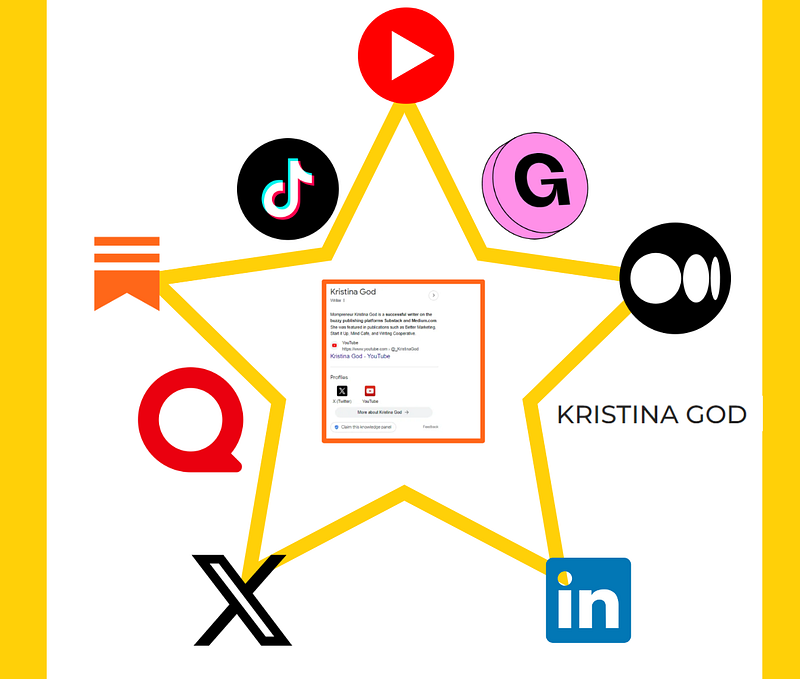
My first step was to write a general description.
I‘m constantly updating it, so here is the current one:
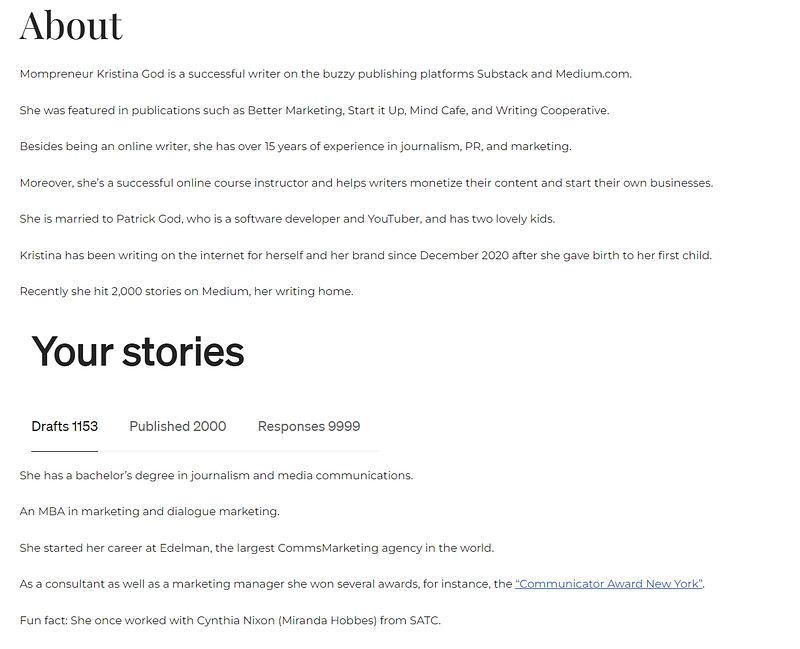
If you want to write such a description yourself, it should be…
- factual — based on facts.
Don’t say:
“Kristina is the writing Goddess.” Better say: “Kristina has been writing on the internet for three years.”
- relevant — only essential information.
Don’t write down your life story. Pick the essentials of your life as a writer that are important to know.
- hierarchical — most recent to oldest.
As if you’d write a news piece, start with the present moment.
“Don’t start with your birth. Start with the latest things and work backward. At the top of the page should be the most important and the most recent, even if you state dates,” the CEO of Kalicube shared with me.
You can also write in the third person about yourself but keep in mind that on socials you want to build a personal connection so it often might be better to use the first person.
Again, it depends on the platform, the space you have to talk about yourself, and how you want to present yourself.
- repetitive — clever is better than creative.
Don’t try to be creative and write different things about yourself as an online writer and/or author. Stay consistent.
Google’s algorithms need to get a clear picture of who you are.
So the key is to repeat the thing you do most that you want to focus on.
When you spread it out across the web, you can simply repeat the same thing on every single website.
If you’re multi-passionate or wear many hats, you can also take chunks of what you’ve written and put them on different websites where they’re most appropriate.
“So when I’m on a music site, I’ll put the musician at the top and then say oh, by the way, he’s an entrepreneur. This means that the person visiting the website about music will see me as a musician, which is what they’re looking for, ” Bernard shared with me.
- semantic triple — subject-verb-object.
The more you use those and you keep them close together, the better the machine will understand.
Instead of “Kristina, who lives on a German island and has two lovely kids, is an entrepreneur” rather say: “Kristina God is an entrepreneur who lives on a German island and has two lovely kids.”
2 — Update social profiles and use the same description
The second step I took was to take my general description of my person and add it to my social profiles.
I constantly make sure that my social profile is up-to-date.
For this, I have a Google Sheet with a simple overview of the platforms I’m using and a link to the main About page.
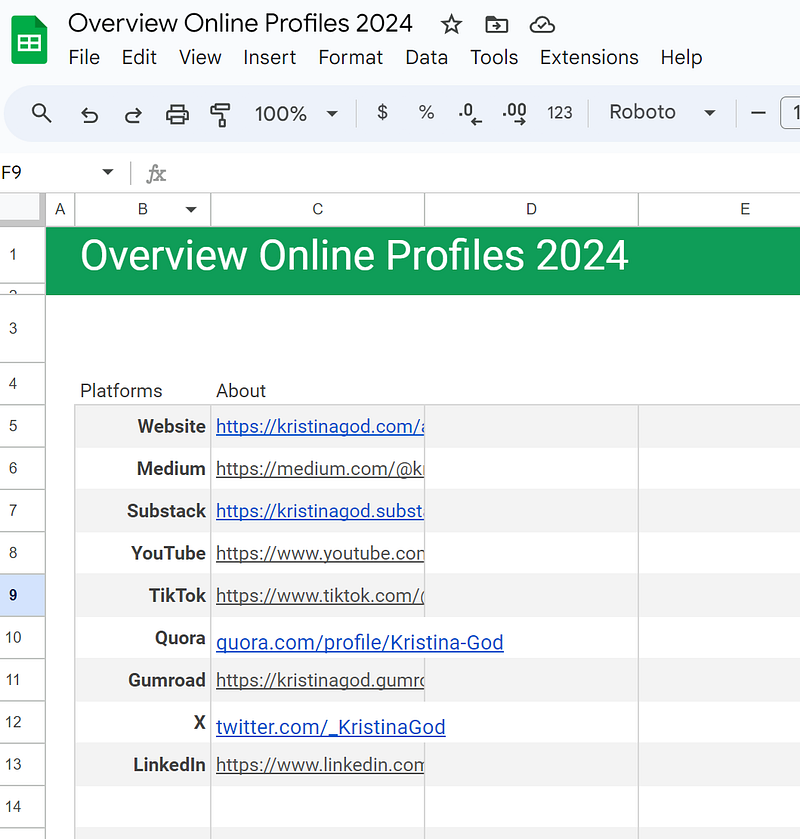
Consistency is key.
As mentioned, I don’t use the exact same description on every platform but I try to avoid contradictions that would confuse Google.
I vary the description but make sure that I mention the most important information, for instance, that I’m a writer, first.
In addition, I link back to the sites or one site I think is most relevant for my audience to get further information about me and my writing, services, and products.
My home is Medium, so I thought I’d be smart to always link to Medium. If a platform, e.g. YouTube, allows me to add more than one link, I also add my other socials.
When I discovered I managed to trigger my Knowledge Panel I wondered why Google thought YouTube was my home on the internet.
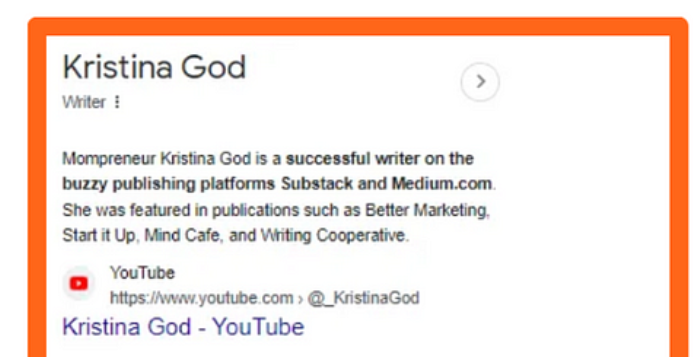
So here’s the biggest learning from my interview with Jason Barnard: You need to link back to your main “entity home”. You have to pick one and constantly link to it.
Your “entity home” is a place that all three Knowledge Algorithms recognize as the place where you live online.
I thought this could be any social media platform but it’s not.
A social media site could be used as your home on the internet but it isn’t recommended, shared the Brand SERP guy with me.
Let’s learn from my mistakes.
3 — Link to an entity home you control
Don’t make the same mistake I did.
As mentioned before, the social media approach I took can be used but it’s not recommended by Jason.
“Google is a child. We are the responsible adults in the room. We need to educate Google.”
You need a strategy otherwise, Google gets confused.
Whilst it was smart to write a clear description about my person and be consistent on all platforms, I wasn’t consistent when it came to my “entity home” and linked to the wrong platforms.
When I asked Jason what he thinks about YouTube being my “entity home” although I wanted it to be Medium, here’s what he replied:
“That’s not good. Because YouTube doesn’t belong to you. And if it does, you wouldn’t be talking to me because you’d be super rich.”
Jason added: “Key here is to make sure that you own the place that they think you live”
This means socials are nice but Jason recommends picking a place you can control.
You can’t control any social media platform, do you?
We want to train “the child that is Google” based on information we can control.
Now and in the future, you are in an ideal position if you are the recommended answer when Google drives the user to what they call “the perfect click”.
This is the click that gets the user to the place where they want to convert.
“What Google will do is guide the user down the funnel, answering questions, creating a dialogue, get the user to the point at which they’ve decided what they want.”
With “the perfect click” at the end of the funnel, they come to your website to become a subscriber or buy a product or service from you.
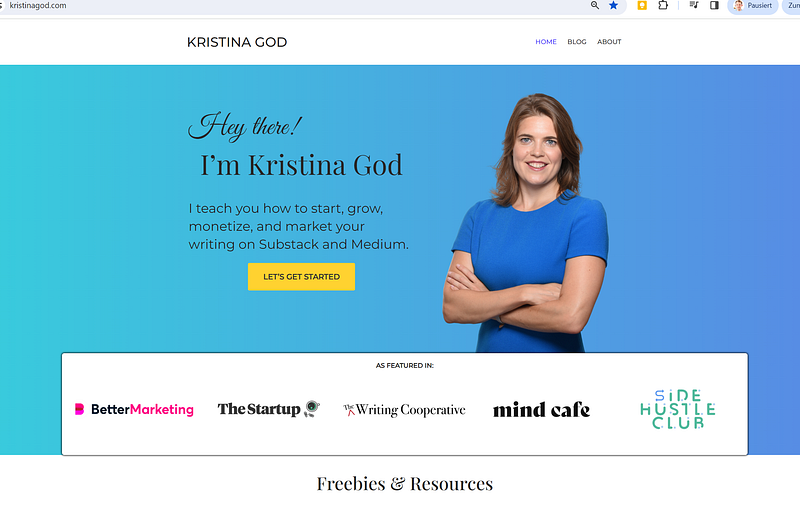
Google will only create a Knowledge Panel if it thinks you’re worthy
If you’ve been reading the article until this point, keep in mind, that you can implement all three steps I showed you and put yourself in a position of luck.
However, whether or not the Google Knowledge Panel then appears when somebody searches your name or brand name is a different question.
Jason shared with me: It’s a question of “whether the Knowledge Panel Algorithms decide that you’re worthy or interesting enough to be shown. And that comes down to probability in truth. How probable is it that the person searching is searching for you? And that depends on geo region, notability, and confidence.”
This means, that to get the Knowledge Panel, you need to make yourself notable in your niche or your geo region.
Final Thoughts
I’m thankful Jason Barnard hopped on a Zoom call with me after one of his employees read my Medium article about my own Google Knowledge Panel.
I learned a lot and I’m happy that I could share my newfound knowledge with you.
I’ll put more emphasis on building my website and blog and link back to it.
In addition, I’ll ask people who conducted interviews with me to link back to my entity home. Of course, I still want to link to my socials but my number one site will be the WordPress site I own.
I’ll be patient because I know it takes time for Google to find all the information, index, and assimilate it.
Moreover, I’ll claim my Knowledge Panel and will let Google know that I’m the owner of this information box and the main authority to tell Google who I am. I’ll then review my information and suggest any needed updates, e.g. my personal website.
“If you don’t have a Knowledge Panel you look like a nobody,” Jason stated.
I guess you don’t want to be a “nobody” on the internet.
If you want to take action and trigger a Google Knowledge Panel keep in mind what Jason shared with me:
“The timeframe can be anything from a few days to a year.”
For further context information, here’s Kristina’s interview with the SERP guy, Jason Barnard.
You can join Kristina’s Online Writing Club here.