
I’m Now a Card-Carrying Democrat
Confessions of a formerly lifelong member of the GOP
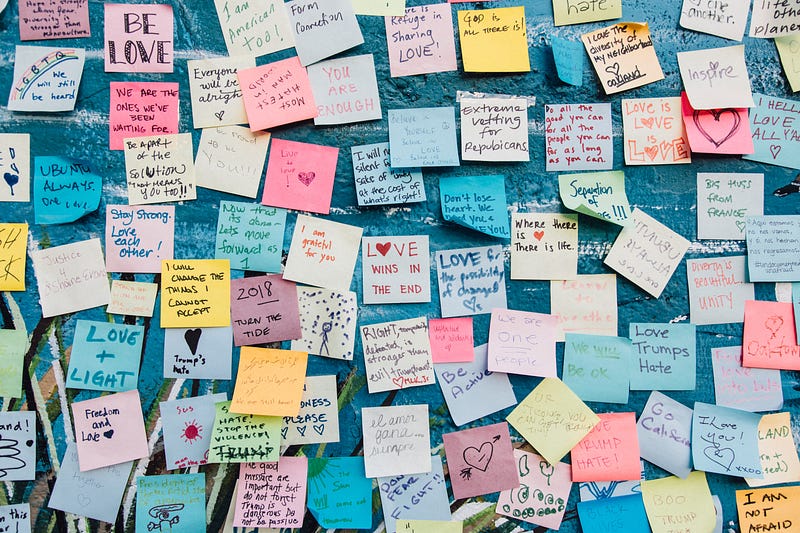
I’m officially done being a Republican.
I voted for Bush in 1992. It was my first opportunity to vote in a presidential election, and it was done via absentee ballot.
Being a Republican was just in my blood. It was my heritage, really. I was a member of a Southern Baptist church, almost everyone I knew was a proud Republican, and I’d been raised to have Republican values. So for years I voted straight up Republican on everything.
It was how I had been raised. I had no reason to question anything. It’s just how everything was.
There was one person in my family — my dad’s older sister Brenda— who went against the family grain. She too had been raised in my hometown and lived under a strict Southern Baptist regime. Question nothing may as well have been written in the bylaws. When she became a teenager and started seeing intolerance and racism and other elements that contradicted the “Love thy neighbor” command — not to mention the hundreds of Bible verses regarding caring for the poor and needy — she started to question her early programming.
And then JFK was assassinated and her classmates cheered as if the United States had bombed Moscow.
My aunt had already been highly uncomfortable with her town’s general feelings about Kennedy, who was Catholic. They were convinced that his assumed allegiance to Catholicism meant that the Pope would be the tail wagging the dog.
So his violent death, apparently, meant freedom from evil.
Brenda was done.
Her escape to journalism in high school and, later, college, opened her eyes even more to the injustices of women, minorities, the poor, and anyone else who did not fit the mold that had been created by society’s advantaged.
So my aunt took a hard left and never looked back.
Even though from a very young age I had always admired and aspired to be like my Aunt Brenda in many ways, I was still caught under the foot of the elephant. As such, I never questioned the arrogance and air of exclusivity that were included in the membership. Republicans worked hard and paid taxes and went to church. They were good people who didn’t have abortions or take government handouts. They earned health insurance. They weren’t losers.
Even though my grandmother picked up poor, dirty children and took them to our church and put them right beside her as if they were her own grandchildren, I looked down on the poor.
Even though my mother had worked for the welfare department before I was born and told us about the plight of the poor — particularly women and children — I chose to focus on more pleasant topics.
I didn’t know just how ivory my tower was until I started getting wake-up calls.
The first call rang when I quit the corporate world in 2012 and found out about pre-existing conditions.
As I started working from the house I shared with my boyfriend, I had not considered that there would be a problem with getting health insurance on my own. Everybody I knew had health insurance. I’d always had it myself. So the Monday after my resignation — a move that I had to make because of my deteriorating health — I called the friendly insurance agent who handled my previous employer. She told me she’d look into my options and get back with me. The next day she called back with some distressing news: because I had nine pre-existing conditions, no insurance company would touch me. Not even the ones with sky-high deductibles. Not even if I had the ability to pay thousands of dollars in premiums.
No amount of money could buy me health insurance.
Because I hadn’t known that insurance companies had the choice to deny coverage due to pre-existing conditions, I was blindsided by this information.
So after 30+ years of being on no-questions-asked health insurance thanks to the privilege I had of being in the corporate world, I became one of the millions of uninsured Americans. The Affordable Care Act had not yet entirely kicked in, so people with pre-existing conditions were totally screwed.
However, because I was a single woman with two young children, I did have one choice: apply for Medicaid and hope that we’d be accepted.
Ah, the irony. A dyed-in-the-wool Republican who had spent years voting for people who worked to prevent the underprivileged — including the self-employed and hourly workers — from receiving health insurance. And that same Republican ending up on Medicaid.
I’m in a better situation now, but it has infuriated me to no end when my Republican peers would laugh about the “losers” who weren’t on health insurance. As if they didn’t deserve to be insured. Medicaid was for welfare queens and the Democrats were out to ruin the country with their Obamacare.
I started commenting under their holier-than-thou Facebook posts and would never get any reply because what do you say to someone who has always been member of your own little country club circle who now couldn’t get effing health insurance? Until I found my own pretentious self in the shoes worn by — at the time — 48 million other people in the United States, I was as clueless and unconcerned as my peers.
My next wake-up call came when my now-husband introduced me to the world of low-income housing. Like almost all GOP members I knew, I’d grown up thinking that people on welfare — particularly Section 8 housing tenants — just sponged off the government. But the majority of my husband’s tenants actually worked, which meant that they paid taxes. One was a bus driver, one was a substitute teacher, one worked in a hotel. They received government subsidies, but they weren’t living rent-free.
After that, when I saw self-righteous Facebook rants about people taking advantage of the hardworking tax payers, I’d comment with the information I gave above. Most people have had no comeback, but a few told me that they appreciated my viewpoint.
More recently, I recalled the time my mother had told me that over the years she has counseled a few of her former high school- and college-aged Sunday school members who had come to her in desperation after having abortions. Names and details were confidential, but all of these girls had come from “good families.” It dawned on me that these young women weren’t selfish people who had abortions out of mere convenience. This was the only option they had. I’ve often wondered how many women have felt like they did: pushed into a corner because they were terrified of the very real possibility of being rejected by their families and community, not to mention the fear of going to hell.
My mind then went to a conversation I had with a seventeen-year-old Baptist girl who was afraid to ask her mother for the pill. I offered to drive her to Planned Parenthood so she could get free birth control. She was too afraid, she told me, and I couldn’t talk her into it. A couple of months later, she was pregnant. She opted to keep the baby, but to me it’s a very similar situation to the young women who felt forced to have abortions. Many of them thought that their actions were unforgivable. My mom is a kind person who listened to and reassured them that they were not doomed for all eternity, but many people I know don’t seem to have the capacity to do this. And many women are not treated kindly by the people in whom they’ve confided.
Even though I was still a registered Republican, I voted for Obama — and then for Hillary. It went against everything I’d been raised to believe, but I couldn’t bring myself to vote for a Republican candidate.
And I still can’t.
In the past three and a half years, I have seen so much hate and division that had started well before COVID-19 hit the United States. People I know from church, who adhere to rigid sets of moral standards and demand the same from their children, have stated publicly that Trump is a “man of God.”
Once the pandemic started cranking up in Florida, one of my family members said in a group chat, “President Trump is the greatest president we could hope to have” and that his leadership was a “gift from God.”
People like my father have consistently followed the president’s stance on masks. People who I’ve never known to be conspiracy theorists have convinced themselves that this whole thing was purposely made up to take down not only their beloved president, but all American ideals — particularly freedom.
Even medical professionals I know — particularly a doctor in my town — have been insisting for months that masks are mind control devices. Ironically, that guy’s an abortion doctor who, I assume, wears a surgical mask in the OR.
Not long after I read the Trump-obsessed abortion doctor’s rants, my daughter was exposed to someone who had COVID and we could not find a way to get her tested as promised by our president. I Googled “Florida change political party.” I know that I could vote for anyone in November regardless of whatever my voter card stated as my party affiliation. I know that my decision was probably more out of principle — and maybe childish rebellion — than anything else. But I felt like I needed to make this change for the sake of my conscience.
And I wanted to be one more Democrat on the list of voters in this swing state of mine.
I got my new and improved voter card in the mail this past week and immediately texted my aunt with the news, but I haven’t brought myself to tell the rest of my family. They wouldn’t understand my decision any more than they understood when I moved in with my boyfriend or when I voted for Obama and Hillary.
But my aunt understood, and she’d been one of the few family members who had believed me when I was going through the throes of mania and PTSD after my picket-fence marriage ended seemingly out of nowhere. So knowing I had her continued support was enough for me.
For me, that new card was a symbol of freedom from a part of society whose stance — from what I’ve seen — largely contradicts its proclaimed values. I’ve become increasingly disturbed by the worsening superiority complex, the insistence to be right no matter the cost, and the continued loyalty to a president who seems to care only about his own interests.
But the main reason I had to officially leave the Grand Old Party is this:
The most dedicated Trump-supporting Republicans are quick to defend the rights of the unborn, but that’s it. Thanks to a rare immune deficiency, I fall squarely in the “people most at risk” category, and my former party has made it abundantly clear that their right to live their life trumps my right to live.
They choose “freedom” by refusing to wear masks.
They choose to believe whatever they want: COVID-19 data is exaggerated at best and fake at worst, people with more degrees and decades of experience in their fields are frauds, and this whole thing is a plot to take down President Trump.
Their choices are more important than the lives of those they deem unimportant. People who are in certain minority groups, people with compromised or missing immune systems, and people who are elderly or otherwise infirm are other people. When you are that far removed from the high-risk groups — as well as the people who may not know that they have a prior health condition — it’s easy to reduce human beings to words or numbers in an article online or in the news.
No names, no faces = no importance.
That kind of sounds like pro-choice to me.
I will admit that I don’t agree with some of the beliefs that are held by the Democratic Party. And there are some Republican views that do line up with my own: my husband is a business owner. We own stock. We pay a lot of taxes. But so do a lot of lifelong Democrats.
It was easier for me because I had been veering left for some time, and from my vantage point — particularly with my health issues and concerns regarding healthcare — it just made sense. In spite of my strong views above, I don’t think all Republicans are evil. I do think that many of them are in a sort of self-preservation mode. It’s hard to let go of beliefs and values that weren’t always so blatantly exploited. And from a young age, we Americans were all taught to believe and count on the President of our country.
Isn’t that the essence of patriotism?
Just like the party I left, I don’t want my country to continue down this terrible fork in the road. It breaks my heart to see the level of anger that is strong enough to divide families. That’s why I feel convicted to vote against this division in November.
I hope that my decision makes a difference.


