
Racism
I’m Not Racist
And Other Lies We Tell Ourselves
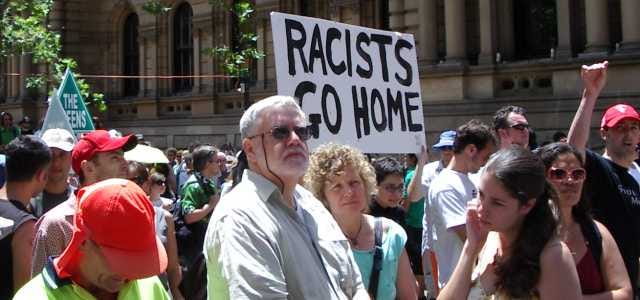

Why do we think we can say we aren’t racist?
Just because we don’t burn crosses in people’s yards, or hate on people of color, doesn’t mean that we aren’t racist.
I don’t beat myself up about it; it’s a fact that I don’t know what it is like to live a life as someone who is not white.
I’ve lived all over the U.S. and am aware of how I’m treated differently than others. It’s rare for me to see overt racism. It’s the constant daily indignities that are inflicted on others that are easy to miss if it’s not happening to you.
For instance, if I’m with white people, what if they make racist jokes? Even if I don’t laugh, do I tell them to cut it out? That I don’t want to hear it? Yes, I do. But sometimes, I get tired of hearing it, having to speak up, and shut it down. I can’t imagine how exhausting it is for people of color to continually deal with this nasty stuff.
We know it’s racist to say the “n” word and make racist jokes. But it’s another matter to speak up when no one (of color) is within earshot. It’s so easy to ignore what we don’t want to deal with.
Even if we strive to be non-racist, we’re surrounded by people who are. No, they’re usually not shouting racist epithets. It’s much more subtle. I’ve had white people try to wait on me before non-whites. Sometimes it could be an innocent accident, but it has happened more than once. Even though I hate standing in lines, I point out who is “next.” I’m not a saint; it’s just the right thing to do.
When shopping, I’m not watched carefully, or treated suspiciously, or had the cops called on me, like others.
In most of the locations I go to, I’m usually part of a white majority: grocery stores, restaurants, or concerts. I sometimes worry about my safety as a woman, but not as a minority. But I notice when there are only a few people of color at an event. I watch others around them. I plan what I can do if they are attacked verbally or physically.
We don’t have to look out for trouble, but shouldn’t we support each other?
I don’t assume all people are mean and violent.
But there are people in our midst who are angry, cruel, and violent. We have to watch out for them; we have to be ready to deal with them. They maim and kill people different from them.
If I call the police, they show up very quickly. I’m not stopped by the police very often, and if I am, I’m almost always treated respectfully. But that’s not how many people of color are treated.
Today a block from my workplace, two white police officers had stopped a car whose driver was a young black man. It was hard not to wonder. Every day I have seen dozens of white people speeding on this street. Why was the young black man the one stopped?
I realize that for most of us, if it’s not happening to us, or those we care for, we don’t see it.
But as Michael Harriot says, it doesn’t matter what we think; it matters what we do:
First, we must agree that racism has nothing to do with “belief,” intent or animosity. It is the result of actions and policies that create and perpetuate racism. The grand delusion that one can only be racist if there is hate in one’s heart is the biggest myth of white supremacy and one of the largest reasons it still exists.
But what does it take to see what’s happening around us?
I live in a state where our legislature has redrawn our voting districts. Not once, but many times, to favor Republicans. The courts have told the government the voting maps have to be redone — more than once. Now the case is going to the Supreme Court. Why?
Half of the votes in North Carolina’s latest elections were split relatively evenly between Democrats and Republicans. But Republicans won the majority of Congressional seats (nine of twelve seats). If you’re a Democrat, which the majority of black voters are in this state, your vote is being diluted in federal elections. The gerrymandered districts are keeping our Congressional Representatives “red.”
North Carolina politicians have admitted that they changed voter registration and voting days to limit black voting. They’re not even trying to hide what they are doing. They justify it by saying they are fighting Democrats, who also happen to be black, Hispanic, Asian, and Native American.
The legislature then implemented restrictive voting id laws. Whether it affects people of color or not, it is another effort to alter our voting rights.
First, our state government has made it difficult for people of color / Democrats to get our vote to count. Next, they’ve put roadblocks up for people of color, making it more challenging to get to the polls. Then, despite a handful of people who vote illegally, we now have to provide different forms of identification, just to vote. This is happening to many of us, so how can we still ignore it?

So what can we do, if many of us won’t see racial discrimination?
Several studies have tried to find effective strategies. Shaming people doesn’t work, nor does blame or rage.
In the ninety-page research report, The Science of Equality, Volume 1, the authors provide several techniques educators, health care providers, and institutions can use to deal with implicit bias, racial anxiety, and the threat of stereotyping.
Some of the methods used are:
- Replacing negative stereotypes with positive examples
- Getting to know people of color as individuals
- Using the growth mindset, to see that we can all succeed if we believe we can
But the researchers admitted, it’s going to take a long time to change the way people think and how they act. And a lot of education…
There is some progress…
According to the Pew Research Center, they found in a 2017 survey:
…growing shares of the public say more needs to be done to address racial equality and see discrimination against blacks as an impediment to this.
But the Pew Research Center survey found that over the years, it’s more Democrats who want racial progress, not Republicans:
The public shift in these views is largely driven by Democrats who are increasingly likely to take racially liberal and pro-immigrant positions, while Republican views have remained relatively stable.
Who told the Pew Research Center they believe racial discrimination is holding back people of color? (In order):
- Liberals (Democrats)
- Post-grads
- Blacks
- Young people
But let’s not assume that conservative, less educated, or older, are “more” racist. We all have work to do.
And there’s hope! Young people have less racist views, and more Americans are aware that racism exists and isn’t going away.

What can white people do?
We’re a product of our environment. Some of us grow up isolated from others different from us. In the U.S., we’re surrounded by images that make it look like whites are more intelligent, prettier, and better. Whether we are aware of it or not, it’s easy to have stereotypes and biases, even when we know they are wrong.
If you want to be a supporter of racial progress, here are a few ideas: