
I’m Not Normal and Neither are You
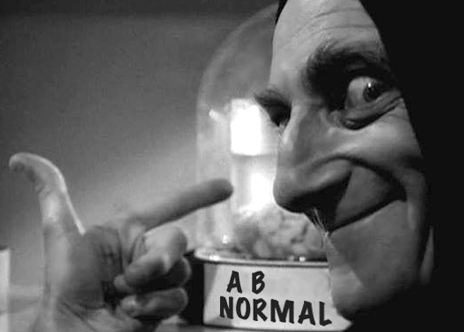
As I ponder my late life discovery that I am transgender, I have regularly felt a disconnect with being “normal”. I experienced a profound internal conflict as I sensed an increasing detachment to those around me. I was becoming an outsider.
When I was normal, my life was simpler. I was accepted by family and friends. I knew what was expected of me and I was OK with it. I was so indoctrinated with rules of the Baby Boomer generation that I forgot that they were there, inside me. Being binary was OK. Now I have been thrust into this very odd world that has placed me outside the “NORM”. I have suddenly asked myself:
What is normal?
Normal is also used to describe individual behavior that conforms to the most common behavior in society (known as conformity). Definitions of normality vary by person, time, place, and situation — it changes along with changing societal standards and norms.
So, if normal varies by person, time, place, and situation, then by simply walking a distance from where you are now, normal changes. Knock on your neighbor’s door and ask them to define “normal” and it will be different than yours. Sure, you will find some commonality but you will also find many differences.
That brings us to social norms. Social norms are regarded as collective representations of acceptable group conduct as well as individual perceptions of particular group conduct. They are an informal understanding that govern the behavior of members of a particular society or social group. This can include families, tribes, clans, chiefdoms, neighborhoods, states and nations.
Essentially a large enough group can establish its own society. A society is a group of individuals involved in persistent social interaction, or a large social group sharing the same spatial or social territory, typically subject to the same political authority and dominant cultural expectations.
Think “Lord of the Flies.”
The world is a collection of societies that co-exist together. The norms of your society are probably not the norms of another. We visit other countries on vacation to experience something outside our norm. National Geographic built a publishing empire predicated on sharing what is outside our norm. We forget that when that lens is reversible we are not normal to the people of those articles.
So, forget normal. What is normal to one is abnormal to another. Recognize that, with very little change in your physical location, you are no longer normal…
and that is ok.
Who wants to live in a world where everything is the same? Imagine how boring it would be?
My life was interesting before but now I find it fascinating. Much of this experience has been very painful. For the last three years I have mercilessly been tearing myself apart to the point of being cruel. I have also spent time seriously challenging some of the life-long prejudices that I have held that I have never known existed. The process has given me time to seriously re-evaluate who I am and what I believe.
So, I am not normal and that’s ok. I’m definitely not boring. I am sure, if and when I come out, that I will be the entertaining topic of a lot of confused friends and family.
I am starting to like my differences.
Emma Holiday
Please also read:


