
Thanks for the Advice, Mom and Dad, but I Won’t be Spanking my Kids
You did you; now I’ma do me

My mother loved her mother, but she didn’t like her very much. Mom would never say those exact words, but she openly complained about my grandmother frequently and I never got the sense they’d seen eye to eye during my mother’s childhood. Nevertheless, both my parents worked full-time and had to cobble together childcare for me, so before I began kindergarten, my grandmother watched me every Wednesday.
As tenuous as my mother and grandmother’s relationship was, I only ever saw or heard them fight once.
It was a Wednesday afternoon and my mother had come to pick me up. The argument was short; it was over before I realized it was happening. But I remember it as clearly as the intervening decades will allow. My mother, through tears, shouted at my grandmother, “Do not tell me how to raise my daughter.” She may have then said something about what a shitty job my grandmother had done herself. And then she shuttled me to the car and took me home.
Never was that incident discussed in front of me again, but I imagine my mother saying something to herself like, “I will never do that to my daughter.”
My parents don’t tell me how to raise my kids; they sub me, instead.
As soon as I was openly pregnant, everyone had an opinion about what I should do. Most of their advice was based on what they did, or what their sisters or mothers or partners did, or whatever cultural norm they’d grown up with. Typically, however, it wasn’t backed up by actual biology and psychology.
The opinions didn’t stop once the baby came, of course. I insulated myself from them by hiding among like-minded people. My safe haven existed largely in Facebook groups, but on occasion, I was pleasantly surprised to find that some of my real-life friends and family members shared my beliefs about parenting, too.
Some, but not all.
I was a couple thousand miles away from my parents by this time, and had been in a supportive environment since my oldest had been born. And so when I went to visit with my daughter for the first time I wasn’t quite expecting the exclamations of, “You’re still breastfeeding that baby?!” and “You can’t hold her all the time,” and the constant comments on my other parenting choices. But at least those were direct.
As my daughter got older, and I was blessed with another, the subbing began. Frequently, I would hear one of my parents say things like, “Well, that’s why I only had one kid,” and, “I don’t know why anyone would have children so close together.” They’d be talking to someone else, but would be sure I was in earshot, just in case there was any doubt at their level of support for my actions as a mother.
My favorite such comment is an oldie but a goodie. “Well, I’da beat Nikki’s ass if she did something like that.”
This talk started when my first daughter was very young. My parents knew that I was vehemently opposed to corporal punishment, and so they didn’t make a move to spank my kids. Instead, they found less-direct ways of imposing their views onto my family and me.
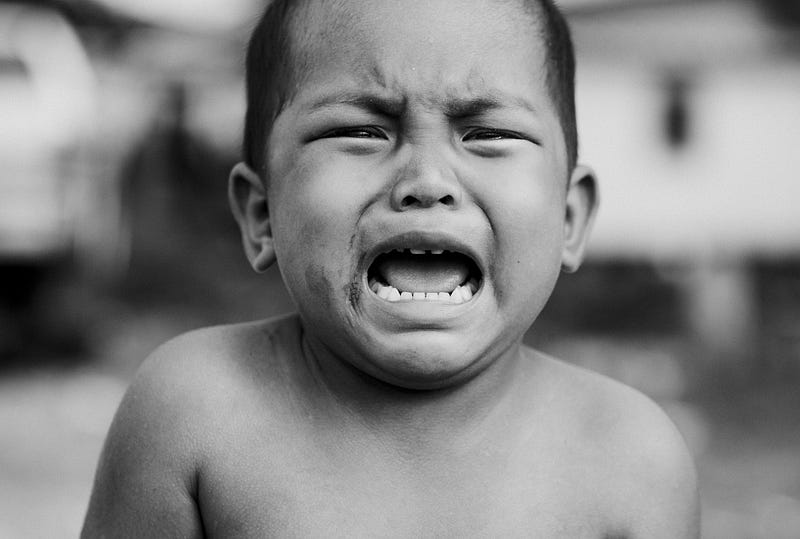
I visited my parents with my daughter when she was about one. She was struggling with an as-yet-undiagnosed illness which generally makes her feel like shit. She was cranky and whiny and super clingy and tough to leave alone. I finally got her down for a nap one day, and I needed some fresh air, and so I went for a walk, hoping she’d sleep peacefully for an hour or so. While I was out, I found a garage sale and grabbed a really pretty dress for her and a toy that she could play with during our visit. I walked through the door of my childhood home with these items, and was greeted by the wailing of my child, who was on the other side of the house, behind a closed door, sitting on the mattress where she’d been sleeping. She’d cried so hard she’d puked (a lovely side-effect of the illness from which she suffers).
“I told her to lay back down and I wasn’t going to get her if she was going to be such a brat,” said my mother.
Okay, seriously? You’re going to leave a sick one-year-old to cry until she pukes because you think she should be less needy? I guess that’s what she would have done with me when I was that age, as well. Which explains a lot.
Now that my kids are older, and my parents live nearby, we visit more frequently, and it’s always under the weight of judgment by my parents. I shouldn’t let them do X, I should make them do Y, and I should most definitely beat their asses. And, of course, these admonitions are spoken through sidelong glances and never directly.
Children do not need to be beaten into submission.
I was spanked when I was a kid. So were my parents, and so were theirs.
My parents would hold me up as evidence that corporal punishment accomplishes exactly what it’s supposed to. I’m kind and respectful, after all. I’ve got a strong work ethic, and I am a contributing member of society. It worked for me, did it not?
Spanking “worked” for me in that it played off my insecurity, inadequacy, and hunger for emotional connection to deter me from doing things that might get me spanked. There was a large wooden paddle hanging on the wall in the kitchen, right next to the brown corded phone, and it served as a reminder that I’d better act right.
Being ruled by fear of physical pain and withdrawn affection, though, had a negative effect on my self-image, and while it may have contributed to shaping all those positive attributes, I’m certain there are other ways to nurture such strengths.
Echoing my mother’s likely sentiment from years before, I vowed never to spank my kids. Working as a kindergarten teacher for five years solidified this conviction: If I could manage twenty-plus kids at a time, all with different backgrounds and attitudes, and somehow teach them all to read and write and add and subtract, without ever lifting a hand to them, then I didn’t need to lift one to my own children, either.
Let’s stop assuming there’s only one way to raise children.
My kids have never been spanked, but my parents have become more brazen about offering to initiate them for us. I was dumbfounded a few weeks ago when one of them actually texted me about my younger daughter’s attitude. The insinuation was that if I didn’t get her “under control,” she’d be ruling the house. Oh, and I should let them know if I needed help.
So much for not telling me how to parent.
A few days later, they watched the girls while my husband and I went to a comedy show. When we all got up the next morning, I asked how the evening had gone. “Well, your little one almost had a red ass,” said my mother.
She went on to describe some inconsequential event that had, for whatever reason, set my parents off. And with zero authority from me, they threatened to spank her.
Seriously?
Guys, you know you’re not allowed to spank my kids, right? I thought, but didn’t say. I’m still a little afraid of my parents, I guess. It’s a conversation that shouldn’t need having, but one that will unfortunately have to happen before they watch my children again.
I’m not a perfect parent, and I don’t have much of anything figured out. My opposition to corporal punishment, however, is a conviction I’ve held firmly since long before I had kids of my own.
Still, sometimes I sit back and wonder if my parents are right — if my kids are spoiled, if they get away with too much, if a swat on the bottom really would set them straight.
And then I think about my children.
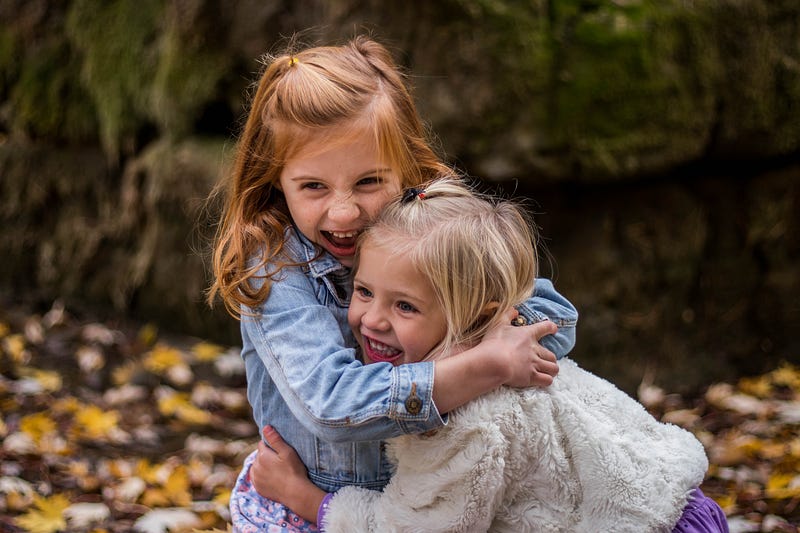
The one who is so emotionally fragile that being hit because of an action she probably didn’t even realize was “wrong” might just shatter her.
The one who is strong-willed and independent and has all the traits of a great leader. What would I be trying to accomplish by spanking her? Breaking her will? That’s one of the things that’s so great about her.
Kids are humans, which means they’re all different. They have thoughts and feelings and emotions and needs. Parenting them in the way they all need is a difficult task, but that’s what we sign up for when we decide to have children.
While the one-size-fits-all ass-whoopin’ might appear to “work” for some children, I know from experience that it can create lasting trauma.
There are plenty of positive, nonviolent ways to teach our kids respect, empathy, and any other positive quality we’d like to instill. I’ve found in my years as a parent and teacher that kids learn best by immersion and example.
Being “from the olden days” is no excuse for being an asshole.
When I told my children their grandparents were going to come watch them that evening, their initial reaction was enthusiasm. But, soon, my little one’s glee turned sour. “I don’t want them to watch us,” I heard her whine to Big Sis. “They’re rude.”
“They’re from the olden days,” my older daughter said as a way of explaining the sometimes-unpleasant nature of their interactions.
I think she probably meant it like, “They’re from the olden days, so we need to change our behavior around them.” If so, that’s cool. It’s code-switching. It’s a good thing.
What I don’t want my kids to think is, “They’re from the olden days, so they can act like assholes.” Just having been on the earth for more years gives no one license to treat anyone else as if their needs don’t matter. Nor does it give them permission to question or intervene in the path a parent has chosen for the safe, loved, happy, amazing children she has the privilege of getting to know each and every day.
I might allow my parents to watch the girls in small doses, but I will never quite relax. How could I, knowing their first instinct when they get even a little frustrated is to engage in a power struggle and threaten physical harm?
Kids can be difficult to figure out sometimes. But, regardless of our ability to understand and respond to their behavior, each child is a unique human being who is deserving of love and respect. When we understand this and act accordingly, we get closer to raising respedtful and loving adults — without ever having to lay a hand on them.
And, if my parents would like some help with that, I’m more than happy to oblige.
Author’s note: Just after writing this story, I came across this one by Leigh Green. Read it; it offers a different, and also quite relevant, perspective.
Subscribe to my newsletter to keep in touch. Tweet | Gram | Book