
I’m No Longer Afraid to Listen to “Ghetto” Music
An eerie experience that many of us went through at one period of time or another.
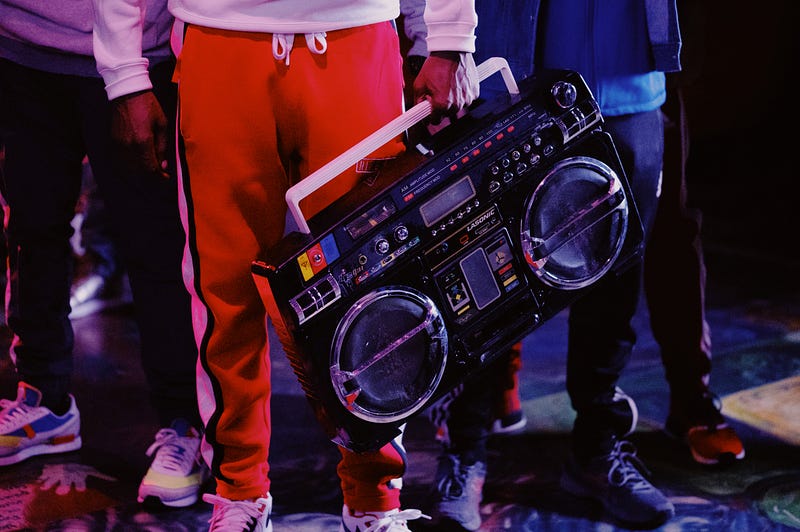
I hate the term “ghetto.” The label itself is scrutinizing. The same goes for words like ”urban” (essentially shorthand for “ghetto”). For a long time, these terms have been used as umbrella definitions to describe most genres of black music.
Not only do they perpetuate all kinds of associated racial stereotypes, but they also strip away the actual ‘blackness’ of black music and continuously deny black artists the diversity of expression.
More than that, it exposes an ugly truth. These categorizing titles have always served to make black artists and their music more palatable to the white public.
When we think of “ghetto” music, what first comes to our mind? Hip-hop, rap, R&B, soul? What do they all have in common?
These genres of music all originate from African American culture. At the forefront, the most prevalent themes are issues of violence, sex, poverty, and crime. But this is only what we’re made to believe. Just like any news publication, the bad news catches the most attention. What they don’t see (or refuse to see) is the beauty and power it wields within.
I will no longer hide my love for ghetto music, and here’s why.
Early Years
The first ever music video that I remember to this day was “In Da Club” [insert link] by 50 Cent. I was in the living room by myself when it came on TV, and I watched the whole thing from beginning to end. I couldn’t understand the lyrics; after all, I was only seven years old. But something about it was so captivating and nuanced; the beat behind it was incredible, the rhythm flowed effortlessly, and the cadence was unmatched.
I watched 50 as he was rapping along to his hit song. He stared directly at the camera like he was speaking directly to me, and I felt my head start nodding up and down. I never saw anything like it.
Ever since then, I have started digging deeper into African-American music. As an African, I was enthralled with it. I became a huge fan. Popular artists at the time were the likes of Lil Wayne, Ludacris, and Kanye West (before the antics, of course).
As I grew up, I was surrounded by African-American music, and it played a huge role throughout my high school life. Many of my friends were listening to this kind of music. Rap music was especially prevalent as that is what the boys listened to mostly.
Back then, Facebook was still popular, and Instagram was just getting off the ground. I remember the cool kids were always posting pictures online with Drake captions to go with their “Swag” outfits (This was the 2012–2015 era). It was ridiculous at the time, but the memories of it now make it very nostalgic.
Abandoning Ship
Over time, I started to realize that a lot of these artists and their music weren’t viewed in the best light.
Being in Africa, I couldn’t relate to the lives of black Americans, nor could I understand the hardships they went through. I only saw what they showed on TV, and it wasn’t great for the most part.
I would ask myself why every music video had to show money, fancy cars, and women shaking their butts. Why they had to glorify drugs, violence, and misogyny? Couldn’t they do something different? Something more viewer-friendly? Something that would educate our minds rather than destroy them?
The slow wave of “white-washing” started coming over me and made me rethink my whole stance on African-American music. It wasn’t long before I started distancing myself away from it. I didn’t want to listen to music that promotes such destructive behavior, and I definitely couldn’t support a genre of music that makes us black people look bad.
Awareness
The year is 2016. The artists on the scene are Drake, Future, The Weeknd, and many others. A whole new wave of rap and R&B music has hit the scene, and it is sending tidal waves across the world.
At this point in my life, I’m a grown adult, forming my own thoughts and making my own decisions. I’m now living in North America. I’m in a whole new world, surrounded by a whole different society.
As I navigated through this sea of white people, I didn’t know what to expect; in fact, I had to expect the unexpected. For all I knew, white people don’t like “that kind” of music. They would probably stare at you and turn the other way if they heard it. I thought I had to conform.
How completely wrong I was.
Exhibit A.
I was studying with a white girl one day when she decided to show me her playlist. My eyes squinted when I saw that it was all rap music. Okay, not all rap music, there were some country and alternative songs here and there, but for the most part, it was plain rap music.
I was surprised for a second, but I tried my best to hide it. Instead, I just nodded my head in acknowledgment. That was the first time I ever asked myself, “What does she know about rap music?”
Exhibit B
A bunch of friends and I went to a campus party on a Friday night. Being in a PWI in Canada, I thought I had a rough idea of what kind of music I was going to hear; Country music, Taylor Swift, Harry Styles, and maybe even some Britney Spears.
As soon as we got close to the venue, the song blaring out from the speakers was “Mask Off” by Future. The next few songs after that were all rap, being played by a white DJ, to a predominantly white crowd. Everyone seemed to know the lyrics and were singing along valiantly (some even uttered the N-word a few times).
Many of the scenarios, like the ones above, were very strange to me and left me with many unanswered questions. But where could I find the answers? I knew that I couldn’t just go up to any white person and start asking questions like;
“Why do you like this kind of music?”
“Do you even relate to Kendrick Lamar at all?”
“Do you really like us or just the music?”
“Is this a current trend that you will soon get bored of?”
That was a whole other side of the fence I was not prepared for.
Redemption
I had to put myself through some deep introspection, reflection, and self-analysis, which brought out many truths hidden under the surface. Truths about myself and the lens through which I viewed life.
My roots were buried deep under the guise of shame, guilt, and hate.
I hated that we were looked down upon; I hated that we weren’t successful. I hated all the stereotypes we were associated with. I hated that we always seemed to live under the thumb of white people. The ultimate truth was I hated myself.
No more. I entered revelation.
I realized that I had nothing to hide or be ashamed of. The power of music is greater than any prejudice or preconceived beliefs.
I see ghetto music in a different light altogether now. I appreciate its raw, real, and unapologetic nature. I love the fact that it speaks out on what many are too afraid to say and gives a voice to the voiceless.
We should no longer view the term “ghetto” abhorrently. Instead, we must look at it through a lens of pride and fulfillment.
I’ve learned so much about the experiences of black Americans in America from listening to their music, and I hope that they continue to use it to speak out, uplift and celebrate themselves.
“Ghetto” music is a reflection of the real world. It’s not always pretty, but it’s real. I think that’s what makes it so powerful.
Side note: Now, if you ever see me bumping Kendrick Lamar loudly in my car, you better start jamming with me because I ain’t turning this shit down!
Read Next —