
Reblogging my greatest hits so you don’t have to.
I’m Just a Third Wheel
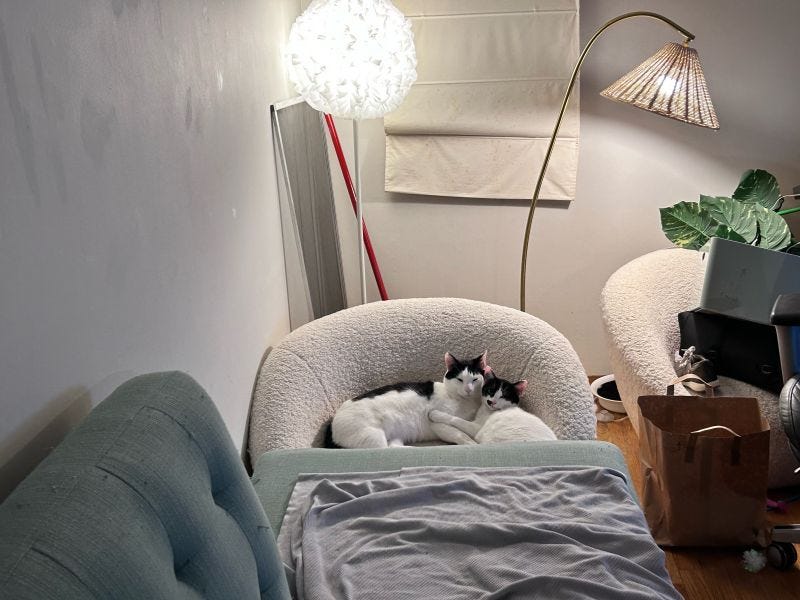
What to Do When Your Cats Love Each Other More Than You

Cats are often perceived as solitary and independent creatures (just like their mom), but they do have the capacity for social bonds and emotional responses, both with humans and other cats.
Cats can form close and complex relationships with one another, especially if they grow up together or are introduced in a friendly, non-threatening environment. Signs of these bonds include mutual grooming (licking each other), sleeping together in close proximity, and engaging in playful behavior. Such interactions are not only social but also help in establishing trust and a sense of security among them.
Cats do experience a range of emotions. While their emotional spectrum might not be as broad or as nuanced as humans, it includes feelings like contentment, anxiety, fear, and affection. They often express their emotions through body language, vocalizations, and behavior. For example, a cat may purr when content, hiss or puff up when scared or threatened, and knead or nuzzle when they feel affectionate.
Cats can also form strong bonds with their human caregivers. Studies have shown that cats can display attachment behaviors similar to those of children and dogs, seeking comfort and security from their human companions. They may show their affection by following their owners around, bringing them “gifts” (like toys or even small prey), and spending time sitting on their laps or sleeping in their bed.
Cats are also quite sensitive to the emotions of their human companions. They can pick up on cues like tone of voice, body language, and possibly even changes in scent related to different emotional states. This sensitivity can influence their behavior; for instance, a cat may become more affectionate or withdrawn depending on the mood of their owner.
In multi-cat households, the social dynamics can be quite intricate. Cats may develop a social hierarchy, and certain cats may pair off as closer companions within the group. Interactions can range from very affectionate to tolerant or even hostile, depending on the personalities and histories of the cats involved.
The social world of cats is complex and fascinating, reflecting their capacity for affection, companionship, and emotional depth. Especially when they ignore their human and play all day.
What are you thoughts? Got any to add? Feel free to debate.
Original Post here.
Citations

Like this story? Check out a list of all articles. Don’t forget to clap, subscribe, or become a member! If you’re feeling generous, leave me a tip! If you’re curious about sources, on a separate page because long citations tank my stats! Be sure to also check out my other publications at history.internetarchaeology.io.
The opinions and thoughts expressed on this platform reflect only the author’s views alone. Images/passages within this publication may contain certain elements of artificial intelligence; but unless specified, have been edited for this article. This image originates from OpenAI/ChatGPT (2024).


