
“I’m Gay”: Telling My Husband and Children
Coming Out Was Both the Beginning and the End of a Journey
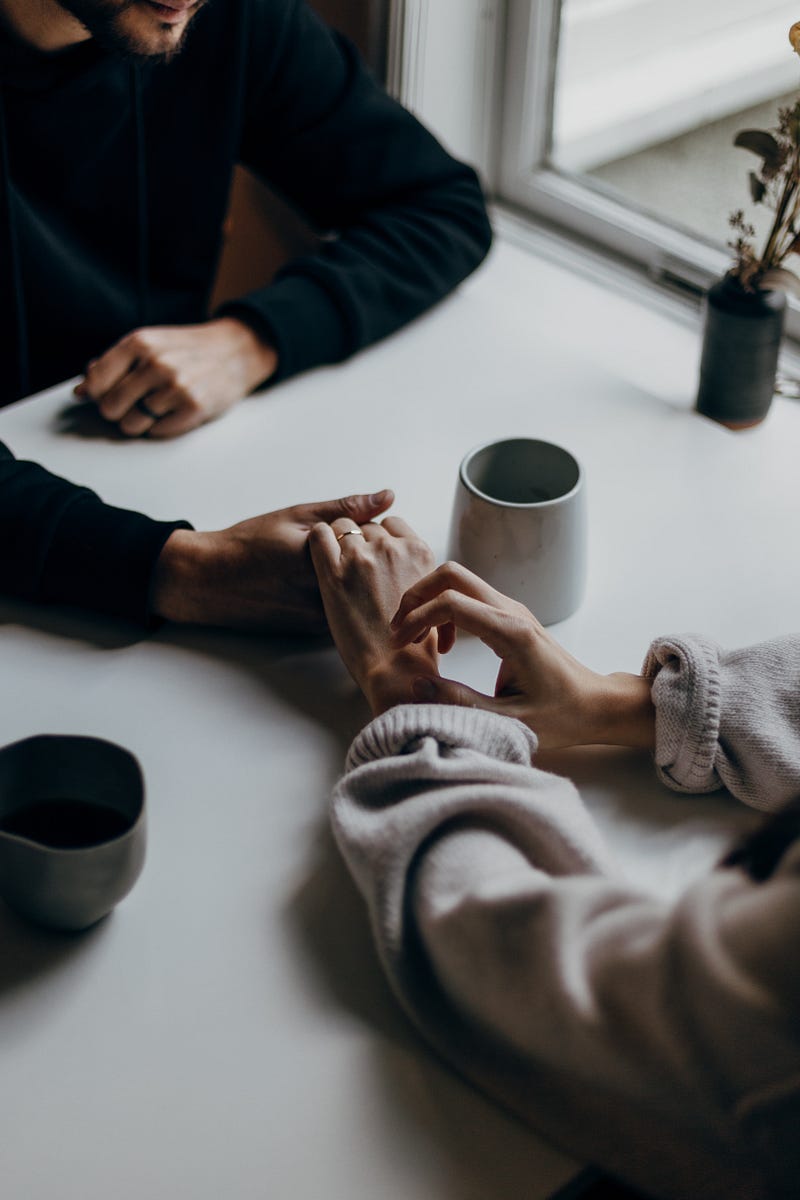
I spent over two decades married to the same man. We have two kids, two cats; we’ve even had two dogs in the time we’ve been together. But three years ago, at the ripe middle-age of 44, I told him and our two children that I’m gay and I want a divorce.
At the very start of our relationship, back when we were both 21 and still wrapped in our college-life delusions about being adults, I told him that I was bisexual. He was fine with it, thought it was a hot accessory for our fantasy life, provided I didn’t act on it of course. I was fine with that because being bisexual does not mean you’re automatically polyamorous and must have both male and female partners in your sex life. It just means you have lot more options for who you might fall in love with.
But there was one glitch, a major one, that only time and a lot of inner-work made clear — I’m not bisexual; I’m a lesbian and I don’t ever want to be with a man again.
Wait… was this really real? Was I really doing this? How could I do this?
I was 44 years old and now, I’m suddenly a lesbian? The implications of this, the layers of this, twisted me up in more ways than I can even verbalize three years later. But here’s what I can tell you…
It wasn’t sudden at all.
We first see ourselves in our parents’ eyes. When we’re brand new to this world and have no idea what anything is, our parents’ behaviors, responses, attention and inattention to anyone or anything, give us the blueprint for living. We learn how the world works… who we are, who to trust, if we can trust ourselves and our own perceptions, and we learn how it all fits together, how we fit in to this grand, complex, alien world.
And as we grow up, we continue this process, putting the puzzle pieces together and making sense of it all. We do this by looking for familiar pieces of ourselves and our experiences in books, films, magazines, family, and friends. We fall and we learn from others if we should brush it off or cry; We learn who and what will keep us safe; and when we have a feeling, although we may have instincts attached to them, we ultimately look to the world around us to understand them and to know what to do in response.
And if those stories, those characters, those reflections don’t match our instincts, we’re left confused and feeling like there must be something wrong with us. The world and our selves remain alien. We look around and see everyone else adding 2+2 and getting 4, while somehow our 2+2 = french toast. Multiple psychoanalysts work support these ideas such as Erik Erickson’s theory of psychosocial development, Donald Winnicott’s concept of mirroring, Heinz Kohut’s Self Psychology, and other… just without the french toast math. That was mine.
The world and our selves remain alien. We look around and see everyone else adding 2+2 and getting 4, while somehow our 2+2 = french toast.
Imagine if you never had french toast, never even saw it, and everyone said it was disgusting. Even if some strong part of you thought otherwise, I’m willing to bet you probably wouldn’t own up to that. And if everyone else added 2+2 and got 4, even though you didn’t and have no idea how they did, I’m willing to bet you might fudge a little and say you did too. And you might even work hard to figure out how they did it so that maybe someday, you’ll get 4 and not french toast.
That was me… French toast, all the way…
Growing up in the 80’s and 90’s, the only non-deragatory sexuality or romance I was ever exposed to was heterosexual. No woman on the screen or in books ever kissed another woman let alone had a romantic relationship with one. And if there happened to be a token character, or if someone happened to mention one, they were some derogatory stereotype who was the butt of jokes, created for the male-gaze, or experienced blatant violence.
All girls fit into one type of box and if not, they were stored in another and taken out with the trash.
A similar phenomenon occurs in media’s representation of “black” and “white” people.
A 2012 study looking at representation on TV and its impact on children’s self-esteem had similar findings. In a survey of almost 400 black and white boys and girls, researchers found that the only demographic that didn’t experience lower self-esteem after watching TV was white boys. They pointed to racial stereotypes and the way black characters were portrayed as one explanation: “Black male characters are disproportionately shown as buffoons, or as menacing and unruly youths, and Black female characters are typically shown as exotic and sexually available,” the authors wrote. The TV portrayals of white boys, on the other hand, were “quite positive in nature.”
As this and so many other articles and studies point out, how we view ourselves is directly affected by how we see ourselves portrayed or erased in media.
As a child and throughout my life, the messages I received were loud and clear from every direction: Marriage and kids are what define a successful life (aside from career, of course). It’s what everyone wants, unless there’s something horribly wrong with you.
There was no questioning it.
And when I was in Brownies in elementary school, maybe 2nd grade, and Allie Coble laid her head in my lap as we sat on the floor of Wannamaker’s watching the annual Nutcracker light show, I knew. I knew that there was something horribly wrong with me. I remember that feeling, that zing lighting up my whole body and freezing me in place, afraid to breathe or shift because I didn’t want that moment to ever end. Even though I didn’t completely understand what it was, something in me knew. And for that moment, just for that moment, I didn’t care about anything except making that moment last; it was that amazing.
And when it did end and she lifted her head to sit up, I could feel how different I was. And I could feel the sudden pressure of my shame growing the space between us.
I already felt like I was different, like I didn’t fit in, like girls made no sense to me, and I’m sure I made no sense to them either. I wanted to be a ninja or a spy or an archeologist like Indiana Jones when I grew up. I loved knives and guns and briefcases (because that’s where you put them according to spy movies). And while the other girls had pigtails and lip-gloss, I kept my hair short so I could slick it back and be cool like The Fonze on Happy Days; I wore my red Michael Jackson Beat It jacket religiously; and I even had a switch-blade comb to complete the ensemble. Not one other girl looked like me, and when I hit puberty, I suddenly, with a jolt of disgust for myself, felt it like a hard and cold slap expanding the space around me more and more. I was always on the outside, pressing my face against the rigid glass, looking in. I felt like a freak. I wasn’t like anyone else, and no one was like me. And now, I had this french toast, I mean these feelings…
And when my best friend’s father refused to let her come to my 4th grade birthday party because I looked like a boy, and when others mistook me for one while I was out at the mall, I felt even more ugly, disgusting, and wrong. I didn’t want to be a boy. I just wanted to be me. I wanted to like what I liked and feel what I felt. What the hell was wrong with me?
…Everything. The shame overtook me.
I grew my hair long and I kept it that way; I put on makeup; I got a Chip n Dale’s male stripper pinup calendar, and I started dating boys (though in secret, I was often flipping to the back of Metal magazine to see the print of Samantha Fox’s naked breasts that seemed to appear in every issue. Thank you Samantha! I had no idea back then, but she’s actually a lesbian too and didn’t come out officially until 2003. My closeted inner-teenager is very happy.)
Dating was strange and awkward, even with Ms. Fox’s boobs waiting in the wings. I felt like an alien observer. What is this strange land and what are these strange creatures? My friends all had crushes and although I started puberty well before any of them (I was 9 when Aunt Flo paid her first visit), I had not a single blip when I looked at any boy. Nothing. Nada. Zip. Zero. It was like looking at a bookshelf… Yup, they’re books, and I don’t care to search through the many titles to find one right now… While my friend’s eyes seemed to home in on one particular book or another and that was that. They knew it was the one they wanted. It made no sense to me. How could you tell you wanted that one when you didn’t even read the book jacket? Seriously… It was that foreign to me. I didn’t understand at all what it was supposed to feel like because to me, they were books! But alas, if I was going to be “normal” and not have something wrong with me, I needed to figure it out.
Maybe I’m not paying enough attention, I thought. So I decided I would just choose someone. Maybe that’s how it works. Maybe I just need to pay more attention and then a crush will bloom. Poof!
So I scanned the books, I mean the boys, and I picked one who seemed nice and handsome. My friends always disapproved of my choices, though. Go figure. They clearly didn’t see what I saw. I don’t know that I did either, but I thought you pick and then you obsess, and voila you have a crush! So that’s what I did… just like my friends, or so I thought. I really had no idea that wasn’t how it worked.
As you can imagine, dating complicated my feelings even more. Now I was forcing myself to do things I didn’t want to do, all in the name of science, I mean love, or ah… what do I mean? Forcing is forcing and it was shitty, and I felt shitty. But I kept doing it, kept going in this direction, because I didn’t know I had any other choice. That part of me that awoke at Wannamaker’s, was hiding deep in the background, so I don’t think I even knew being alone and ostracized for it existed as a choice at this point. I was on autopilot. This was life. Everyone else seems happy with it, so I didn’t understand why it felt so shitty. It must just be me. Enter eating disorder, therapists, antidepressants, suicide attempts, and hospitalization. I’m cured!
None of it worked.
But hey, it was nothin’ a drink, or a bottle of vodka, can’t handle…
Like so many of us, I had a lot going on in my childhood aside from this, but maybe this really was one of the biggest things that lead me to be self-destructive and suicidal as a kid. Maybe it was one of the biggest reasons I fell so far and so fast into alcoholism.
Alcoholism is a complex disease, an allergy that’s often hereditary, but just like any disease the formula needs to be right for it to flower. I may be predisposed to diabetes, but if I don’t use sweets as comfort and eat sugar every night before bed and whenever I’m stressed, there’s a great chance I won’t ever have diabetes. (Maybe I should rethink my nightly desserts.)
From the start, when I drank it was for erasure.
I was at college and now shit was real. Dating and sex were going hand-in-hand. I leapt from a cliff and didn’t care where I fell or if I ever made it back up. Nothing about me felt right or good, ever. And there was never I time I didn’t feel alone. I had lots of friends and was always doing things; on the outside, I looked like anyone else, but on the inside I felt like I was dying. Everything in me said I had to live this life, and I had plenty of parts inside me willing to step up and make sure that happened. That year I was a wreck (you can read about it here).
I was running with the shame, with the fear. They were my constant companions.
Why would anyone want to live their life as someone else? I may not have consciously understood it in those terms, but I certainly felt it in every atom of my being. I felt trapped and I hated myself for it. So of course, I ran head-first into a bottle and stayed there for 11 years hoping to never see the light of day. I had no concrete idea of what I was running from. I just felt really bad. I thought I was crazy, just a horrible, irresponsible, selfish, shitty person who should just drown. I literally prayed to drown, to never wake up. I was running from the horrible, shitty, crazy me I thought I was.
But what I was actually running from was the real me, the sane, kind, loving, lesbian me that I still didn’t see or understand. I was running with the shame, with the fear. They were my constant companions.
When I met the man who became my husband, I was still deep in that alcoholic stupor, still falling deeper and deeper still, but something began to shift. There was a break in the wall between me and the world and every now and then I could see little glints of light coming through if I angled my head just right and squinted my eyes really really tight. It was faint, but it was there.
All those years, the mud of judgement, fear, and shame all piled on thicker and thicker. How is it that now, having begun a relationship with this man, a crack began form?
By the time we started dating, the world had begun to change in a very significant way. It was slow, but it was happening.
On our first date, we saw the movie Chasing Amy, and for the first time ever I felt validated. The character, Amy, was a bisexual cisgender woman and she owned it. She was just herself. And the judgements and expectations of the male characters in the film, the boxes they tried to put her into were not going to contain her. She wasn’t some sex-pot vixen there to fulfill their girl-on-girl porn-star fantasies, and she didn’t just need the right guy or great straight sex to be converted into being heterosexual. And what’s more, she told them that, threw it back in their faces, unapologetically. Of course, there were things still off about the movie, but for the first time ever it seemed like it was okay to have these feelings for girls.
In that movie I finally saw some part of myself that made sense. Because of that and because this man I was dating voiced his acceptance, I finally owned a tiny piece of that huge part of me. It felt like I was actually breathing for the first time ever. He was the only person I ever told other than one of my childhood best friend (a woman who I had very dysfunctional sex with a couple years before this, which you can read about here).
Despite all of our dysfunction over the years, this relationship was the first time I felt connected to someone, to some part of the world. I felt a sense of belonging.
Connection is something we all crave, something we all need to survive like food, water, and air. It is so essential, that lacking this connection, this social bonding, creates a compulsion to satisfy it. This is theorized to be at the heart of opioid use disorder, addictions to substances like heroine, fentanyl, and oxycontin. Social connections, social bonding and affiliation, actually release endogenous opioids into our system causing feelings such as warmth and affection. On the flip side, social loss or separation diminishes these and cause feelings of disconnection and distress because those experiences reduce endogenous opioid activity.
Forty years ago the late neuroscience pioneer Jaak Panksepp first proposed the now widely accepted hypothesis that our body’s naturally produced opioids — endorphins and closely related enkephalins — are critical to the nurturing bonds that develop between parents and offspring and also between monogamous mates in mammals.
Panksepp also observed similarities between maternal love and heroin addiction. In each situation animals would persist in a behavior, despite negative consequences, in order to gain access to solace from the partner — or the drug.
Fortunately, I did not develop an opioid use disorder to compensate for the lack of connection I felt, but it’s clear from these studies that the strong disconnection and distress I experienced over my lifetime was likely the main reason I hung on so tightly to my husband and family, despite negative consequences. My need was so strong that, just like anyone with an opioid use disorder, I made sure I gaslighted myself into believing whatever I had to so that I could keep the connection going. Maybe that need was why I finally entered sobriety. Maybe my drinking threatened this connection too much. And maybe that’s why, even when I knew how it would end, it was so hard to finally say the words and let my marriage go.
***
I had been fighting against accepting my sexuality my entire life, but now it was rearing up above me and cresting, it’s shadow unmistakable and looming, and it was crashing down whether I wanted it to or not. There was no way I was escaping this Godsmack or its riptide.
When I saw it in the distance, unmistakable and coming for me, the fear surrounded me and took my breath, beating me down until I couldn’t stand or see. I meditated, I read, I practiced yoga and I cried. Some days, most days toward the end, I just cried, sometimes for hours on end.
The first time I told him that I was having these feelings, that I might be a lesbian and that I might want a divorce, I felt the floor pull away. I wasn’t ready to own this. I wasn’t ready to do this, to be this. And I knew I was breaking his heart. The fear of it all, of losing everything, made me backtrack, made me question, made me drag the sword slowly and more slowly from us both. It would still be many months before I fully embraced the reality of who I am and shared it definitively, confidently, with him and our children. I had to be absolutely sure before I could let go to that rising ocean, and it seemed the only fair thing to do was to be honest and share with him the shifting tides that suggested this tsunami was taking shape in the distance.
But how do you let go of something you held onto so tightly, something you worked so hard to make true and carved your whole self out of? How do you let go of that life, that world, that identity, and accept something about yourself that you were taught from the youngest age that everyone, everyone, both personal and public, says is disgusting and wrong, something people are actually tortured and killed over?
What was I throwing away? Our entire life, mine, his, theirs? Would anyone or anything be left at all?
How could I trust that everything would be okay?
Everyone’s fate seemed to be in my hands, like I had to choose between my life and theirs. Like I was a fated character in that one episode of Batwoman, where someone would wake up with a bomb strapped to their chest, the counter ticking away, and the only way to save themself was to push a button that would blow up the lives of others.
But was this really just about saving myself? And would their lives actually be destroyed because of it?
In recovery, you likely know, we talk about hitting bottom and that each person’s bottom is different. Some enter sobriety after they wake up in a hospital bed and learn they almost died and next time they surely will. Other’s do something in a blackout that causes so much fear they can’t hide from it in a bottle. There are an infinite number of scenarios, and in every case they have one thing in common:
Death stares them in the face.
It becomes a clear and distinct option. All you see is the floor you hit and your own blood pooling around you. Your only option is surrender. It has to end somehow. You either admit that your way has gotten you nowhere and let go no matter how hard and painful it might be; or you give up on yourself and on life and smash yourself down, once and for all, through that floor to your death.
When you hit bottom, those are quite literally the only two options left. We know there’s absolutely no way we can live that life anymore. Anything else would be better.
Bottoms aren’t exclusive to alcoholism or other substance use, though.
The day I told them I’m gay and want a divorce, my alcoholic bottom had been 15 years before, but there I was flat on the floor, pooling my own blood yet again and staring death in the face. This time, however, it had nothing to do with alcohol or any substance in the least.
It had to do with the life I was living. There was just no way I could do it anymore. I would’ve rather died. It hurt too much. I had to end it; I had to either end this part of me or all of me. So I chose to end this part, the false self that I struggled so long and so hard to create.
I hammer-and-nailed that persona onto every aspect of my body, mind, and spirit, so prying off each splintering piece was going to be painful; it was going to gouge out pieces of my heart, maybe my sanity with it. And what’s worse, I had to hurt others to do it.
What I didn’t realize, though, was that I was already hurting them. By living this life, by holding onto it, by trying to force myself and my family to fit into this image of what I believed we should be, I wasn’t allowing any of us to live fully. Not only was I preventing them from knowing the real me and inadvertently teaching them to hide who they really are; I was keeping them in a dysfunctional home; I was modeling a codependent life; and I was denying both myself and my husband the life and the love we deserve, the one we could never give to each other no matter how hard we tried. So in accepting myself and giving myself this gift, I was giving it to them as well.
Yes, it would hurt, but this pain was the pain of growth.
We tend to see pain as a bad thing, something to avoid at all costs but in doing that, we deny ourselves a full and rich life. Giving birth, for example, is one of the most painful experiences a person can endure (physically, mentally, and emotionally), yet we choose to do it over and over again. That’s because it’s worth it, because without it no one would exist. And because without it, we wouldn’t have the opportunity to experience the decadent richness of life that only being a parent provides. Emotional pain is no different. We need it to be whole, to grow, to be fully alive. Everything, every choice, comes with both joy and pain.
“…every pursuit…comes with a shit-sandwich, …so the question is, what do I love so much that I don’t mind eating the shit-sandwich that comes with it?” - Elizabeth Gilbert
I experienced a lot of joy among the pain of my marriage, the pain of our dysfunction, the pain of living as this false self. It just came to a point where the pain was too great, and I could finally see the love we were all missing.
This was the pain of growth.
There’s a quote by Elizabeth Gilbert that I often go back to. She said, “…every pursuit…comes with a shit-sandwich, …so the question is what do I love so much that I don’t mind eating the shit-sandwich that comes with it?” In other words, you can’t get away from pain, so why experience pain from something you don’t want, something that’s not healthy or good for anyone, just because something you do want will also cause pain? Pain is pain and it’s temporary, so why not be happy while it hurts? As Jim Carrey said, “You can fail at something you don’t want, so you might as well take a chance at doing what you love.”
Why live a life that someone else says you should live?
Whether you’re gay or not, it’s a trap that most if not all of us fall into. Look at clothing, weight loss, career choice, friends, homes, marriage; they’re all boxes. And wouldn’t it be nice if they were fully and completely our own boxes, not something prefab and handed to us because others are displacing fears of their own? Wouldn’t it be nice if we didn’t feel like our value hinged on the approval of others, if the love we receive is based solely on who we are, individually, and not on whether or not we followed directions?
We all get only one life, why should someone else have theirs and yours too? One life at a time is more than enough for any one person to handle. Usually people are grabbing at the lives of others because they’re too afraid of their own. Let them… not my monkeys, not my circus.
After I hit bottom, I had to allow these lessons to burrow beneath the splintered parts of my false-self; the parts I pried off bit-by bit, exposing the true me that was re-forming — a delicate loam, still pulpy and raw. This was the only way they could sink in deep enough to travel the long and slow path from my head to my heart.
We all get only one life, why should someone else have theirs and yours too? One life at a time is more than enough for any one person to handle.
The morning after Christmas, my eyes opened to the darkness of our bedroom, the false night of our blackout shades. And my tears began to fall; I realized I had just woken from a dream, that I was still there in that bed, still feeling my husband’s weight beside me. This was still my reality.
And it had to end.
“We need to get a divorce,” I said to the ceiling above me, to the darkness encasing me like a tomb.
“I know,” was all that he said.
We spent a long while talking that morning after I let the light in. And a week later, when we sat our children down in the living room, told them we had had something important to talk about, they were surprised but only a little. It wasn’t the first they heard of my sexuality, but they thought I was bisexual, they thought we’d stay married. And when I told them I’m a lesbian and we’re getting a divorce, they understood easily, accepted me quickly. They were even relieved on some level that we were divorcing because for a long time, they weren’t happy with the dysfunctions of our home, dysfunctions that had little or nothing to do with my sexuality. You see, even without my sexuality thrown into the mix, divorcing would’ve been the best, healthiest choice for us all anyhow.
We’ve been divorced for 3 years now and as expected, it was a rocky transition. It took time and brought pain. But even through it, through the pain and now on the other side, we’re all much happier for it. He remarried about a year ago, bought a new home, and has a much healthier relationship with our children than he’s ever had before. He and I have even become friends again.
And I was not only accepted quickly and easily by my children, I was also made a celebrity among my daughter’s gaggle of friends when I finally started dating; I was a real live lesbian with a real live lesbian girlfriend. It sounds funny, and I make jokes, but looking back on my childhood and even my adulthood, it is so crystal clear how much that really does matter. Progress has given us all the gift of being able to see and understand ourselves through lesbian characters in shows and films. Characters who reflect our reality, characters who aren’t just some token stereotype but a normal part of the human mix.
And I was exciting to them because we took it a step further. We weren’t fiction. Heterosexual people have references everywhere, see themselves in all imagined forms all the time, but my girlfriend and I were possibly the only real-life adult reference my daughter and her friends had that reflected who they are or who they could be. They got to see real lesbian people kissing and holding hands, laughing, playing games, doing normal domestic things together, living a normal every-day kind of life just like any other couple. Because we are normal; we are just like anyone else, and we are beautiful in every single way.
Thank you for reading! Feel free to reach out or follow me on social media.


