
READING & WRITING
I’m Communicating With You by Using Words Because I Can
The bond created between the reader and the writer is special
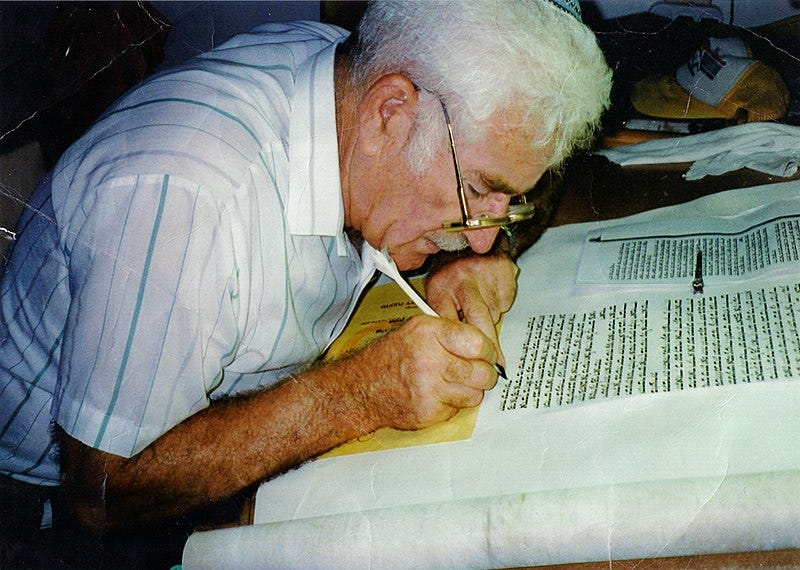
“In the shop, we buy and sell them, but in truth, books have no owner. Every book you see here has been somebody’s best friend.” — Carlos Ruiz Zafón
Novels are possibly the most intimate means we humans have conceived for understanding a stranger’s thinking.
Shaped by formal standards, experimentation, and cultural and social influence, Novels have a long, rich history. Authors use novels to tell detailed stories about the human condition, society, history, and morality through various genres and styles. Our brains seem uniquely adapted to making sense of experience through stories. And in Aristotle thinking, only a person with experience could practice practical wisdom. We tell stories and listen to them; even a sacred text such as the Bible pursues to make meaning of the world through stories.
The relationship between audience and author has been explored, from classical rhetoric to the twenty-first century. Much remains to learn about this relationship, as evidenced by the continued interest and diverse opinions about this subject. Yet, some things are as clear as the sun is bright.
The process
A character speaks — shouts, mumbles, whispers — breaking the stillness and, in so doing, calls the writer into existence. The writer responds by cocking her head and listening. Then writing.
Writing a book can take days, months, or even years, and a struggle with characters ensues. Writers place themselves in their books, take themselves out, and insert themselves back again in several different ways and guises.
We imagine ourselves as godlike beings who wield omniscient and absolute authority over our creations, manipulating characters like puppets and convincing them to enact our every urge. But that’s not entirely true. Writers are at the beck and call of their craft, as I suspect all gods must be.
The bond between reader and writer is analogous
And while it seems farfetched to think of a character as a preformed, antecedent entity, floating around in some primordial, waiting for an unsuspecting writer to show up, often that’s how it feels. The character leaps on board and takes over the controls, and the writer — gratefully, hopefully — hangs on for dear life.
While characters sometimes have an unsettling amount of agency, the author has authority upon which the characters rely. The relationship between novelist and character is interdependence, and the book is the evolving ground of their partnership.
As with the character and writer relationship, the bond created between the reader and the writer is special. It is thought that the writer controls the reading experience, seducing readers with a story and holding them in captivity. The reality is more complicated and mutual. This connection is symbiotic, too, and the book is a co-creation.
Biblical stories never give us enough details; our curiosity is constantly triggered, and we are left to supply the missing parts ourselves. As a writer, I rely on my readers to finish my thoughts. Every word I write is decoded by the eye and attention of a reader. My scenes exist because readers are willing to animate the story with their creativity and lived experience. This means that each reader is reading a very different novel, and anyone who has ever been in a book club understands this to be correct.
All meaning is created through relationships, and all meaning is relative. And because we are constantly changing, the words you read today are very different from those exact words when reading a year or two from now. The Bible does not tell us what to think or what moral we should carry away with us. Instead, it forces us to form our own opinion after reading its stories. Remarkably, we may reread a story at a different stage of our life and discover something we never noticed before or perhaps never understood.
That means that the story is born anew by changing recollections of time and place — your childhood bedroom, the color of the walls, the hue of light — and by the life you’ve lived in the years since you last read the text.
So, I’m speaking to you using words because I can. In writing, I can transmit complicated thoughts to you. What I’m doing right now is making sounds with my words — tones that hiss and puff, and then your brain transforms them into thoughts. Tone exceeds the words we choose. Each note and pitch is a vibration expressed as a wavelength in music. It’s how we communicate our personality. And when our thoughts connect, our hearts open, tones resonate with the words on the page — a kind of lyric sings in our hearts.
Author intention and audience response do not always match
We create a world by the interaction between writer and reader and the larger cultural and physical world in which writing and reading occur. This means the writer intends some meaning and proposes that intention through a “scene” or framework. The reader interprets the message from the signals sent and, in a sense, cooperates with the writer to form meaning. If the writer miscalculates the audience of readers, or the reader cannot enter into the writer’s world and submit to her intention, then communication is a miss.
The relationship between writer and reader is powerful and deserving of our respect. A reader has given our words the time and chance to make a difference in their life, and my job is not to let down the reader but to give them something worthy of reading. The result is a collaboration, a book we cannot put down.
Thank you Sarah-Jane W.
Thank you for reading and sticking with me to the end.
If you haven’t signed up for Medium yet, and want to read all my articles, use my affiliate link! There’s no additional cost to you, and I’ll receive a small commission — thanks for your support!


