
NON FICTION
I’m Chinese but I Don’t Speak Mandarin
What it means to be a Chinese Malaysian
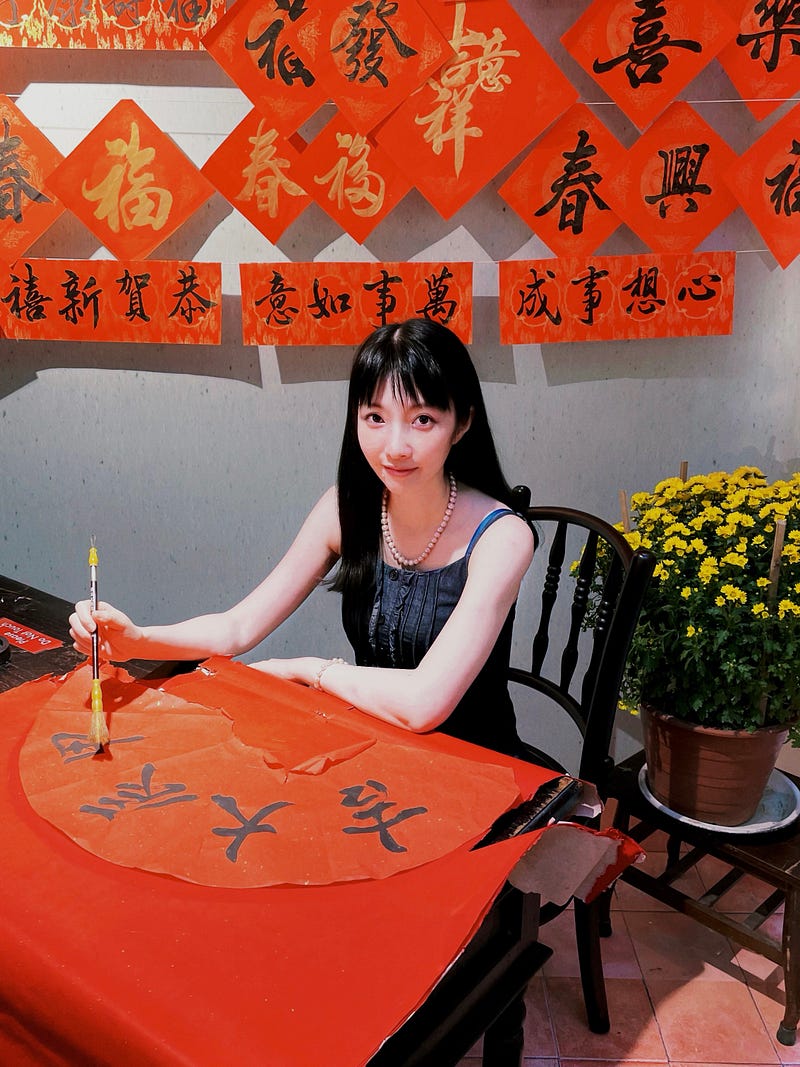
Disclaimer: The views expressed in this article are the author’s personal opinions. They are not intended to offend or target any specific individuals or groups mentioned. The content is for informational purposes only.
“Are you from China?”
“Are you a mix of Malaysian and Chinese?”
“How long have you been living in Malaysia?”
Oh boy. Here we go again.
Over the years of being active on social media, I’ve noticed that many foreigners are not aware that Malaysia is a melting pot of culture. The main ethnic groups in Malaysia are the Malays, Chinese and Indians. I am a Chinese Malaysian, with “Chinese” referring to my ethnicity and “Malaysian” to my nationality. I am 100% Chinese, not mixed, and no, most of us have not even visited China, let alone been born there. The Chinese communities have been here since the 18th century. Well, technically since the 15th century with the Peranakan Chinese. But that’s a story for another time.
In Malaysia, we just say “Chinese” instead of “Chinese Malaysian,” when we refer to ourselves. As for the people from the People’s Republic of China, we call them “mainland Chinese” or “PRCs”. It is interesting that we sometimes feel offended when people mistake us for Malays.
Personally, I feel annoyed when online acquaintances keep referring to me as a Malay, even after correcting them a few times. There is a sense of pride in being Chinese, although sometimes I’m hesitant to point out their mistakes. I feel that if it is done frequently enough, it increases the risk of unintentional perceptions of superiority over other ethnic groups in Malaysia.
The interesting thing about the Chinese in Malaysia is that we take pride in our heritage to the extent that we often resist speaking our national language (Malay) at home or with non-Malay friends. Unlike in neighbouring countries like Indonesia and Thailand, there is a lack of complete assimilation of cultures and languages among different ethnic groups.
That said, Chinese Malaysians don’t seem to hesitate when it comes to speaking English at home. I use the term “English” loosely because honestly, we converse in Malaysian English, which is essentially an English-based creole language. That’s just a fancy term. In actual fact, it’s broken English. Unfortunately, broken English seems to be my first language, although I usually use a mix of Cantonese and (broken) English with my parents. My Cantonese isn’t that great, either, so I suppose I speak broken Cantonese and broken English on a daily basis! I can’t even watch Hong Kong movies without Malay/English subtitles. Not that I watch many Chinese movies, but more on that later.
Although we speak passable Cantonese or other Chinese dialects (such as Hokkien, Hakka, Teochew and Hainan), many of us cannot speak Mandarin (the official Chinese language) or read in Chinese. Not many people know this, but there are two unofficial groups of Chinese in Malaysia. Oddly enough, these two groups are defined by the type of primary schools they attended from the ages of 7–12. One could say that these are the formative years and thus influence our interests and preferences.
The first group consists of those who attended Chinese primary schools. We refer to them as “Chinese-educated”. They are often perceived as hardworking, quiet, gentle, and generally more interested in Chinese entertainment, media and pop culture. The second group includes those who attended Malay/English primary schools, and they are often seen as more opinionated and into Western culture. These are just stereotypes, but like any stereotype, there tends to be a grain of truth.
I belong to the second group. In Malay schools, even though classes are conducted in Malay, most of the time, we speak English with our friends and even with the teachers in between lessons. As I mentioned earlier, Chinese Malaysians seem reluctant to converse in Malay with non-Malays. Honestly, I don’t know the actual reason, but I admit that I do the same. I speak Malay fluently (at a native level) but choose to converse in Malay only with Malay people who don’t speak English. Since we don’t learn Chinese in school, most of us can’t speak Mandarin, let alone read in Chinese, except for those who speak Mandarin at home or attend private lessons. I did try learning Chinese/Mandarin from a neighbour when I was in primary school, but lost interest quickly as I couldn’t (and still cannot) understand how Chinese words are formed without alphabets.
We jokingly use the term “banana” for Chinese people like me who don’t speak Mandarin or are illiterate in Chinese — yellow on the outside, white on the inside. The yellow refers to our skin colour, and white refers to the English language. I’ve never met a Chinese Malaysian who is offended by the term. Personally, I don’t have an issue with being called “yellow,” but I understand that in other parts of the world, it is offensive to refer to an Asian person as “yellow.”
To be honest with you, I do think my skin has a yellowish undertone, which is more pronounced in cold temperatures. Or at least cold by Malaysian standards. It is what it is. To me, there is no shame in that. Sure, it might not be the most attractive colour to some people, but who cares? It doesn’t really matter to me. I can’t pretend I have any other skin colour. As for the “white on the inside” part, perhaps it originated from the mindset of an ignorant Chinese (Malaysian), associating the English language with white people. I suppose their first exposure to the English language was during the British colonial times. It is not meant to be racist, but I can see how it might be perceived as such by non-Malaysians.
Back in school, not being able to converse in Mandarin wasn’t a problem, as my town mainly consists of Chinese people who attended Malay schools. However, once I entered the workforce, I found that almost every Chinese Malaysian can speak Mandarin. Many of my coworkers are, in fact, Chinese-educated. Even if they speak Cantonese with me, it is still hard to be close friends due to different interests. As mentioned, those with a Chinese education often lean towards Chinese pop culture and consume Chinese media, which I have no interest in.
It also leaves me feeling a bit isolated at times as they speak Mandarin among themselves at work. I remember attending a department lunch many years ago, during which everyone spoke Mandarin. Even the manager! So, I just sat there and played with my phone. My coworker, who was beside me, turned and asked me in Mandarin, “Why don’t you join in the conversation?” I could understand simple Mandarin, so I reminded her that I don’t speak the language. She laughed, and said that she had forgotten because I looked like someone who is Chinese-educated. Huh?
She wasn’t the first one to mention it, though. Nearly everyone I meet says the same thing — storekeepers, cashiers, doctors, hairdressers, everyone. “You have very fair skin and fringe (bangs), so I thought you went to a Chinese school.” Frankly, I think that it is a silly and illogical reasoning as one is not related to the other.
I suppose it boils down to the point I mentioned earlier. The school that you attend will shape your personality. I guess my looks fit the stereotype of someone who attends a Chinese school — gentle, ladylike, and perhaps a bit submissive. The ultimate good girl look, I’ve been told. It couldn’t be further from the truth.
Follow The Hub Publication for practical tips and inspiring stories.
If you enjoyed this post and would like to support me, please consider buying me a coffee. Thank you very much! https://ko-fi.com/samtzelin


