
I’m Being The Client I Wish I’d Found in My Freelance Writing Days
Lessons in entrepreneurship from my freelancing career.
I’ve had my fair share of client horror stories as a freelance writer.
From unpaid invoices to expecting 2x the scope for half the money, my freelance writing career was full of ups and downs.
The freelance writing model worked well for a couple years, until I realized I had way too many clients, and the only way to manage them all was to work 14-hour days.
My ambition and financial planning took me to a stage where I had no time for myself, and all I looked forward to on a daily basis was work.
That’s when I took baby steps towards outsourcing and delegating work.
At one point in my career, I had a client who expected five $200 1200-word articles every week, and having them on a retainer basis gave me the confidence to hire my first writer.
Since then, I’ve come a long way. My team composition currently looks like —
- 3 writers for 3 different niches
- 1 content manager to convey client expectations to writers and check if their work is upto the mark
- 1 SEO expert to edit and finalize the articles.
I’m soon nearing the three-year anniversary of being self-employed, and at this special juncture in my career, I wanted to take a moment to reflect on how far I’ve come, and how my experience as a freelancer has taught me valuable lessons about running a business.
In this article, I’m sharing all the reflections from my freelancing days and how I’m implementing them as I run a content business. In other words, here’s how I’m being the client I wish I’d found in my freelancer days.
1. I don’t ask for free samples
In my freelance writing days, when a client asked for free samples, I either sent them examples of my previously-published work in a similar niche, or straight away declined their offer.
If the client was reasonable, the previously-published samples worked. Otherwise, bridges were burnt, and there’s nothing I could do about it.
As a business owner, when I look to hire freelancers, I use a two-step process.
Step one: The initial vetting process
If I like a writer’s LinkedIn posts or blogs, I instantly get an idea of how they’d perform if I were to hire them to write articles in a similar niche.
In case of inbound leads, the quality of their cold pitch tells a great deal about a freelancer’s proficiency, professionalism, and depth of research. It’s hard to impress me with a cold email, but if someone really puts in the work, I reply, and this leads us to step two.
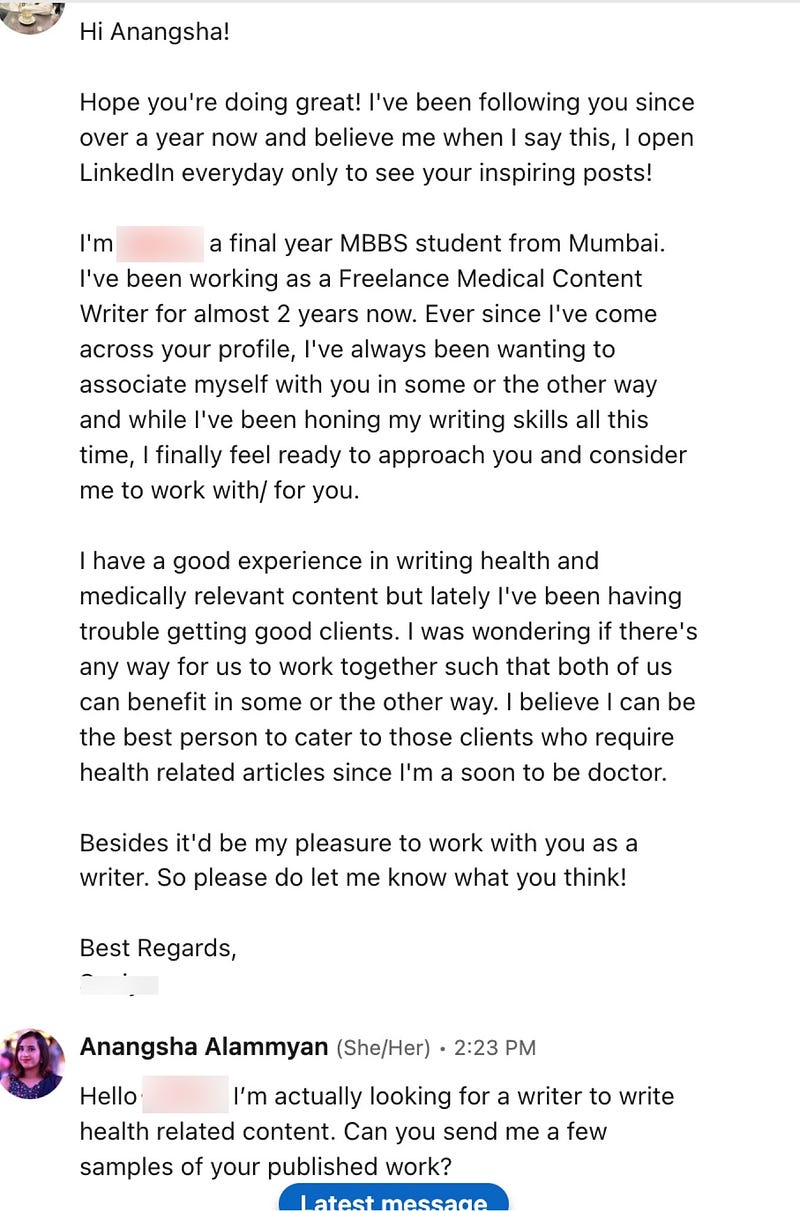
Step two: The paid samples stage
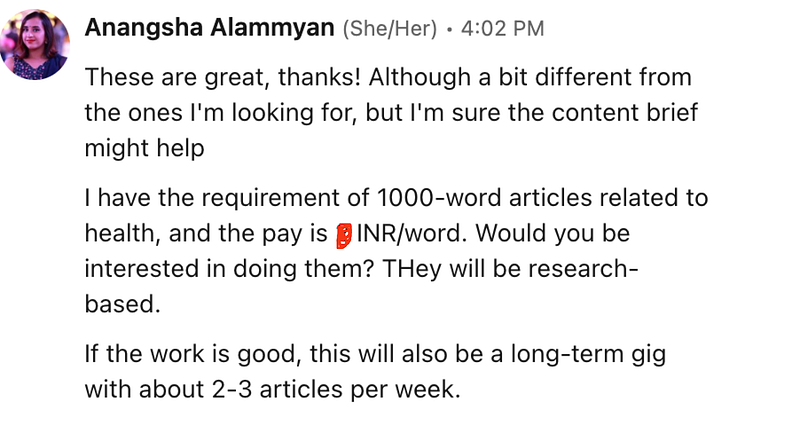
Once the freelancer sends me samples of their previously published work, it gives me a good idea of what I can expect from them.
The next step is asking for a paid sample. I usually offer them the same rate I’d pay if I were to hire them long-term. The rationale behind this is I don’t want a sample for 50% of the rate, and hence, undervalue the writer’s work.
Writing a sample article for the same rate as a liong-term gig would give the freelancer a good idea of what it’s like to work long-term with me.
Being stingy and asking for free samples shows you’re skeptical about the value a writer might provide to your business. If that’s the case, it’s better to not engage with them at all, and look for writers you trust more.
Going through someone’s portfolio gives you a great idea of the kind of content they’d create for you. To judge them on their responsiveness, professionalism, and adherence to deadlines, asking for a paid sample should suffice.
2. I’m reasonable while bargaining rates
When I cite $200 for a 1000-word article, if a client buys in bulk and offers me $150 for each article, I might be okay with it, depending on how long they want our engagement to be.
If they say my rates are too steep and I should be charging $20, because that’s the market rate they’ll find on platforms like Upwork and Fiverr, I wouldn’t want to talk to that client again.
As a freelance service provider, you’re giving out a part of your soul in exchange for money.
You wouldn’t want someone to so casually undermine the value you bring to the table.
Keeping this learning in mind, I bargain mindfully when I hire freelancers. This usually includes carrying out a trial period at a reduced rate, and then increasing the amount based on the freelancer’s performance.
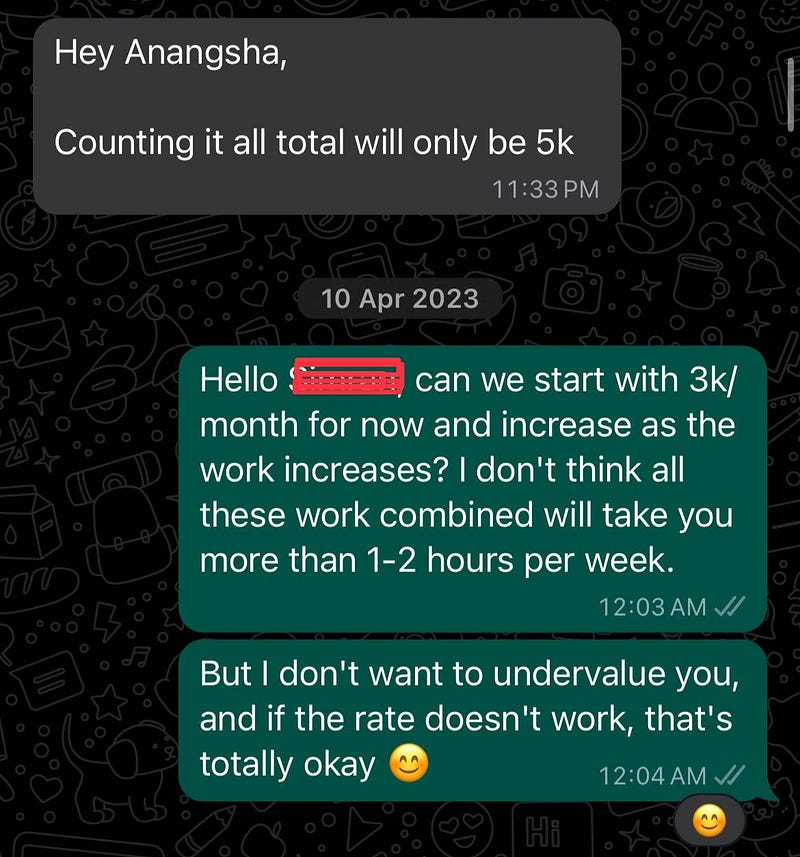
I never undermine the person’s value addition and negotiate fairly. If they’re keen on not lowering their prices, I offer them some non-monetary incentives, like subscription to a writing tool, free mentoring sessions with me, etc.
3. I give away extra perks
I’ve worked with 10+ clients when I was a solo freelancer. The best experiences always come with those clients who put in the extra effort to make me feel welcome and like I’m a part of their team.
My best memories are from working with Swapstack, when I received a box of goodies with their logo, and an invitation to join them on their yearly employees’ retreat in Mexico.
I didn’t end up going, but that gesture was enough to make me feel valued.
Keeping this in mind, whenever I work with writers for a longer duration, I always make it a point to give them extra perks. Every writer or editor who’s worked with me gets a free invite to all workshops and courses I host. I try my best to be available when they have a career query I could help them with.
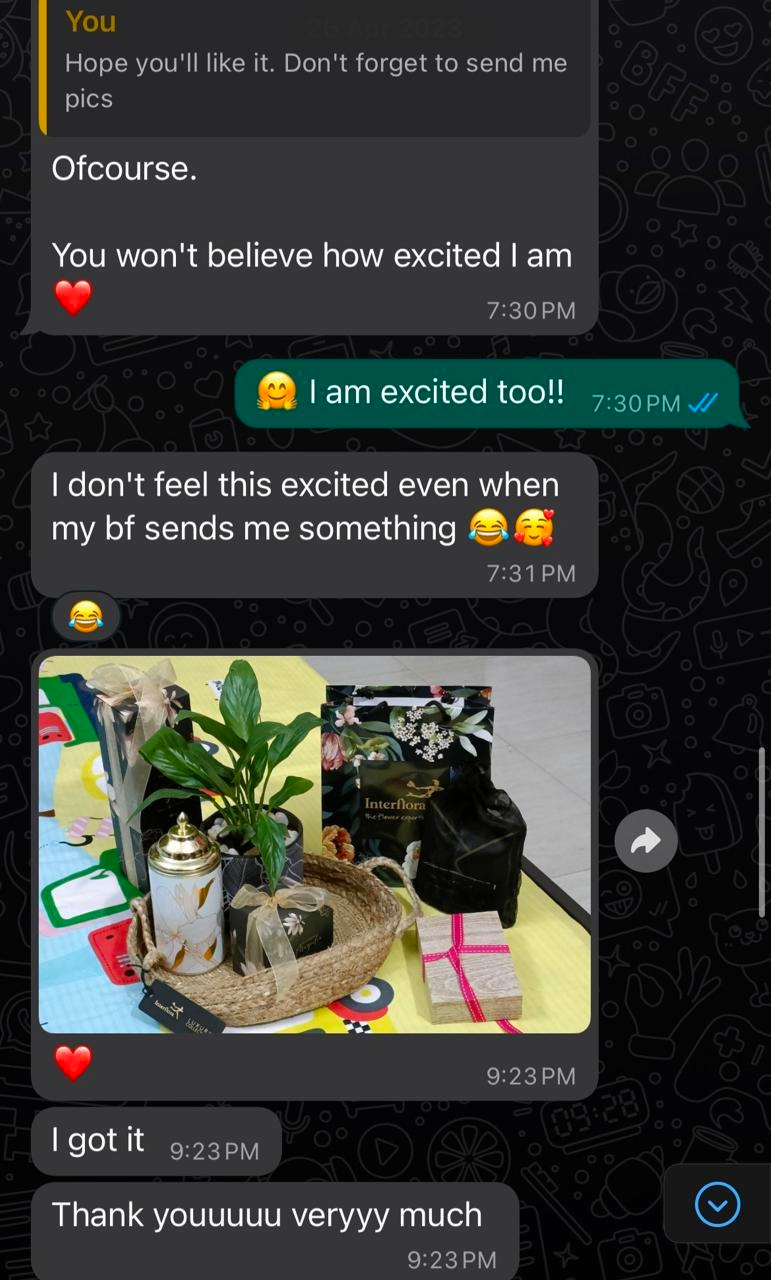
Last year, to celebrate one year of association with a writer, I sent her flowers. Her happiness on receiving the package was a reminder that maybe I’m doing some good work in my life.
Entrepreneurial lessons from my freelancing days: Final words
As business owners, it’s easy to take advantage of freelancers who might be desperately looking for work.
As someone who’s come from the same background, I understand freelancing is not easy at all. The least I can do is treat my freelancers well and make them feel appreciated for the work they’re putting in.
To do so, here are three tiny steps I take —
- I vet the writers based on their previously published work, and then ask for a paid sample.
- I bargain mindfully without undermining their work, and start with a trial period at 70–85% of the original rate. Based on the writer’s performance, I increase the payment as time passes.
- I give them extra perks whenever possible.
In return, my freelancers give me the best work, and a positive energy that sustains my mood and helps my business grow.
“Treat employees like they make a difference and they will.” – Jim Goodnight, CEO and co-founder of SAS Institute