
I’m Being Attacked By My Own Body
My femininity is fading, but I refuse to let my disease define me.
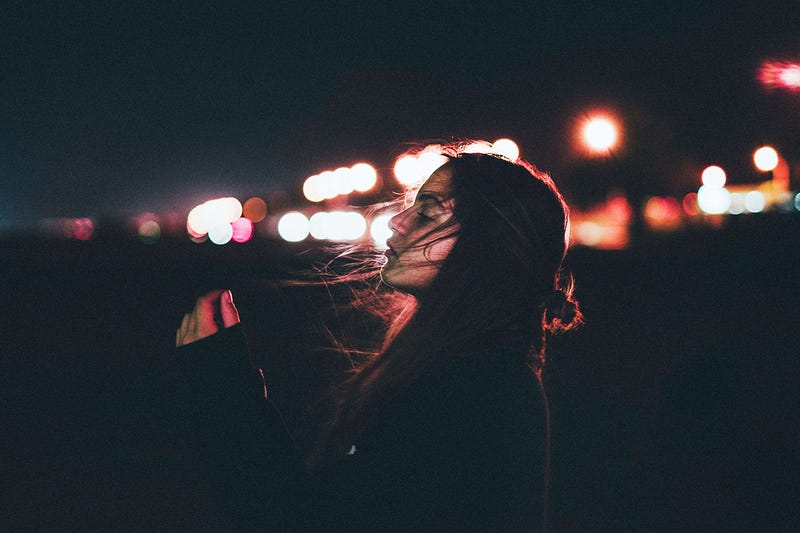
I woke up this morning drenched in sweat and gasping for breath.
Panicking, I untangled myself from my sheets and scrambled to the mirror. Once I realized I still had hair, my pounding chest calmed down, and I collapsed back into bed.
It was just a nightmare, I reassured myself.
In my dream, I was on stage in front of thousands of people. Suddenly, my hair starts falling out in clumps around me. The crowd gawks as my biggest secret is exposed, and their paralyzing stares leave me unable to flee from the humiliation.
But this was more than a bad dream — in real life, this feeling was all too familiar.
I was 13 when I started to lose my hair.
Although I wasn’t in front of an audience, the experience still horrified me. I remember gathering it up from my pillow, holding back tears, and staring at it in my hand. My hair became so fragile that it would break off in the wind. I had no idea what was wrong with me, either, which made me more anxious. I longed for a diagnosis.
Now, seven years later, I finally figured out the answer. I have lupus — an autoimmune disease that causes my immune system to attack my own tissues. I was relieved to find out, but I also felt more uncertainty than I did before.
I began to question what femininity meant to me. Growing up, the definition was simple — it was all the typical ‘girl’ things. And on a scale of one to ‘drowning in the color pink,’ I was as girly as they came.
So it made sense why losing my hair felt like losing my identity. But it wasn’t until my diagnosis that I realized femininity’s true meaning.
Puberty hit me at the same time that my first lupus symptoms appeared. As I began to notice my looks and understand my body, my hair grew thinner and thinner. At a time when I was supposed to be embracing my womanhood, it was slipping away from me.
And as a late bloomer, I was already desperate to keep up with my peers. I experimented with makeup (big mistake), wore padded bras, and tried to act like the ‘adult’ women on TV.
At a time when I was supposed to be embracing my womanhood, it was slipping away from me.
But even with horrible eyeliner and fake breasts, I couldn’t express myself without my hair.
At school, my friends flaunted their highlights, curls, and headbands. During lunch, we’d sit in the grass, picking daisies and braiding each other’s hair. I’d help them weave the flowers into their braids, envying how beautiful and feminine they looked.
As a kid, I had golden waves that danced down my back. I was too young to appreciate them, and by the time I did, they were already gone. I missed them. I loathed how my hair was hardly thick enough to stay in a ponytail — never mind fishtail and waterfall braids.
Throughout my teenage years, this continued to carve away at me. In high school, I got extensions, which were a miracle. But wearing them felt like lying to the world.
The severity of my lupus symptoms tends to ebb and flow.
Sometimes, the waves roar and crash around me, violent like a hurricane. But other times, like last summer, the water is calm. It reflects the sunshine and gently ripples while I float on top. My body isn’t under so much stress, which allows my hair to heal.
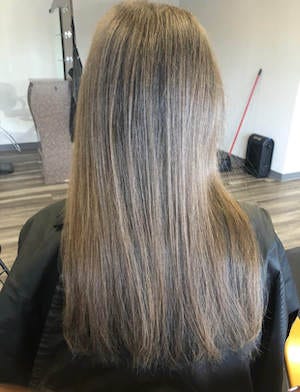
This was the best my hair’s ever been. The universe had finally given me the authentic femininity I’d craved for too long, and I was over the moon. I felt worthy of life. Energy and happiness radiated from every step I took.
But ominous storm clouds rolled back in, overtaking the sky. Last January, when I got my extensions redone, the damage was shocking.
The flare-up continued, and I slipped into a dark depression. Crying spells became a nightly event — I’d lay on my kitchen floor, too scared to move, too fearful of my own body.
In March, I was finally diagnosed. The waitlist to see a specialist is months long, so it’s challenging to get an appointment. Because of this, I haven’t started treatment yet, and my hair continues to get worse.
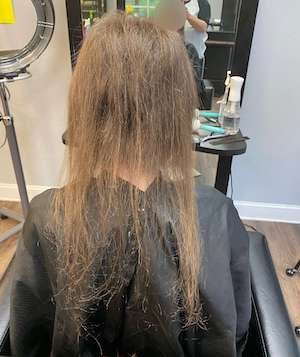
Needless to say, my heart shattered when I saw my reflection. Thinking about my hair overwhelms me with waves of nausea. My extensions are my biggest secret, and nobody except my hairdresser has seen me without them.
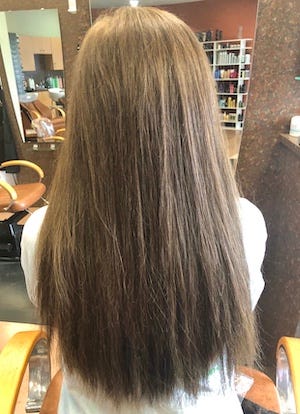
But despite how they hide my illness from the outside world, I still struggle with shame. I also feel guilty when a guy likes me — like I’m a liar for pretending to be healthy.
Who would ever be attracted to a girl with no hair? How could a guy ever love a sick girl?
Even though I grieved the femininity I’d lost, I could’ve lived with its absence for the rest of my life. After all, I’d dealt with it for seven years. I was used to it.
Lupus puts an incredible amount of stress on our bodies. Under this stress, we go into ‘survival mode,’ and our body focuses its energy towards the autoimmune attacks. Because of this, our cells neglect the things that aren’t a high priority, such as hair, bone density, and circulation.
It can also mess with our reproductive system. Pregnancy with lupus is dangerous — women with the disease are more prone to miscarriages, birth complications, and severe flare-ups.
This is much scarier than hair loss.
Ever since I can remember, my dream in life has been to be a mother. I’ve always adored working with children. Whenever I notice a baby, my heart flutters, and excitement overwhelms me.
Now, my purpose — the reason why I live — is uncertain.
I grew up in a dysfunctional family. Overcoming my past is difficult, and imagining the day I’ll have a baby of my own makes it easier. My future children motivate me to keep my head above the water. I need to be mentally healthy to be a loving mother.
At first, I questioned if life was worth it if I couldn’t be a mom. I wondered if the risks were too high. A piece of me felt empty and hollow; I believed I couldn’t be feminine if I couldn’t be a mother, as if the words were synonymous.
The world pissed me off. Despite my estranged relationship with God, I hated him for this. Why me? Haven’t I been through enough?
One night, however, I stumbled on a lady’s post while reading an online forum. In it, she talked about how grateful she was for her hair loss. I was bewildered. But she went on to explain it was the reason she went to the doctor in the first place — it led to her discovering she had lupus.
Holy shit, I thought. That’s how I discovered mine, too. Had it not been for my hairstylist urging me to go to the doctor, I’d still be quietly suffering from an unknown illness.
My mind began spinning with new questions.
So the thing I loathed was actually… good?
Because I know what’s wrong with me, I can start healing. And since I’m only 20, by the time I’m ready to have a baby, I’ll be healthier. My odds of having a successful pregnancy will be higher.
My wheels kept turning.
What if I was wrong about everything else, too? What if femininity wasn’t what I thought it was?
Of course, my hair will always play a role in how I perceive myself, and my desire to be a mother will never fade. Yet, these two things are only the tip of the iceberg.
True femininity is immune to the challenges we go through; physical appearances and motherhood don’t define it. Instead, it’s fighting life’s battles despite how exhausting they are, and respecting our bodies enough to get help if we’re sick.
It’s embracing our power, our voices, our identities.
It’s finding the courage to live despite the darkness looming in front of us. Pain and suffering are inevitable, but they don’t stop us from moving forward.
It’s accepting ourselves for who we are and where we’re at — understanding we can’t fix everything. Some things just are, and that’s okay.
True femininity is realizing how valuable we are. It’s writing the raw words coming from deep within us. It’s empowering other women, lifting them up, and reassuring each other that no one is alone.
I can’t control the state of my hair or my immune system, and it’s hard to deal with the symptoms. But what I can control is how I define myself. Embracing my femininity means embracing my strength, value, and confidence.
I’m still terrified. I’m still pissed. But lupus is not who I am. And with that, I find the courage to stand up to the world, the awareness of my innate beauty, and the power to determine my future.


