
I’m American, But Not That Kind of American
Should I blame the US for all my problems? Maybe.
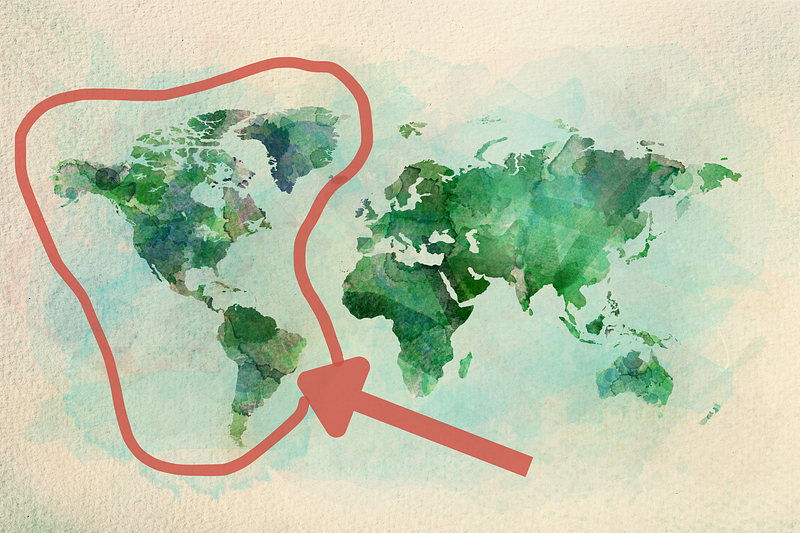
I’m American, but not that kind of American.
I was born and raised in Brazil. At least on our maps, Brazil is in South America, making us, and millions of other people who weren’t born in the US, also Americans. I’ve heard geography isn’t the US’s forte, though, so perhaps the maps are different there. It seems like they’re only slightly better at recognising their own country than any country at all when faced with a map.
As a representative of Americans who aren’t born in the US, especially those of us born south of the border, I can say a lot of our problems come from US meddling. That’s not to excuse Europe, but at least in modern times, the US has a more pronounced influence over us, politically and economically. American countries have to do a lot to protect themselves from the US’s god complex.
“America seems, unfairly in my view, to be the whipping boy for all the world’s troubles.” — barry robinson in “JFK. A good president or a bad one”.
When I saw this sentence in Barry’s post this morning, I couldn’t help but cry out, “I’m American, too”. Which is true, but I’m not that type of American. We’re not blamed for the world’s troubles. We, the other Americans who can’t even call ourselves Americans without 900 words of explanation attached to it, have a long history of trying to fence off unwanted “help” from the big boys in the north. It’s hilarious that, on the one hand, the US loves to call themselves American, but on the other hand, they try to separate themselves from the rest of the continent. They’re not that kind of America; they’re basically an improved version of Europe.
In my opinion, the US is to blame for many of the world’s troubles. They’re not the only party to blame, but in many cases, they are the boy who came up with the idea and convinced the other children to do what he wanted, either by force or sheer ‘influence’. I’m not sure if they’re the student council president as they think they are, or just the rich bully for whom consequences aren’t as real as for the other kids.
Look, I don’t think Americans are to blame for everything. (I do wish there was a proper name I could call them! USish? USian?) But I also don’t think they’re unfairly blamed for things that aren’t their fault. I tried to think of one example of when America was blamed for something they didn’t do. I realised I have to stop blaming the US for Crocs. Crocs are American, but they’re based on clogs and those shoes can be traced back to at least seven hundred years ago in Europe. Much before Europeans created America!
I have nothing against Americans; many of my friends are Americans. And so am I. Just not that kind of American.
PS: I can’t name all the countries on a map, either, even though I can name some. Is that what makes me a true American?!