
I’m Almost Always The Only Woman In The Room
What it’s like working in science and engineering as a mixed-race female millennial
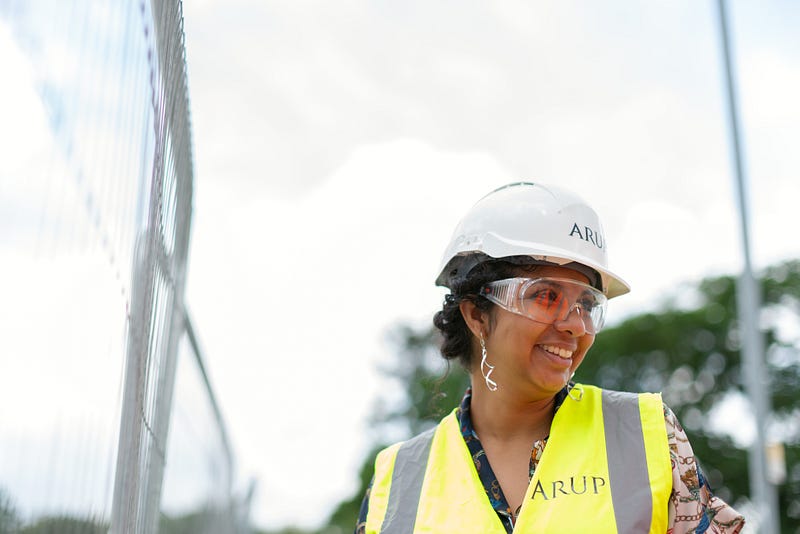
Today, on International Women’s Day, I’m reminded of all the work our predecessors have put in for me to be able to do a PhD in a field historically reserved for men.
I am eternally grateful to have been born when I was — in the late 80s rather than decades prior. And I am particularly grateful to have been born into the family I have, with parents who have always told me and my siblings (two sisters and one brother) we could do anything we wanted if we worked hard enough. Had things been different, I likely wouldn’t be here doing what I do.
And yet, I can’t help but think that so much more still needs to be done. So many things still need to change for women.
To be clear, women aren’t the only ones getting the short end of the stick — minority groups across the board remain underserved.
The only woman in the room
In my university days, doing my physics degree, I was one of about 15 women in a 100-person group: ~15% of the class. I was the only one who wasn’t fully caucasian.
When I did my masters degree, also in physics, it was the same story though the numbers changed very slightly.
When I proceeded to work in the nuclear industry, it was more of the same. In a team of 40 individuals, 5 of us were women: 12.5%.
“Women are rubbish at mathematics and science,” it has been said.
No. Like any demographic, there are people who are hopeless with numbers and others who are excellent at it. Gender is irrelevant.
So why aren’t there more women in science and engineering?
It starts with one thing —
Childhood. At least from my experience, as well as the many people I’ve spoken to.
At such a young age, we get told that boys are builders and girls are nurturers. Boys become engineers and girls become nurses. Boys are good at physics, girls are good at home economics.
Complete and utter rubbish.
It’s appalling that in this millennium we’re still being told this. We’re still telling little boys they can’t play with dolls, and hand them trucks instead. We force girls into ballet classes rather than enrol them in science camp because that’s just what they’re supposed to do.
Except it’s 2022 and these kids, regardless of how they identify, can grow up to become scientists and engineers and doctors and ballerinas and footballers and artists.
They can go into virtually whatever career they’re inclined to but they first need to know that’s possible, instead of shoving them into a proverbial box when they’re young.
Rather than pushing them towards a career path we think is right, how about we encourage them to explore the many avenues they can take?
Let them decide.
The future for women in science, tech and engineering
This isn’t a story declaring women are better than men. I’m saying gender isn’t a factor when considering an individual’s capability and potential in science, tech and engineering (and beyond).
The issue here is females, across all ages but especially in younger years, aren’t given the same opportunities to pursue a career in the field because gender bias still blatantly exists.
So what do we do?
Initiatives, outreach, mentoring and more — both on a local, individual level and on a larger scale. It’s time-consuming and isn’t straightforward but it has to be done. Many organizations and community groups already exist and are doing great work, we just have to do more of them. Otherwise, it just isn’t fair to our youth.
But there’s always something each of us can do in our own homes, families and friend groups. And arguably, this is the most effective: to encourage our children’s, nieces’ nephews’, cousins’, and friends’ kids’ curiosities instead of flippantly just shutting them down.
And if a little girl in your life tells you she wants to become a scientist or inventor when she’s older, please tell her it’s going to take a lot of hard work but that it’s totally possible.
I mean, I did it!


