
I’m a Female — and Feminist — Sommelier. It’s Getting Harder to Be Both Every Day
But I’m not giving up
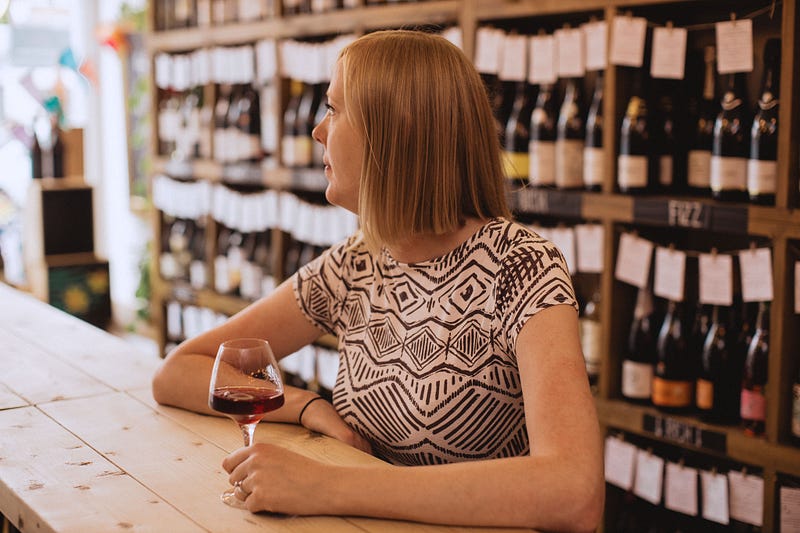
Sexism in wine is nothing new.
It’s a male-dominated world that attracts the boisterous and the hedonistic. Making it as a woman in this environment is hard.
I “made it” by skipping to the top of a totem pole made by my own hands — I opened my own place. But out of the four people who worked in my store and bar, I was the last one anyone believed to be the owner.
It hurt. But what hurts more is that, despite a prominent wine trade #metoo moment a few years back, women still have a tough time in the business. They’re still not taken seriously. They’re still being assaulted and harassed.
Honestly, I’m tired of it. And today, I’m calling it out.
The devil’s drink in the wrong hands
A drunk guy in the trade once grabbed my mouth to clamp it closed because, in his words, he wanted to hear from my husband and not from me.
I was lucky it wasn’t worse. Far too many women in my trade have been at the mercy of a dude who can’t keep his hands to himself, drunk or not.
Some allegations are in the public domain, some are not. Some happened a long time ago and some happened recently.
I know about more instances than I care to count, the biggest one of all involving the most “prestigious” wine association, the Court of Master Sommeliers. This is the program that awards arguably the most coveted accolade in the wine world — the Master Sommelier diploma.
In 2020, some women in the program accused some of the most prolific Sommeliers in the world of sexual harassment. It was our big #metoo moment.
When the story broke, none of my female wine trade friends were surprised. We all know of similar instances.
Of course, men don’t have to be drunk to commit assault or harass women. But there are a lot of late nights in the wine world. There are also many men in positions of power and yes, a lot of alcohol.
Women should feel safe in this environment — they should feel safe in any environment — but they don’t.
To add insult to injury, we’re not only fighting this single battle. We have to fight for our careers too.
We’ve got to fight for our right for recognition
I know, I know. The idea of women working harder for less recognition is the feminist cry you’ve probably heard so many times it’s starting to lose all meaning.
But you hear it so often because it happens so often. And in my case, I have a very specific way to prove it.
My husband and I worked through the wine ranks together at the same time.
I got my wine qualifications, so did he. I went to winemaking college, so did he.
We owned a wine store and bar together. We have always drunk together — rarely in separate groups — which means our education and experience are almost the same, down to the very last bottle.
And yet, who gets more recognition? Who do our family and friends ask for wine advice from? Who is considered to be better at their job?
Sometimes I think it’s because my husband is better than me.
But he’d be the first one to tell you he’s not.
We may absorb and relay information differently, we may approach hospitality and wine differently, but when it comes to our knowledge and experience, we’re very much on the same level, even if no one believes it.
I’m not alone in feeling like this. A recent survey on women in the wine trade revealed that 78% believe that gender bias and sexism are still rife in our industry. My example is just one of thousands of ways women are being discriminated against whilst their male counterparts enjoy recognition and privilege.
And it’s incredibly hard to speak up against this.
Speak up, be branded “difficult”
When a customer refused to speak to me, insisting that my male manager would be a “better fit” for him, I didn’t say anything.
When a prospective supplier asked me to fetch the owner because he didn’t assume that could be me, I didn’t tell him to get out of my store.
When a dude in the trade told people we’d slept together when we hadn’t, I didn’t confront him.
I’m embarrassed. As a feminist, should I not call out misogyny when I see it? Am I a failure for keeping quiet?
Perhaps. But every woman knows what this conflict feels like. It’s our MO because we know what could happen to us if we speak up. We risk being branded difficult or worse, being hurt.
After all, the last time I called out a man’s behavior, it resulted in the bar I was in having to call the police on the guy (a story for another time).
It’s hard enough to make it as a woman in this business. Add feminism to the mix, and we run the risk of being completely ostracised, no longer privy to the inner circles the wine trade still runs on.
This is an industry where it’s often not about what you know, but who. And in my experience, “who” is often a man uninterested in a woman fighting for her rights. As one respondent to the aforementioned survey put it, the wine trade is like an “alpha-male club.”
Honestly, I feel uncomfortable writing about this because of this very issue. I’m a female in an alpha-male club.
But hey, I’m freelance. I don’t have male superiors to answer to. And I’ve already been branded difficult in more ways than one — a wine publication recently told me I don’t write about wine in a very “on brand” way.
So I might as well go the whole hog and start fighting.
It may be bad, but still we fight
I’m not giving up on this trade.
I stand in solidarity with all women in the wine trade who have been assaulted, patronized, put down, and passed over for promotion.
There may be fewer of us compared to our male counterparts but we’re not afraid of making waves.
One of the most famous wine critics in the world is a woman. Her name is Jancis Robinson and she is a freaking inspiration. She’s been doing her thing since the 1980s when the world of wine was solely the domain of blustery old men who would ask her if she was tasting wine on behalf of her boss.
More and more women are joining the wine trade. Nearly half of new Master of Wine applicants (another prestigious association) are women.
Yes, we have it tougher. We have to work harder. We have to fight for rights like maternity leave and bodily autonomy.
But fight we do. We lobby. We form associations that protect our interests.
Yet progress is still slow. I don’t think I’m alone in thinking more would change after that Master Sommelier scandal. Sure, some big-name Sommeliers were expelled from the program, but that’s little comfort to the women who are being groped in quiet wine storeroom corners or passed over for leadership roles.
It’s little comfort to the 44% of women who have considered leaving the industry because they’re tired of the challenges they face every single day.
Eventually, I hope things will change but the only way that will happen is if we speak up.
So I’m not keeping quiet anymore.
If that makes me considered difficult, then so be it. If that closes doors in my career, they’re not doors I want to walk through anyway.
It’s not right that I know of women who have been assaulted, groped, or passed over for promotion.
So I’ll write. And I’ll fight. And you can call me the wine trade’s resident difficult woman.
Bring it.
I’ve launched a remote wine consulting service called SommAnywhere. Tell me what you like to drink and where you live, I’ll send you a list of the best places local-to-you and online stores and what you should buy from each of them. You’ll also get my little black book of wineries. Book the service here.