
I’m a Cyborg and So Are You
Are You Ready for the Next Evolution of Homo Sapiens Sapiens?
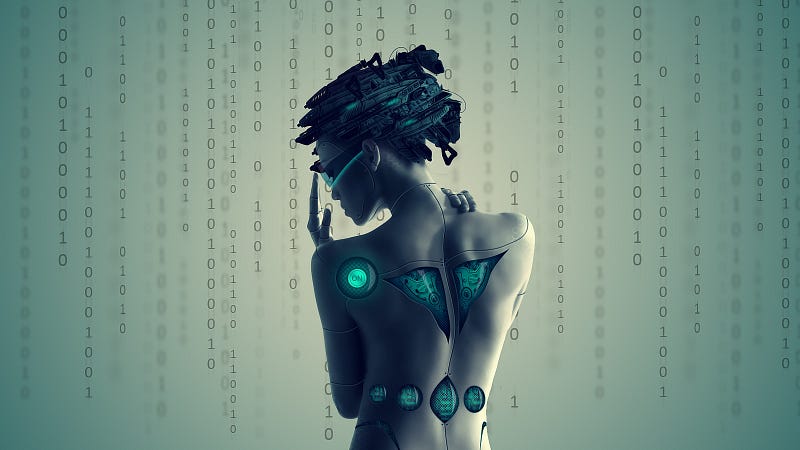
I have recently re-kindled my interest in neuro-hacking, the process of using technological and spiritual tools to essentially hack my consciousness, make myself calmer, and of course, happier! I’ve been using vitamins (D3!) and isochronic tones for some time, but I have run across a number of new devices and apps recently. I got a demo kit for a new device called Thync, that purports to alter brain waves to achieve greater calm, less stress, and more energy. This follows, for me, several decades of interest in this arena, also fueled by a bunch of projects in the works that seek to augment human potential using the latest brain science, emerging hardware, and games.
This is an area of professional interest as well as personal. I’m a socio-cultural anthropologist with a focus on digital culture, technology use, and future possibilities. My graduate work focused on social learning associated with online gaming. A lot of my focus falls into a sub-discipline of anthropology known as cyborg anthropology:
Enhancing human potential is a hot topic among futurists. For one thing, the speed of technological progress means that within the next couple of decades, options for human augmentation will become wide-spread. Already our younger generations demonstrate a facility with technology that leaves a lot of us breathless. We can see in real-time, how their brains wire themselves, according to principles of neuroplasticity, to technologies they are exposed to:
To them the smart phone is already an extension of who they are. — Jason Sosa
For someone who grew up on The Six Million Dollar Man and The Bionic Woman, this seems natural. There are also vocal transhumanists doing research into life extension and developing technologies expand mental, physical, and emotional capabilities. We are essentially hacking evolution and taking control of both our bodies and our genomes.
On the Horizon — Tech to Watch
- Pervasive, ubiquitous, and cloud computing
- Wearables, exo-skeletons and other robotic parts
- VR and augmented reality
- Robotics and AI
- Smart pills, nano-tech, and implants
- Prosthetics, retinal implants, bionic eyes, cochlear implants, mind/body coordination, glasses for color blindness.
The Long View
Eventually, we will become part of the Internet of Things. This is no surprise to spiritual devotees who think that we are part of a cosmic consciousness that connects beings much like our own Internet does.
This will make some people very uncomfortable, but it is up to each person to decide if the benefits outweigh the risks.
Everything we come in contact with will become part of us. — Jason Sosa
Another thing to consider is that our children will be cyborgs, too. We’re already well down that path; reproductive technology is a booming industry already and advances in other areas means that younger and younger children might be enhanced to prepare them better for life. There are already options for wearables that track kids and even measure their attentiveness, meaning we are going to have to look at children’s rights and the ethics of bio-hacking in these arenas, as well.
Will robots rule the world? Yes, they will, for they will be our children — Marvin Minsky
Robots, AI, cyborgs? Is that future already here? There have been some amazing advances lately like legal AI that can predict the outcome of human rights cases. Are we about to hit the singularity?
There are certainly ethical ramifications associated with a lot of this. For one thing, babies are likely to be designed based on principles that are eugenics, a well-known slippery slope. But in other ways, these technologies offer us an opportunity to continuously improve upon ourselves. We’re not far off from possibilities that seem truly incredible, even uploading our consciousness and replacing our organs with 3D printed ones. There are also gloomier prospects, like innovations in technology for warfare, and tech that can have positive or negative consequences, like mind-reading computers.
We might think that this sort of technological progress will change what it means to be human, and in some ways, it will. There will be unintended consequences and emergent effects we can’t begin to imagine. I think what we should be considering is how to increase our existing potential as individuals and as a collective, and how to make life more equitable for everyone. That makes us more of who we already are, rather than thinking of technology as something that might someday misguide or even replace us.
And who knows? We might have extraterrestrial neighbors who have mastered technologies we cannot even begin to fathom. Full body transplants, anyone? And no, I do not mean robotic replacements or uploading our consciousness into computers. I mean new avatars/interfaces for our experience of existence. We live in what is effectively a large virtual world, and we are all software. Paradigms can change but it might mean scrapping old code for newer, better optimized, delightful solutions to what it means to be human. What will we call ourselves? I like Homo Luminous.
About Me: I am an anthropologist, futurist, veteran, and Mom to a transgender teen. I am also disabled and now must rely on donations to fund my work. You can support me with a small donation via PayPal or you can donate on a monthly basis via Patreon. Thank you!


