
Paradox as an Agent of Change
Essence of the Ying Yang
“One ought every day at least, to hear a little song, read a good poem, see a fine picture, and if it were possible, to speak a few reasonable words” — Goethe
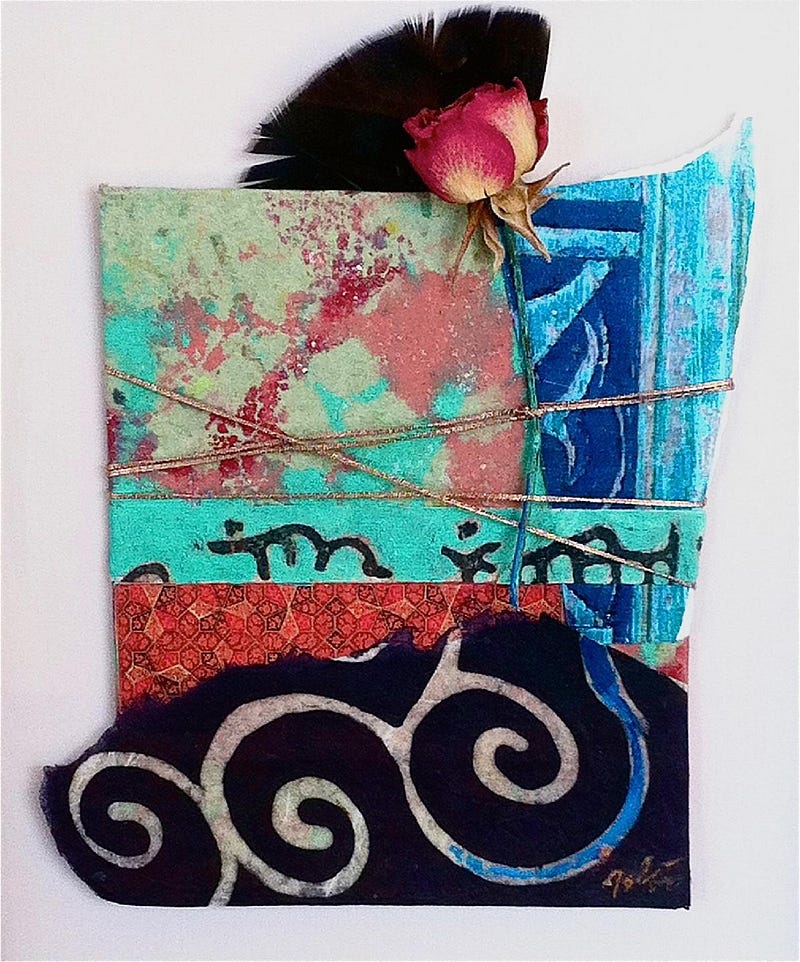
It is my feeling that paradoxes are the essence of the “yin-yang” of life. Our world can be wonderful, and it can be ugly. I recently watched a late-night documentary on wild animals. A scene of cute cubs juxtaposed with predators vanquishing the offspring was hard to watch. Yet somehow nature’s vision seemed awesome in its unifying entirety. This view of nature in recent years, further underscored by Quantum Physics, has taught us that opposing views and actions, or paradoxes become moments of enlightenment.
With some perseverance these ever-present challenges can lead to an eventual understanding of one’s self: an exciting journey towards the constant striving for wholeness and the ensuing wisdom. For example, someone special in your life tells you how much they care about you, yet on another occasion, may say “I need my space” and ignore you. You can feel bad about yourself and get deeply stuck in an unenviable no-win situation or you can grow from hearing how others have dealt with similar hurts, create perspective and work through this situation. This person cares about me and needs space at times; I can understand that and not take it personally or put myself down. What a relief and avoidance of unnecessary stress that results in seeing things systemically or from a wider perspective.
In a sense, by accepting the inevitable quest to understand who you are, you have taken a profound and positive step towards the desire for completeness. This is not always easy, and life’s paradoxes can be much more extreme, such as, I have a great education but cannot find a job or I have this chronic ailment and my dreams may not be unfulfilled.
A paradox consists of statements or situations that may seem to contradict each other but, are different parts of a wider perspective. Paradoxes are the soul of humor and the basis for finding one’s self emotionally and physically. Getting through a paradox is like avoiding or resolving a double bind, having a satori moment or a breath of enlightenment. Paradox points to a wider reality; it is both a mystery and a joy when it is celebrated. John Fox, poetry therapist and author writes in his book Poetic Medicine (New York: Tarcher Penguin, 2007), “Embracing paradox is a good strategy for tapping into the healing process of creativity. Intuition, generated by this dynamic embrace, enables us to see possibilities for growth.” (p.13).
Just as ignorance can misguide us, the grasping of one’s potential through understanding the limitless possibilities available, can be the path to our celebration and enlightenment. Paradoxes are just another tool to make your life work the way you want it to. They offer a liminal pause to explore many possibilities. When we confront the mythological core of our paradoxes the result is that we can find the true meaningfulness of our lives.
Implications for Paradoxes as an Agent of Change:
We have enormous tools to weather the storm of paradoxes, avoid double binds and reach for smooth sailing. John Fox asserts that a way to weather the storm of paradoxes is to express one’s self courageously through poetry.
Poems for instance can take the form of a simile, which makes comparisons between two very different things using “like” (“I am like a _____”) or “as” (“I feel as if I am____”) and focuses on creative tension that may be useful for emotional and physical healing. You can also try composing a metaphor, which consists of words and symbols to unite two different things into a new reality. This becomes clear if you make two columns, one list of things that you may need for your personal sustenance, and another with words that nourish you.
For example, you may need a “healthy diet” and connect it to a nurturing word like “peaceful.” Now think of ways that create connections between those needs and nurturing words, such as in this case, creating a “stress free atmosphere” during dinner. After making several of these connections imagine yourself in a comfortable place where you can process this exercise and best describe your feelings, smells, and things you can touch. Write down how you felt about connecting your needs with ways that will make you feel more whole and healthier. All these possible insights can evoke positive energy from your own background as well as the collective reservoir of how others made these connections.
Try answering these questions that relate to John Fox’s assertion:
What painful things do you most want to speak out about?
What is it you can no longer avoid?
What do you want to courageously sing about?
What do you want to invite into your life right now?
How can you share your insights of working through paradoxes?
Write a short poem based on the above questions.
After writing your poem, create an affirmation that reinforces your sense of self and gives direction. Examples of affirmations can be I am creative; I respect my power to communicate; I am passionate toward others and life. Mostly, use your own words, mostly verbs to express the inner dreams and aspirations that you may have deep within yourself.
The gift from challenging paradoxes is the recognition of the value of mutual learning that will enhance your relationships. The wider expanding contexts resulting from this journey is the understanding of how we are interdependent with others and nature.