
Illuminated by Plants: The History of Plant Based Lighting
The winter season, with its early sunsets and overcast skies contains the months of the year with the least amount of natural sunlight. People in the past relied on lamps and candles to illuminate their homes on short, dark days and complete required tasks. Fueling lamps and creating candles typically required animal fats, by-products of animal slaughter and later, whale hunting. Vegetarians and vegans in the past also needed these essential lights and searched for alternatives to animal derived products.
The most obvious option for lacto-ovo vegetarians were beeswax candles. Their main drawback was economic — beeswax candles were more expensive than tallow candles. An 1853 issue of The Vegetarian Messenger attempted to find a compromise, reporting on the existence of vegetable tallow, which could be combined with beeswax to make candles.
The tallow-tree (Stillingia sebifera) is cultivated to a great extent at Ningpo, Chusan and the eastern provinces of China, for the white tallow that surrounds the seed, which is used for and possess most of the properties of beef tallow, furnishing candles, cereates¹, plasters², etc., for domestic and medicinal uses. It is not much used for cooking, the Chinese preferring other vegetable oils that they have in use for that purpose. The tallow is produced in considerable quantities, and is sold at Chusan at a very low price; when mixed with wax it forms an excellent material for candles. The tree itself, apart from the value of the substance it yields, would be an important addition to the ornamental trees in this country, and it is said, might be easily cultivated; the leaves resemble the aspen in shape and color. (p. 22)
19th century ethical vegans were typically opposed to the use of insect products, meaning beeswax candles were not a solution for them. Wax derived from a European shrub myrica gale, or sweetgale likely furnished some of the first vegan candles. The Gardener and Botanist’s Dictionary, published in 1807, wrote of sweetgale wax candles: “The catkins or cones boiled in water throw up a scum resembling bees-wax, which gathered in sufficient quantity would make candles”.
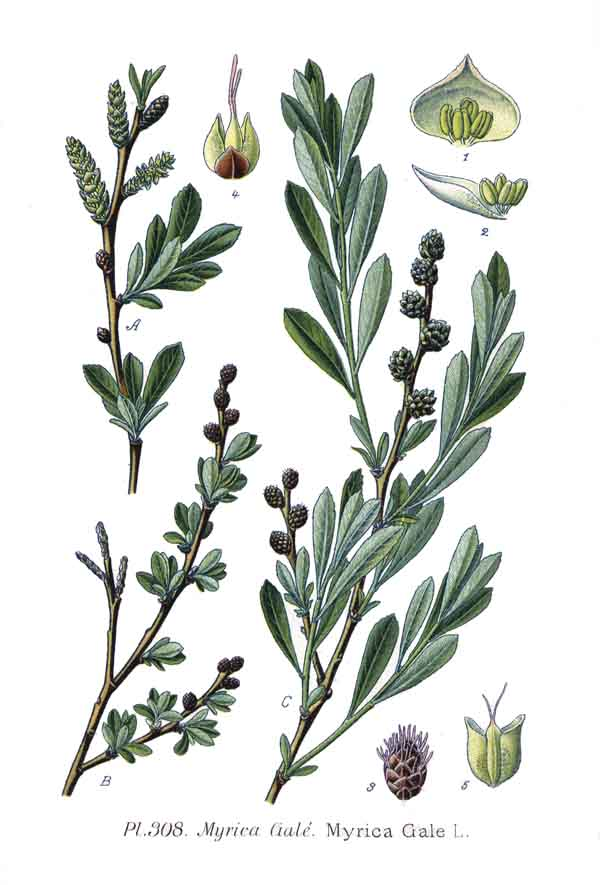
The wax produced from the cones of the myrica gale were not sufficient for large-scale production, so sweetgale candles were likely produced by individuals at home.
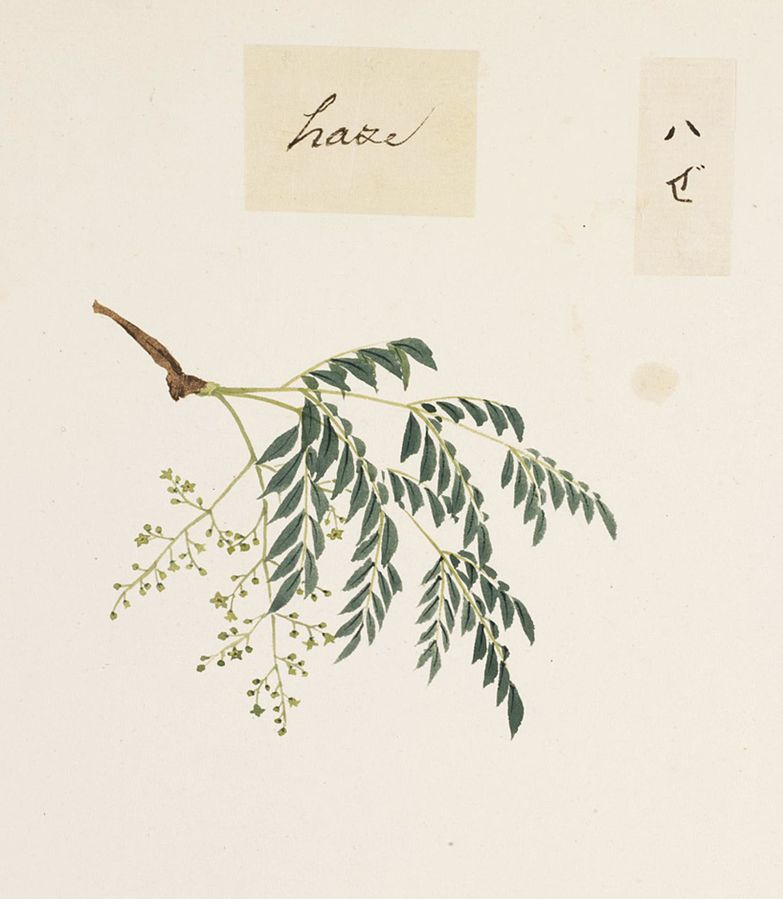
Wax derived from the rhus succedanea, also known as Japan wax, was traditionally made into candles in Japan. Japan wax was imported into Europe as a substitute for or adulterant to beeswax by the 19th century. European candle-makers found the material too brittle to use alone, so it was often combined with animal ingredients like tallow to form candles, , so it was not a likely alternative for vegetarians.
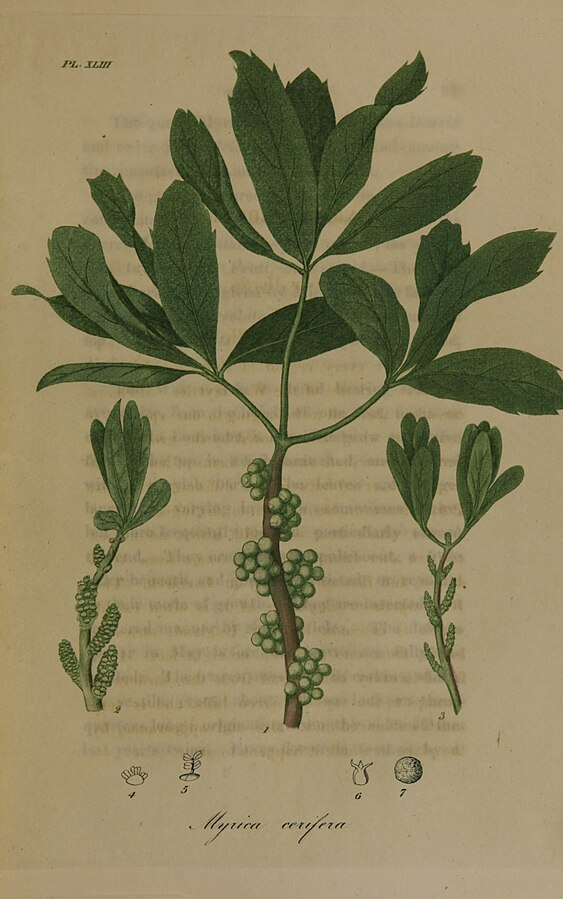
The most important wax-producing plant in North America was myrica cerifera, the bayberry, sometimes also called barberry or wax-myrtle. Early European colonists made candles from the wax derived from the berries of this shrub, which produced higher quantities of this material compared to its relative, myrica gale.
There is evidence that bayberry candles were sought out by early vegans to illuminate their animal product free homes. Bronson Alcott, as part of his attempt to create a vegan communal living society, known as Fruitlands, purchased bayberry wax with the intention of making it into candles. Unfortunately, no one in the commune had candle-making knowledge, so pine-knot torches were sparingly used as lighting instead.
The Vegetarian Magazine reported on a different vegan community in 1900 that seemed to exclusively rely on bayberry candles for light.
They use no milk or butter. They have no hens to lay eggs or provide broiled spring chicken, and the grunt of the porker is unheard of and the odor of fried bacon unsmelled in all the region. Not only are sheep barred from the community, but none of the residents will wear woolen garments, clothing themselves and covering their beds with linen or cotton cloths. […] As tallow taken from sheep or cattle is prohibited, they have surrounded their homes with barberry hedges, which yield a fruit concealed on a greenish-gray fat popularly known as barberry tallow. The berries are picked from the hedge as soon as they are ripe and boiled until the grease rises to the top of the water, when it is skimmed off and made into dipped candles, which furnish all the lights used about the houses. A bushel of berries will yield about six pounds of tallow, which will make candles enough for a family a month in winter and two months in summer. The light is not very clear, but the burning fat gives off an agreeable smell, which pervades the whole neighborhood and has given the district a name which has found a place on the maps. (p. 114)
Oil lamps also provided sources of light, and most ancient examples from warm climates relied on vegetable oils to fuel the lights the lamps provided. However in colder climates, candles were preferred and oil lamps were usually fueled with animal fat. Spermaceti, oil derived from sperm whales, was a popular lamp fuel in the 18th and early 19th century.
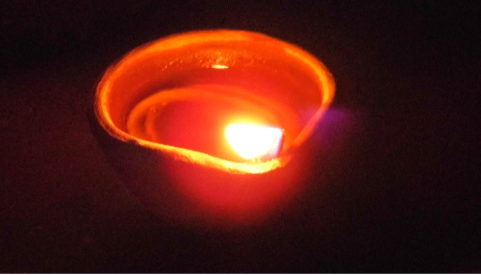
The invention of a new model of oil lamp in 1784, was a potential option for vegetarian-friendly lighting in colder climates. The Argand lamp, patented by Aimé Argand could be fueled by a variety of vegetable oils, including linseed and olive oil. Blends of turpentine and alcohol based lamp fuels could also be used in Argand lamps.
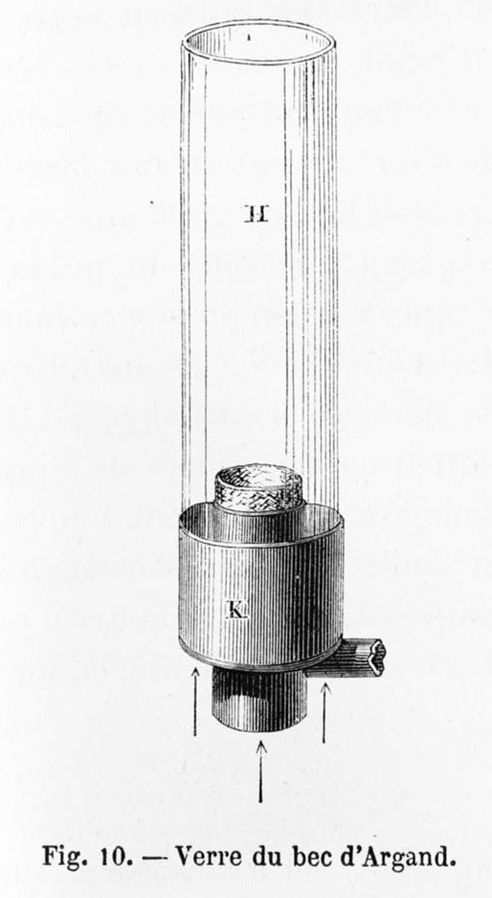
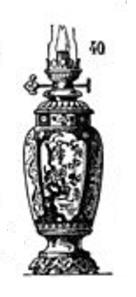
Carcel lamps were introduced in 1800, invented by Guillaume Carcel, a clock-maker. The internal clockwork mechanism improved the efficiency of fuel required, and was better suited to using vegetable oil as fuel. Carcel lamps provided a brighter light, the design moving the oil reservoir to the base of the lamp, fixing the issue of the reservoir casting a shadow in the Argand model.
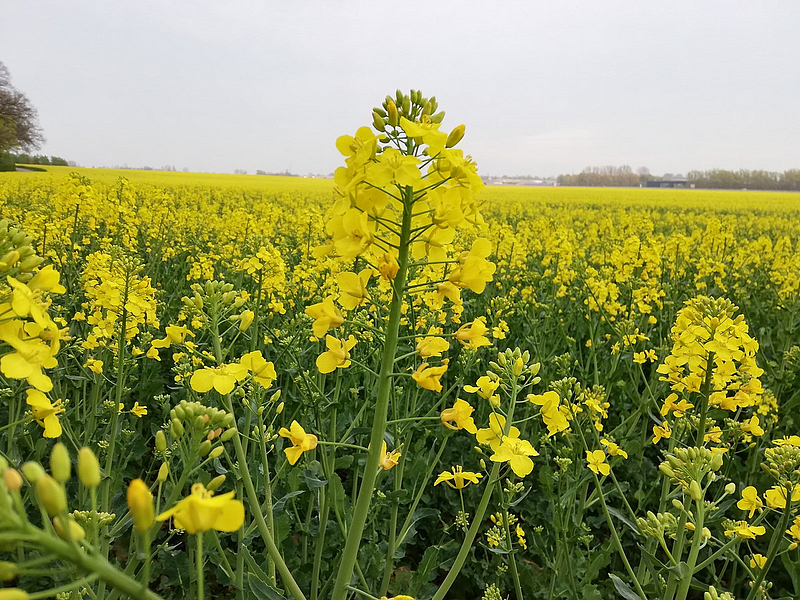
The most successful competitor for spermaceti in oil lamps was an oil that is now more ubiquitous with deep-fat frying — canola oil. The variety of canola oil used in lamps was referred to as colza oil. Colza oil was used to fuel the lamps in lighthouses. A U.S. Senate document from 1851 speaks highly of colza oil as a replacement for spermaceti in lighthouses:
In regard to the substitution of the oil of colza, (rape-seed), now used exclusively for light-house purposes in France, England, Scotland, and Ireland, and in most of the light-houses of the other maritime nations, for spermaceti oil, or, more properly, for that used in our lights, the board would refer to the fact, that the recommendation of the select committee of the House of Commons of Great Britain, in 1845, to the light-house board, to introduce the more economical oil of colza into their light-house establishments, had the effect of causing a thorough experimental examination to be made of the two oils, (colza and the best winter-strained sperm oil,) by Professor Faraday, Mr. Alan Stevenson, and others interested in light-house service, by which it was clearly demonstrated that the colza oil is superior, in every essential particular, to the best winter-strained sperm oil. (p. 149)
There were downsides to these new lamps, they were expensive, and broke easily. Vegetable oil fuels were costly, and turpentine-based fuel mixtures were highly combustible. Candles remained the primary source of light in the early 19th century for these reasons. Gas lamps were sought as a more efficient and affordable alternative to lamps and eventually became a must-have feature in middle class homes by the late 19th century.
A plant derived source of fuel for gas lamps was created by the Vegetable Gas Light Company, attempting to manufacture camphine from turpentine resin. Vegetarians were also interested in the potentials of this plant-derived fuel. The Vegetarian Messenger & Review reported on the formation of this company with interest in an 1851 edition of the periodical.
We have recently had an opportunity of inspecting a new process for the production of gas for all illumination, on a novel, but exceedingly elegant and scientific principle, by which a perfectly white, pure, and brilliant light is produced, and the accumulation of large deposits of filthy refuse, either liquid or solid, entirely avoided. The apparatus was patented by Mr. G.R. Booth, and is now adopted by “The Vegetable Gas Light Company,” who for the purpose of fully carrying out the principle on an extensive scale, propose to raise £100,000 in 10,000 shares of £10 each; and the plan having been in operation for upwards of twelve months, with complete success, at Eton College, Bury St. Edmunds, Blackpool, and various public and private establishments, there can be little doubt as to the results of the company’s extended operations. The basis of the system is artificial production of a vegetable oil, containing the due proportions of carbon and hydrogen to form, when vaporised, a perfect gas, uncontaminated by foreign and injurious mixtures; this is effected by the distillation of palm oil, in conjunction with caoutchouc³ and Canada balsam⁴, the result being the required compound, which, in point of economy, surpasses any production yet introduced for the generation of gas. (p. 2)
Candles also remained a popular source of light in the 19th century. Advancements in vegetable-derived candle waxes continued to be made in the mid to late Victorian era. The 1851 Official Catalogue of the Great Exhibition of the Workers of All Nations included a listing for vegetable wax or stearine candles prepared from oils.
19th century vegetarians seemed to be aware that candles free from animal ingredients existed. William Horsell mentions in his book, The Science of Cooking Vegetarian Food, published in 1856, that vegetable based candles were already available.
Stearine candles, like those mentioned in the Great Exhibition catalog, were developed by Price’s Patent Candle Co. Stearine, or stearic acid is a wax-like fatty acid that could be extracted from animal or vegetable fat. Price’s Patent Candle Co., developed a process to extract stearine from palm oil and create candles from this material.
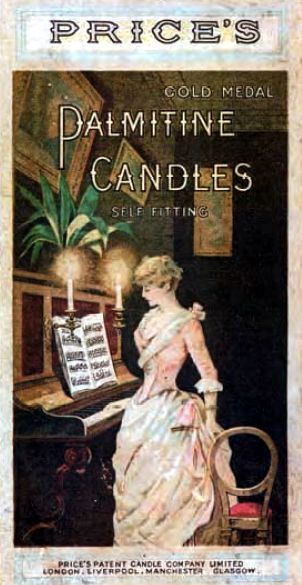
Competitors began to make their own versions of these stearic acid candles, usually under the name “adamantine candles”, highlighting the hardness of the stearine based candle that meant a longer burn-time and resistance to melting in hot weather. An 1872 book, A Dictionary of Every-Day Wants, described the process of extracting stearic acid to make adamantine candles:
CANDLES, Adamantine.–Adamantine candles are made of stearine, and stearine is made in two ways. One way is to boil common tallow with one-sixth of its weight of slaked lime until lime soap is formed. The lime soap is put into another vessel and four parts of sulphuric acid for every three parts of the lime (previously used) mixed with it to get out the lime. It is heated and stirred until the fat all runs off and leaves nothing but sulfate of lime and water. The fat is now allowed to cool, is then shaved into thin slices, put into canvas bags and into a hydraulic press. Here the fluid portion is driven out and the stearine remains. This is again shaved and pressed. The cakes now left are commercial stearine or stearic acid, an inflammable substance without any greasy feeling. The other method is to blow steam into cocoa-nut oil or palm oil and thus separate the glycerine from the fat. After the glycerine is taken away, the fat is allowed to cool and treated as above. No acid or lime is used in this process. (p. 314–315)
Stearine candles and other palm oil products served a dual purpose for vegetarians, the vast majority of which supported abolition. Palm oil allowed them to avoid animal products in everyday items like candles, as well as support an industry that was intended to provide economic incentive for an alternative industry to the slave trade.
A Victorian periodical, Chemical Technology discussed palm oil and it’s connection to the abolition of slavery:
Although the existence of palm oil has long been known, it was always classed among the curious products of nature, and not among those substances which are of importance in the arts, and it has only attained its importance by a remarkable concurrence of circumstances, in connection with the most praiseworthy action in modern British history, viz : the abolition of slavery. Since the slave trade has been subjected to the restrictions of the English, the natives of the coast, instead of bartering human beings for the supply of their human wants, have been forced to substitute the useful produce of the soil, or palm oil, as payment. As many as twenty slave ships were to be found at the mouth of the Bony river, (an arm of the Niger), until the blockade of the English put a stop to the traffic, and made an opening for the exportation of palm oil to the amount of 20,000 tons yearly from this port alone. (p. 430)
Unknown to most consumers at the time, Price’s Patent Candle Co’s abolitionist stance was a marketing gimmick, the company did not have any particular loyalty to African palm oil suppliers, and instead purchased whatever palm oil was the least expensive.
Mineral oil-derived ingredients such as petroleum and paraffin began to replace plant-derived products for making candles and lighting lamps. They were considered more cost effective and efficient than either animal or vegetable sources of wax and oil. Vegetarian periodicals also noted this shift, an 1863 issue of The Dietetic Reformer and Vegetarian Messenger mentions that paraffin and mineral oils are replacing tallow in candles and other products.
Candles considered suitable for vegetarians were marketed in vegetarian periodicals by the late Victorian era, like in this 1897 advertisement from Herald of the Golden Age. Candles free from animal products remained available in the early 20th century. Philosopher, writer and advocate for vegetarianism, Henry Stephens Salt wrote of vegetarian candles in his 1906 book, The Logic of Vegetarianism:
Slowly and inevitably at first, as is inevitable while vegetarians are so few in numbers; but vegetarian boots, vegetarian soap, and vegetarian candles are now in the market, and as the movement spreads, the demand will be proportionally greater. (p. 85)
The invention of electric light bulbs eventually made candles and gas lighting for homes obsolete, and standard lighting today is naturally free from animal products. The history of plant-derived candles and lamps is lengthy, and entwines with the vegetarian movement’s quest to avoid animal use in not only their diet, but in essential items for everyday life.
Notes:
- Cerates are external medicinal preparations containing wax or resin combined with fat.
- Plaster (British English broad definition) — something applied topically to the skin to heal or soothe; a paste applied to the skin for healing or cosmetic purposes.
- Caoutchouc is latex or liquid rubber extracted from tropical plants from the species Hevea and Ficus.
- Canada Balsam is a resin obtained from the North American balsam fir Abies balsamea.
Thank you for reading!
If you love history, plants or the history of plants, consider supporting Plant Based Past by buying me a coffee!
For more vegan, vegetarian, and botanical histories, follow Plant Based Past on Medium.
You can sign up for email alerts to receive the next story when it becomes available, just by clicking the envelope icon.
Next Week: 5 Rose Recipes from the Past for Valentine’s Day


.jpg)


