
The Difference Between Optimism and Toxic Positivity
Illness taught me that processing feelings honestly and authentically is healthy

For months, I knew something was wrong. After two trips to the ER and abnormal ECGs, a genetic test came back positive for a condition called Brugada Syndrome.
Brugada Syndrome is an ion channel disorder that affects the muscle cells of the heart. It’s the number one cause of sudden cardiac death in young people, and it’s difficult to diagnose. As I wait for an appointment for a more advanced test that is supposed to be definitive, anxiety mounts.
I had a similar waiting experience a decade ago when I found out I had breast cancer. I had to wait a month for the lumpectomy from the day I received my category five mammogram results. During any period of high-stakes uncertainty, it’s inevitable to feel fear, anxiety, anger, regret, and depression.
Underneath these emotions, optimism and gratitude may linger as a source of strength. But let’s face it, nobody in touch with their feelings will feel only positive emotions, especially during a challenging time. No real, authentic human will declare, I’m so grateful I have this [insert bad experience here]!
One of the most difficult aspects of going through a life change that engenders uncertainty and fear is seeking emotional support.
Many people, no matter how much they care, don’t know how to emotionally respond to those in distress.
Before my illnesses, I recycled the phrases I heard growing up. Many of us do. I didn’t know what to say to people who were suffering until I thought about what I wanted people to say to me. People who use toxic positivity often have the best of intentions.
What is toxic positivity?
Many definitions exist, but I define toxic positivity as denying negative emotions in oneself and others at the expense of authenticity, honesty, and processing necessary feelings.
Optimism doesn’t entail denying your feelings, needs, or reality — toxic positivity does.
Optimism entails facing the circumstance with courage and honesty; toxic positivity is a form of emotional repression.
Phrases like, don’t dwell on it. Or, don’t worry — it’ll all work out, though well-intentioned, don’t help, and don’t make sense. I would give anything to never hear these phrases or similar ones again — they are dismissive, repressive, accusatory, and out of line with reality. How does anyone know it’ll work out? One can hope for the best, but hoping and proclaiming are as different as apples and oranges.
Unlike optimism, toxic positivity creates pressure to appear happy.
Dismissive attitudes pressure distressed people to appear happy when they aren’t. This can lead to the distressed feeling misunderstood and lonely. The truth is that releasing negative emotions without judgment can help one feel less alone.
Our culture emphasizes toughness and bottling feelings, which can look strong on the surface. But looks can be deceiving. Optimism and courage do not mean denying fear — they entail passing through it.
Optimism is a state of growth; toxic positivity is stagnant.
It’s hard to focus when unprocessed emotions simmer below the surface. They drain so much energy and stunt growth. Like physical pain, emotional pain conveys a message. It may seem nebulous at times, and thoughts aren’t always the truth, but stifling feelings instead of digging deeper isn’t the answer, just like ignoring back or leg pain isn’t the answer.
Optimism aims to achieve the best possible outcome without denying pain. Ignoring pain or any problem never results in solving it. Many people are terrified of anger. But anger can be a catalyst for action.
Optimism is empowering; toxic positivity is judgmental.
Optimism is a heart-centered orientation. Toxic positivity judges oneself and others for negative emotions. Judging others can lead to cynicism, dividing people as winners and losers, and ultimately, closed-heartedness.
Years ago, when I paddled an ocean kayak through choppy waters, the fear of capsizing felt very real, but focusing on the heading — toward the beach was a form of optimism. Focusing on what one wants while being honest about reality is a way through turbulent times. Toxic positivity does not put one in touch with one’s soul or with reality. It’s analogous to a directionless kayak paddled by drugged kayakers.
Certain phrases reek of toxic positivity.
Over-confident phrases asserting that something good will happen are hallmarks of toxic positivity. The truth is that life is uncertain — we never know what will happen. Trying to explain bad things away as fate or God’s will is another form of toxic positivity. It’s not our job to try to make meaning out of another person’s suffering.
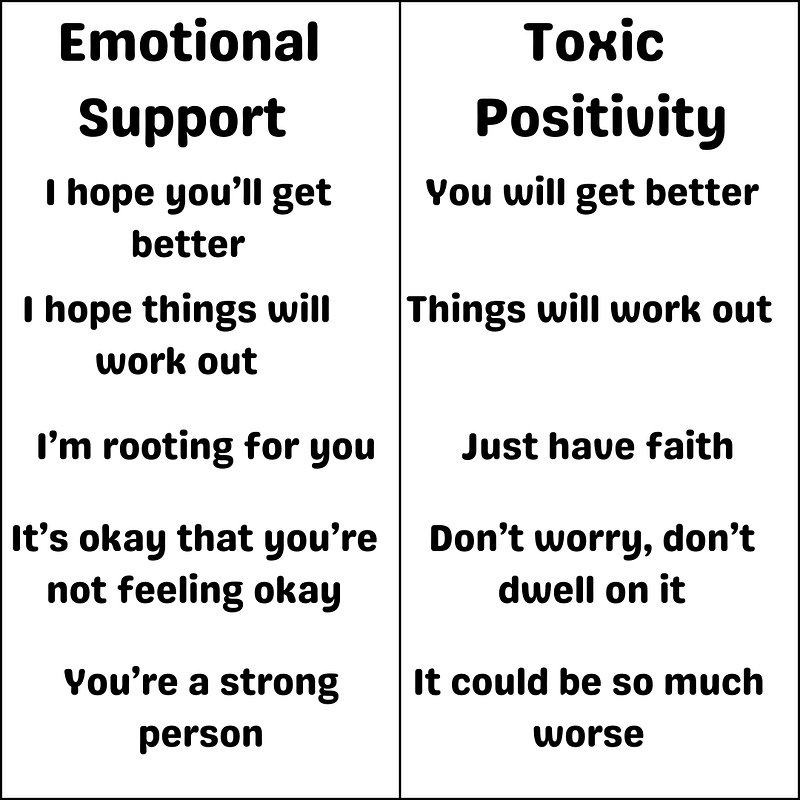
Optimism doesn’t entail fixing other people’s problems; toxic positivity can spill over into co-dependency.
Helplessness can lead to wanting to fix other’s problems or to give advice. Optimism involves having confidence that others have the resolve to work through their own problems to the best of their ability, which allows them to be in touch with their strength. Reassuring another of their strength is far more helpful than telling them what to do.
Emotional supportiveness is a skill that anyone can learn. Some people say they aren’t good at talking about feelings. But emotional support often involves more listening than talking. Sometimes, listening and letting the distressed person know they are heard is enough — and really all that can be done. Toxic positivity, like emotional support, is a strategy and not a good one.
The takeaway…
Most of us want to feel loved and supported for who we truly are, which entails staying grounded honestly and authentically in our feelings. Shutting down emotions with toxic positivity is repressive and unhealthy. Supporting authentic emotional expression helps promote hope and optimism, which can be the difference between walking with someone through a crisis and leaving them feeling alone.