
If You’ve Never Heard of Harrison Ford, Here’s the 5 Roles You Need to Start With
And that you should revisit often
I’ve got a lot to say, so we’re gonna just jump right into it.
If someone came up to me and said they had no idea who Harrison Ford was, I would immediately point them to these films first.
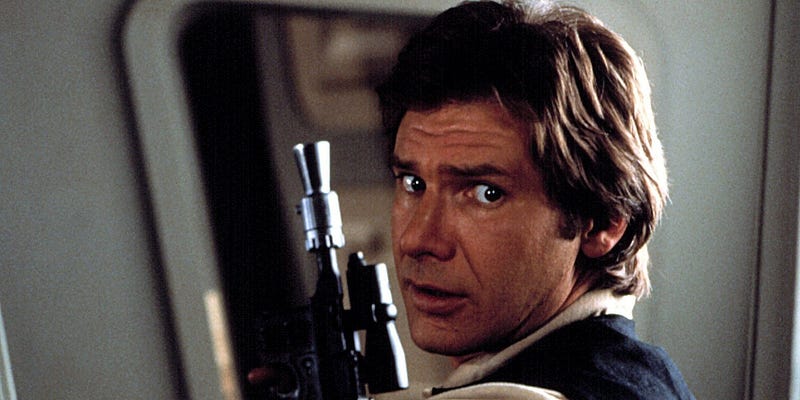
First things first, let’s get the holy trinity of Harrison Ford roles out of the way:
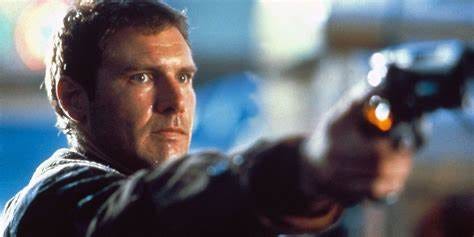
- Rick Deckard / Blade Runner & Blade Runner 2049
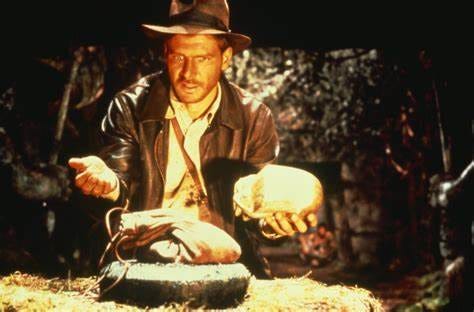
2. Indiana Jones / from Raiders of the Lost Ark to The Last Crusade
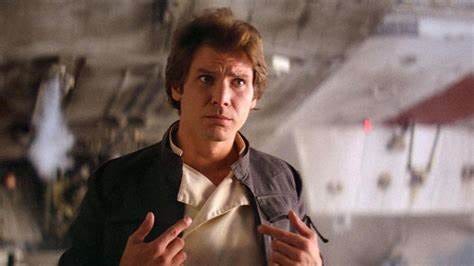
3. Han Solo / The Original Star Wars Trilogy
It doesn’t matter what generation you are, if you know about Harrison Ford it’s almost guaranteed at least one of these roles popped up first.
Now I don’t wanna gloss over these because they’re overhyped or cliched at this point. There’s a very good reason why Ford is known for these three.
I’m only keeping a limited amount of focus on these roles because I feel enough has been said about these roles.
These made Ford a household name and it’s because he learned how to play to his strengths in these roles.
- Rough around the edges
- Charming when it’s needed
- An action hero that can kick ass
- Respectful of the character and their own worlds (even if it was difficult like in the first Star Wars production)
Harrison Ford made it seem like these weren’t really characters he was playing rather than being himself and actor or otherwise, when you can make your job look effortless, you know you’re doing something right.
So now that we got the usual suspects out of the way, I want to segue into the next kind of role and that is Harrison Ford doing what he does best but really showing his acting chops.
Not to say that he doesn’t in the other three, but you can kind of tell when an actor / actress is known for something and then they use that to develop and grow a character into something more.
The first example that comes to mind is Michelle Yeoh, a very gifted martial artist and actress from Hong Kong, using all of her experience to build up the complex character that is Evelyn in Everything Everywhere All At Once.
Or Michael Keaton who seemed to have used his experience playing Batman as a kind of “sense memory” for the lead in Birdman or The Unexpected Virtue of Ignorance.
And for Harrison Ford, a man known for playing the grizzled action hero, he really used it to develop the character of Doctor Richard Kimble in The Fugitive.
I do have to give an honorable mention for his role as John Book in Witness (the only role for which he was nominated for an Academy Award) but I have yet to see Witness and lately, I don’t really gauge the Oscars as a fair metric of quality acting more than it is a game of politics.
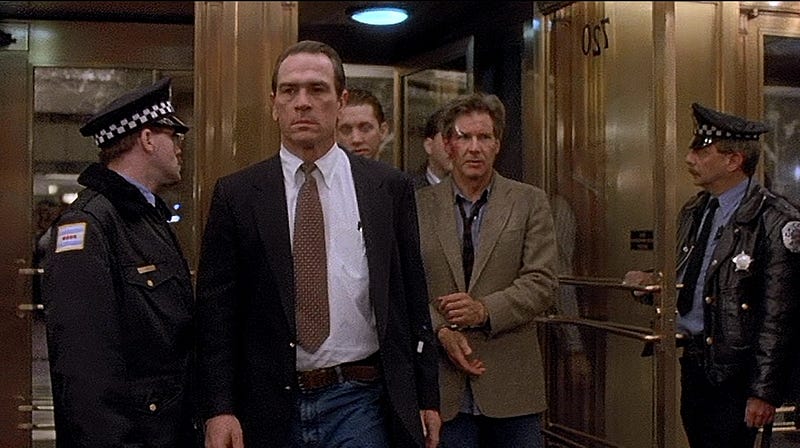
Keep in mind, The Fugitive came out in 1993, which means Ford had already played all the roles he was known for.
Blade Runner in 1982.
Indiana Jones from 1981 to 1989.
Star Wars from 1977 to 1983.
All that to say, by the time this movie came out in theaters, Harrison Ford was all kinds of established, if not set for life.
Having watched the film for the first time four days prior to writing this article, I am enamored with the film. In fact, I have a whole article devoted just to its editing.
In the film, Ford plays a vascular surgeon who’s on the run from a U.S. marshal after being accused of murdering his wife.
I’m not going to go any further into spoilers for this film because I think it’s worth checking out, but Richard Kimble is a perfect example of really complimenting what Harrison Ford does best and then adding depth.
- Kimble is very knowledgeable which makes him versatile like Indiana Jones.
- He starts getting a little more calloused like Deckard.
- And he has to think on his toes in action scenes like the bus crash in the same kind of way Han Solo would.
But then you start having to add emotion to all of that.
In the first ten or so minutes of the film, Harrison Ford is in an interrogation scene where he has to demonstrate a mix of paranoia, grief, and confusion all at the same time.
Chris Stuckmann alluded to this in his review of the film, but as much as I love Chris, it really doesn’t do Ford justice.
Here’s the clip to show you:
And I love this scene because it shows what I’m talking about perfectly despite coming so early in the film.
- A flashback of Kimble performing surgery (Ford played an expert in the field which means he can play calm and collected with the exact info he needs)
- An outburst demanding they find the culprit (Ford playing an enraged and defensive man which means he can intimidate and channel that seamlessly)
- Reimagining what’s happened to his wife (Ford being able to portray contemplation and being deep in thought without looking like he’s zoning out; if there were no flashbacks, you can still tell what’s happening)
Now add all that to the emotion that’s here…
- Admitting he has a gun (Ford has to demonstrate that he’s losing even though he shouldn’t be)
- Trying to cooperate after a home invasion (Ford has to show a tough exterior while processing trauma: something you’d never see Jones or Solo doing)
- Bursting into tears (Ford has to have an emotional outburst which after multiple takes is so much easier said than done)
No matter the activity, I love watching somebody skill-stack.
Meaning, I love when somebody uses their experience to build on top of itself to really create a layered, seasoned result.
That’s why I would recommend The Fugitive.
This is not only a great role, but a role that can only happen after decades of work and characters coming together.
Now for the next role, I want to highlight as Harrison Ford in an unexpected or unconventional role.
I think every good actor needs to have at least one of these kinds of roles. Some great examples are:
- Jim Carrey in Eternal Sunshine of the Spotless Mind.
- Brendan Fraser in The Whale.
- Marlon Wayans in Requiem for a Dream.
- Hell, Nic Cage practically made a career and name for himself making every role an unexpected role.
For Harrison Ford, this role lies in the genre of comedy.
Think about it.
Aside from a few quips as the badass action hero, Ford’s not really known for his comedy as the basis of a role.
Sure, there are films like Six Days, Seven Nights; Anchorman 2: The Legend Continues; and I have to give an honorable mention to all of his appearances on any talk show hosted by Conan O’Brien (his appearance on Conan O’Brien Needs a Friend makes me cry laughing every time).
But for this slot, I’m gonna give it to a very, very new entry to his filmography and one of his very few television credits.
His role as Paul in the Apple TV+ sitcom, Shrinking.
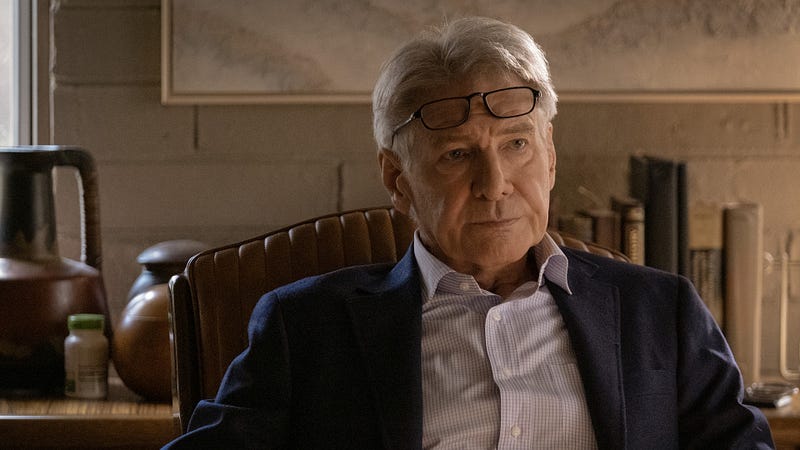
As a hypnotherapist, I have to say Paul is the best cinematic portrayal of a therapist that I’ve seen since Robin Williams as Shaun in Good Will Hunting (another great example of an unexpected role).
On paper, it doesn’t really seem that comedic.
Ford plays a highly successful and accomplished cognitive behavioral therapist who struggles with both his family relations and early stage Parkinson’s.
But here’s where the comedy comes in: Paul is one charming and quick-witted sonuvabitch.
His interactions with Jason Segel’s character is his time to shine and he wastes no time ripping him a new one while also helping Segel in a very paternal way.
Look no further than this clip where [SPOILERS] he finds out Segel slept with his coworker.
Through a lucky guess.
This could also be another example of skill-stacking as I can see a little bit of Indy in this role but this scene alone is a great example of one thing that can make or break a funny moment.
Harrison Ford is a master at comedic timing.
The editing definitely helps with this, but sitcoms are interesting because they are the closest thing that many actors have to stage work.
That’s why theatre actors like David Schwimmer thrive in shows like Friends.
And when you act in the theater, you don’t have editing. You have what’s on the stage with you for the next X amount of hours.
So it’s vital that you cooperate with your cast to make something cohesive and you see that here with Ford and the rest of the cast.
You can almost put music to it, it’s that good.
And of course, Ford still adds depth to his work. Paul still feels like a real person rather than a caricature of a therapist (which I appreciate on a personal level) and he puts a smile on my face when he lands a joke.
Or, dare I say, every joke.
Thanks for reading! If you liked this, subscribe for more articles and streams of consciousness or check out some of my other film thoughts!