
If You’re So Smart Why Aren’t You Happy?
Raj Raghunathan may have an answer
As I was strolling in the library searching for the next book to read, a blue-colored book with a catchy title caught my attention.
And that book was with the same title as this story by Raj Raghunathan. The book is a great read as long as you are not expecting this book to change your world and make you happy. There are a lot of good research findings and exercises that help understand what hinders from making you happier.
As per the book, there are seven sins that stop you from being “Happy”:
Sin 1. Devaluing Happiness
People want happiness but they often get distracted by other goals like “value for money” or “impressing others”.
2 steps to increase the odds of experiencing happiness on a more regular basis: a) Defining Happiness and b) Incorporating Happiness
Sin 2. Chasing Superiority
This sin is partly a result of being socially conditioned to be better than others. We are taught by everyone around us to be the “best” at whatever we do.
Through the Whitehall studies, researchers have found that despite receiving the same medical attention, those lower in status are more prone to falling sick, are sick for longer periods of time, have shorter life spans, and suffer more emotional negativity than those higher in status.

So, it seems like being superior does make you happy.
However, chasing superiority will only make you less happy.
Why doesn’t chasing superiority make you happier?
We always want to be better than others but it is not always possible to compare success as the yardsticks to measure do vary heavily. And so we choose to compare using yardsticks that are less ambiguous even if they are not relevant.
For e.g., if a professor wants to compare against someone who is not a professor, he would assess how much more wealth, power, or fame the other has.
The problem with these proxy yardsticks is that they make us focus on materialistic rewards. And focusing on such extrinsic and materialistic rewards is one of the biggest happiness killers.
Instead of chasing superiority, you should chase to get “flow”.
Try to focus on things that you enjoy the most, that you are good at and that the world needs
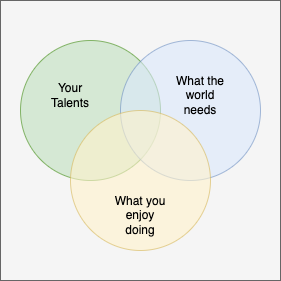
2 great practices to adopt that can increase happiness
i) Self-compassion — When things are not going right, be kind to yourselves. Giving a negative talk to yourself would not motivate you but will lower your self-esteem instead.
ii) Express Gratitude — When things are going well for you, don’t forget to thank all those who helped you achieve the state you are in.
Sin 3. Desperation for Love
A study has found that the top 10 percent of the happiest people had at least one intimate relationship. Being in a relationship is extremely important for happiness and so, feeling isolated is associated with depression.
But there is a thin line separating a healthy desire for love and connection and an unhealthy desire.

Again expressing gratitude can deepen your connections and you will lead a better social life.
In general, there is more positivity in the world than most of us realize. However, negative stories are favored over positive ones on news channels and social media. And because of this constant exposure, we end up feeling that there is more negativity in the world than there is positivity.
To be happy don’t be desperate to get love, instead be ready to give love and be kind!
Sin 4: Being Overly Controlling
Everyone dislikes being controlled. Studies have shown that we are more likely to buy a larger quantity of a product when there is a restriction on how much of it can we buy than when there is no such limit.
This reminds me of how during the pandemic, in Australia people were buying more toilet paper than they needed 😊
Being overly controlling can reduce happiness as when you want to control others, you may get a “power stress”, which is the tendency to get angry and frustrated when others don’t behave the way you want them to.
In addition to controlling others, you may be seeking control over the external environment — the outcomes and the events. Chasing good outcomes is a good thing, however, becoming obsessed with achieving the desired outcomes makes you overly control-seeking.
Life doesn’t go as planned, and those high in need of control suffer more.
In addition to that, your decision-making may be adversely affected if you are overly controlling of outcomes.
To be happy, take internal control by leading a happier lifestyle. A healthy lifestyle consists of
a. Eating Right
b. Moving More
c. Sleeping Better
Sin 5: Distrusting Others
It is important to be smart about when, with whom, and how much to trust others.
We shouldn’t distrust everyone all the time as you will lose some great benefits, including feeling happy. At the same time, you can’t trust everyone all the time. Because if someone breaks your trust you may lose something and you will also feel cheated.
The negativity from being cheated out of an x amount of money is far greater than the positivity from saving the same amount.
It takes as many as 5 trustworthy behaviors to overcome the negative feelings generated by just 1 untrustworthy one! — John Gottman, one of the researchers in the area of relationships
Our default tendency is to distrust others. If we could overcome this tendency, we might be happier. People are far more trustworthy than we give them credit for.
Practicing forgiveness will help to let go of the pain you get when you get cheated after you show trust.
Sin 6: Passionate Pursuit of Passion
People are far happier being busy than being idle.
And if people find that what they are doing is meaningful, then there’s an even greater chance of being happy.
3 broad approaches to goal pursuit:
a) Obsessive Pursuit Of Passion — Having a strong preference for certain outcomes over others before and after they have occurred.
b) Indifferent Pursuit Of Passion — Not caring about outcomes both before and after they have occurred.
c) Dispassionate Pursuit Of Passion — Having a preference for certain outcomes over others before but being nonjudgmental after.
If you adopt a dispassionate pursuit of passion, you will be far more happy.
Sin 7: Mind Addiction
Our emotions play a huge role in influencing decisions. But we often feel uneasy accepting that. That is because we have built a perception that our emotions tend to hinder our decision-making process rather than enhance it.
As a result, we try to justify our emotional decisions on the basis of “rational” reasons.
Our gut instincts and feelings are more intelligent than we think. One of the reasons that we underestimate the importance of our guts and feelings is that our education system teaches us to emphasize performing a thorough analysis before arriving at solutions to all our problems and challenges.
Many people including Thomas Edison have noticed that the best ideas come when one is not actively thinking about the solution to a problem.
Mind-wandering is a phenomenon where your mind is all over the place and isn’t focused on any one thing. Whereas, Mindfulness is the opposite of it where you are focussing just on the thing that you are currently involved in.
By practicing mindfulness, one can get both physiological and psychological benefits.
Conclusion
If I had to summarize the top learnings that I captured from the book:
- If you want to be happier, stop comparing your success with that of others, as there are no valid logical yardsticks available to measure. Fame, power, and wealth aren’t the right yardsticks. Chasing them will only lower happiness.
- If you want to be happier, build deeper connections and be ready to offer love and be kind.
- If you want to be happier, be self-compassionate, show gratitude, and practice forgiveness.
- If you want to be happier, don’t try to control the outcomes but instead have a preference for the outcomes before but don’t be judgemental after.
- If you want to be happier, practice mindfulness.