avatarHolly Jahangiri

Free AI web copilot to create summaries, insights and extended knowledge, download it at here

4010

Abstract

o learn, practice, and maybe move from dabbler to poet? <i>Are you undaunted?</i></p><h1 id="f9be">Still with me?</h1><p id="dfaf">Good. Because this challenge is for <b>you</b>, the nascent poet — the dabbler, the enthusiast, the playful <i>poetential </i>poet. Let the others spend their effort and energy on writing me hate mail — <b>you </b>come and take my challenge:</p><p id="fccd">1Go learn more about the various forms and terms of art that poets use. You will find the most common, useful, and important ones here, at Poetry Foundation, and <i>bookmark this page</i> — you’ll be returning to it many times:</p><div id="b7cc" class="link-block"> <a href="https://www.poetryfoundation.org/learn/glossary-terms"> <div> <div> <h2>Glossary of Poetic Terms | Poetry Foundation</h2> <div><h3>Related to acrostic, a poem in which the first letter of each line or stanza follows sequentially through the alphabet…</h3></div> <div><p>www.poetryfoundation.org</p></div> </div> <div> <div style="background-image: url(https://miro.readmedium.com/v2/resize:fit:320/0*t5LosT4gK4RW7ke6)"></div> </div> </div> </a> </div><p id="e69f">2Buy or bookmark a rhyming dictionary or two. This is a special sort of dictionary that categorizes words by the sound of their endings, and the number of syllables in the word. A few examples:</p><div id="2ad6" class="link-block"> <a href="https://www.rhymezone.com/"> <div> <div> <h2>RhymeZone rhyming dictionary and thesaurus</h2> <div><h3>A language arts reference tool and comprehensive search engine for words. Includes the functions of a rhyming…</h3></div> <div><p>www.rhymezone.com</p></div> </div> <div> <div style="background-image: url(https://miro.readmedium.com/v2/resize:fit:320/0*iYMW2sg_6319-P7U)"></div> </div> </div> </a> </div><div id="a201" class="link-block"> <a href="https://rhymer.com/"> <div> <div> <h2>Rhymes * Rhyming Dictionary | Rhymer.com</h2> <div><h3>End Rhymes (blue/shoe) This option lets you easily find exact rhymes (words in which the final vowel and consonant…</h3></div> <div><p>rhymer.com</p></div> </div> <div> <div style="background-image: url(https://miro.readmedium.com/v2/resize:fit:320/0*8pTZ6GvoZCZU2Vg7)"></div> </div> </div> </a> </div><div id="fe79" class="link-block"> <a href="https://wordhippo.com"> <div> <div> <h2>WordHippo!</h2> <div><h3>Thesaurus and word tools for your creative needs. Find the word you're looking for!</h3></div> <div><p>wordhippo.com</p></div> </div> <div> <div style="background-image: url(https://miro.readmedium.com/v2/resize:fit:320/0*Yr764oVI_TdNrTxg)"></div> </div> </div> </a> </div><figure id="1e91"><img src="https://cdn-images-1.readmedium.com/v2/resize:fit:800/1*iC54M3LTo0IpzOzEuy0gnA.jpeg"><figcaption>A Few Books from the Author’s Own Shelf</figcaption></figure><p id="1864">If you prefer print, I highly recommend <a href="https://amzn.to/3bEpoWD">The Complete Rhyming Dictionary: Including The Poet’s Craft Book, by Clement Wood</a>. I have a very old and tattered edition — this one is updated and expanded.</p><p id="2d53">Avoid “slant rhymes” — words that don’t quite rhyme. Now and then, you can make a close-but-not-quite rhyme work, but more often than not, it’s the hallmark of an amateur who isn’t trying hard enough. Consider different word choices.</p><div id="1a76" class="link-block">

Options

   <a href="http://blog.writeathome.com/index.php/2014/02/rhymes-that-dont-quite-rhyme/">
        <div>
          <div>
            <h2>Rhymes That Don't Quite Rhyme</h2>
            <div><h3>Bearing shame and scoffing rude In my place, condemned He stood Sealed my pardon with His blood Hallelujah, what a…</h3></div>
            <div><p>blog.writeathome.com</p></div>
          </div>
          <div>
            <div style="background-image: url(https://miro.readmedium.com/v2/resize:fit:320/0*Z5dz0JKgE_qEur70)"></div>
          </div>
        </div>
      </a>
    </div><div id="28eb" class="link-block">
      <a href="https://www.litcharts.com/literary-devices-and-terms/slant-rhyme">
        <div>
          <div>
            <h2>LitCharts</h2>
            <div><h3>What is slant rhyme? Here's a quick and simple definition: Traditionally, slant rhyme referred to a type of rhyme in…</h3></div>
            <div><p>www.litcharts.com</p></div>
          </div>
          <div>
            <div style="background-image: url(https://miro.readmedium.com/v2/resize:fit:320/0*Low27NnyOSZzZty9)"></div>
          </div>
        </div>
      </a>
    </div><p id="ca27">3Now for the real challenge: Go back to the link in the #1, and beginning from A — Abecedarian — devote one day to each term, and write a poem that demonstrates it, and your understanding of it. Work at it until it “clicks.” Some will be much easier than others; that’s fine. No need to work ahead. Focus on the term for today.</p><p id="76c5">4Publish your poem here on Medium and include a link to the specific term you were working on. Include a brief journal entry — what you learned, how difficult it was, and what insights you gained from the exercise. There are 275 terms listed at Poetry Foundation. This means you can take most weekends off, if you like, and still finish in a year. Not all of the terms listed here are forms — on the days when you run across a term like “rhyme” or “meter,” simply write a poem that relies on rhyme, or meter, and discuss that in your journal entry.</p><p id="871d"><b>NOTE</b>: If you prefer not to share your poem, here — perhaps it is something you feel is good enough to save and publish in a poetry journal or a <a href="https://en.wikipedia.org/wiki/Chapbook">chapbook </a>of your own — then just note that, but do the journal entry, anyway. If you take this route, commit to submitting your poem to a poetry journal or other publication within the month, or to gathering enough of your own poems to publish a chapbook within the year.</p><p id="319f">By the end of a year, <i>if you take on this challenge</i>, no one dare raise an eyebrow if you call yourself a “poet.” I cannot guarantee that a year’s daily practice will make you a “<i>great </i>poet.” It probably won’t. But you can puff out your chest and proudly declare that you are a “poet,” and I will nod and say, “Yes, <i>absolutely </i>— now, keep at it, because the day we stop learning and growing, we can call ourselves <i>dead poets</i>.”</p><p id="89ab"><i>Amazon links (amzn.to, when you hover over them), added for your convenience, are affiliate links. If you buy using them, I may earn a few pennies and it will not cost you extra. But as always, you have choices, and if you choose not to use my links, I’d urge you to support your local brick and mortar, independent bookstores.</i></p><p id="0343"><a href="https://jahangiri.us"><i>Holly Jahangiri</i></a><i> is the author of Trockle; A Puppy, Not a Guppy; and <a href="https://amazon.com/author/hollyjahangiri">A New Leaf for Lyle</a>. She draws inspiration from her family, from her own childhood adventures (some of which only happened in her overactive imagination), and from readers both young and young at heart. Subscribe to her newsletter at <a href="https://hollyjahangiri.substack.com/">https://hollyjahangiri.substack.com/</a></i></p></article></body>

If You Would Call Yourself a Poet…

A challenge, a dare — a call to dedicated writing and commitment
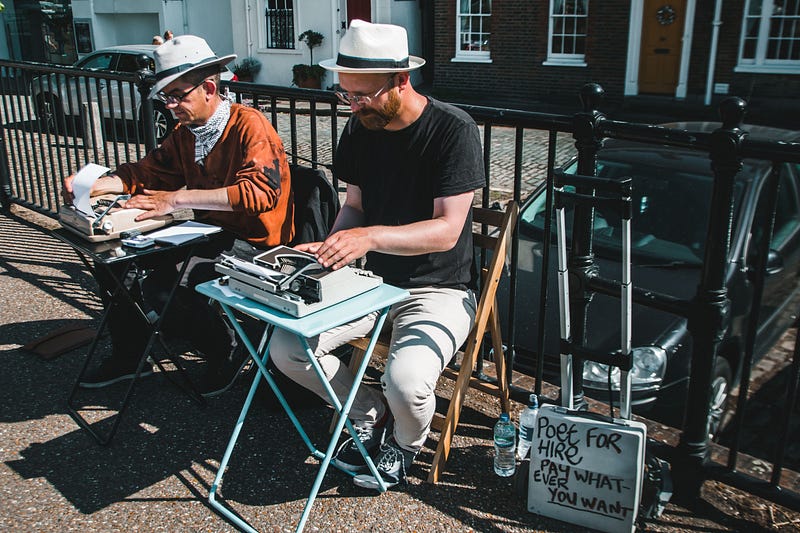
Photo by Andraz Lazic on Unsplash

You can call yourself anything you like, of course. I daresay you’d take some exception to my calling myself a brain surgeon, but so long as I don’t open your skull — only suggest, slyly, that I might — who’s to stop me playing pretend?

Photo by National Cancer Institute on Unsplash

Any craft requires dedication: effort, practice, a willingness to learn from one’s mistakes (God save us, each and all, from dilettantish brain surgeons!) Humility, if you will. It is a long way from, “I have an interest in neuroscience and anatomy,” to “Do you trust me to use a saw to open your skull, and probe your gray matter with a knife?”
Photo by Thanh Tran on Unsplash

Dabblers

You may laugh and think me mean to suggest that one or two seventeen-syllable verses does not a “poet” make, but rather, a dabbler in poetry. There is nothing wrong with dabbling in poetry, or writing, or art, or photography, or music, or dance! There would be no poets, no writers, no great masters of the arts, and no ballet without there first being dabblers. Don’t look to knock me off my pedestal — I am a dabbler, too.

Not when it comes to some forms of writing. When you have spent the better part of forty years practicing and being paid well to do a thing, perhaps then you can be forgiven for claiming, “I am a writer.” Because by then, it really is a core part of your identity, and it has kept a roof over your head and played some part in providing food for your family’s table. But there is no shame in being “an engineer and mother who dabbles in writing,” or a “retired schoolteacher and grandmother who dabbles in poetry.” There is no shame in that at all.

But there is a question: Do you want to be a poet? If the answer is “yes,” then you must also cry out, “YES!” when asked, “Are you enthusiastically willing to do the work?”

If not, then look elsewhere for your vocations — don’t puff out your chest and proclaim, “I am a poet!” merely because you are able to count out seventeen syllables.
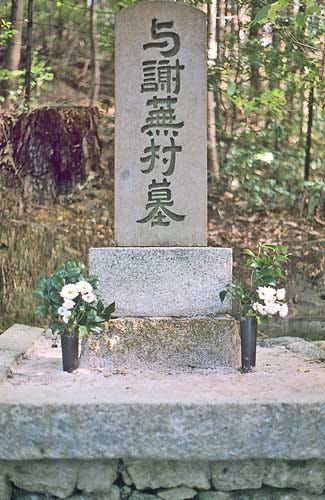
Grave of YosaBuson (与謝蕪村墓) (Public Domain, Wikipedia)

Poets who are truly dedicated to Haiku will not take offense; there is an art to Haiku, and some have devoted lifetimes to mastering it. When people lay wreathes on your grave, more than 200 years after you are gone, because your poetry is as enduring as that of Yosa Buson, you will have “made it” as a poet and a writer of Haiku.

Are you bothered by what I’m saying? Or are you energized — challenged — eager to learn, practice, and maybe move from dabbler to poet? Are you undaunted?

Still with me?

Good. Because this challenge is for you, the nascent poet — the dabbler, the enthusiast, the playful poetential poet. Let the others spend their effort and energy on writing me hate mail — you come and take my challenge:

1Go learn more about the various forms and terms of art that poets use. You will find the most common, useful, and important ones here, at Poetry Foundation, and bookmark this page — you’ll be returning to it many times:

2Buy or bookmark a rhyming dictionary or two. This is a special sort of dictionary that categorizes words by the sound of their endings, and the number of syllables in the word. A few examples:
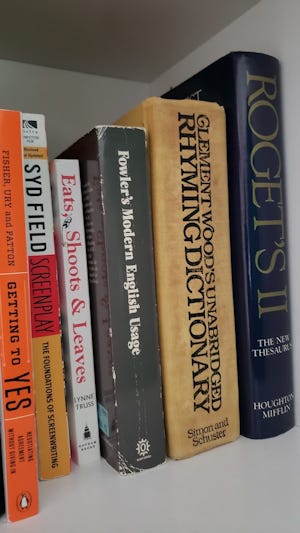
A Few Books from the Author’s Own Shelf

If you prefer print, I highly recommend The Complete Rhyming Dictionary: Including The Poet’s Craft Book, by Clement Wood. I have a very old and tattered edition — this one is updated and expanded.

Avoid “slant rhymes” — words that don’t quite rhyme. Now and then, you can make a close-but-not-quite rhyme work, but more often than not, it’s the hallmark of an amateur who isn’t trying hard enough. Consider different word choices.

3Now for the real challenge: Go back to the link in the #1, and beginning from A — Abecedarian — devote one day to each term, and write a poem that demonstrates it, and your understanding of it. Work at it until it “clicks.” Some will be much easier than others; that’s fine. No need to work ahead. Focus on the term for today.

4Publish your poem here on Medium and include a link to the specific term you were working on. Include a brief journal entry — what you learned, how difficult it was, and what insights you gained from the exercise. There are 275 terms listed at Poetry Foundation. This means you can take most weekends off, if you like, and still finish in a year. Not all of the terms listed here are forms — on the days when you run across a term like “rhyme” or “meter,” simply write a poem that relies on rhyme, or meter, and discuss that in your journal entry.

NOTE: If you prefer not to share your poem, here — perhaps it is something you feel is good enough to save and publish in a poetry journal or a chapbook of your own — then just note that, but do the journal entry, anyway. If you take this route, commit to submitting your poem to a poetry journal or other publication within the month, or to gathering enough of your own poems to publish a chapbook within the year.

By the end of a year, if you take on this challenge, no one dare raise an eyebrow if you call yourself a “poet.” I cannot guarantee that a year’s daily practice will make you a “great poet.” It probably won’t. But you can puff out your chest and proudly declare that you are a “poet,” and I will nod and say, “Yes, absolutely — now, keep at it, because the day we stop learning and growing, we can call ourselves dead poets.”

Amazon links (amzn.to, when you hover over them), added for your convenience, are affiliate links. If you buy using them, I may earn a few pennies and it will not cost you extra. But as always, you have choices, and if you choose not to use my links, I’d urge you to support your local brick and mortar, independent bookstores.

Holly Jahangiri is the author of Trockle; A Puppy, Not a Guppy; and A New Leaf for Lyle. She draws inspiration from her family, from her own childhood adventures (some of which only happened in her overactive imagination), and from readers both young and young at heart. Subscribe to her newsletter at https://hollyjahangiri.substack.com/

Poetry
Poetry Writing
Poet
Writing
Vocation
Recommended from ReadMedium