
If You Want Us Men To Watch “Little Women”, Stop Lecturing Us About It
You can’t just scold men into movie theater seats.
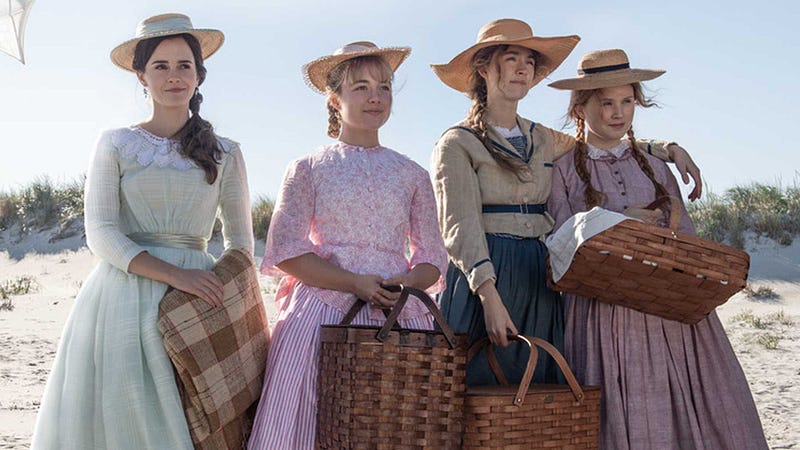
I’m sitting on a couch at my friend’s house in LA on New Year’s Eve as I sculpt the intro to this tirade on the latest kerfuffle around men not flocking to see a Little film about Women.
While my LA trip is certainly about pouring too much alcohol into my body to ring in another Year of Loud Opinions, it’s also a business trip of sorts. You see, my friend and I are aspiring horror filmmakers and have been spending the past several months planning how we’re going to kick open the doors of Hollywood nobility and stink up the joint with our ghoulish cinematic visions.
We’ve had many nerdy film discussions about our favorite movies, filmmakers we idolize, and the types of films we’d love to make together. However, one topic that’s been invading our conversations more and more is that of “wokeness” — that rotten bastard of a dogma that I’d gladly beat to death with a baseball bat and bury in the desert somewhere outside of Las Vegas — and its cancerous chokehold on contemporary filmmaking.
My friend and I share the same worries about the industry we’re trying to break into when we unleash our first horror film together: Will audiences care more about the skin color of our protagonist than the creative choices we made? Will film festival judges criticize our flick for not being feminist enough? Will we be denounced for not making the protagonist an autistic transgender lesbian vampire hunter?
Ironically, Hollywood’s growing attachment to wokeness frightens us more than any monster possibly could.
The brouhaha about the recently-released Little Women is yet another symptom of this thriving malignancy, this cultural bubonic plague that threatens to cripple the originality of filmmakers everywhere.
Since Little Women was released, there’s been an outbreak of condescending articles talking about the Man Problem. Both male and female critics have taken it upon themselves to lecture penis-havers on the virtues of watching a syrupy film about teenage girls growing up during the Civil War. (The fact that it’s both men and women who are seeing red over such a trivial issue is proof positive that neither sex owns the copyright on righteous stupidity when ideology is involved.)
If you’re not too concerned with your sanity’s health, check out some examples of hollow reasoning and unearned pomposity parading as penetrating insight and cinematic wisdom.
The first example of the bizarre panic about this nothing-event that I encountered was this tweet by veteran New York Times critic, Janet Maslin.
Apparently, those three apathetic men are confirmation of a coming malepocalypse that only Maslin can foresee. Batten down the hatches, ladies! A reign of terror in which men ignore your thoughts on chick flicks is upon us! Don’t say she didn’t warn you!
By the way, since there isn’t much joy to be found in this rant, here’s my classic response to her neurotic missive:
My comebacks will be the stuff of legend soon, I just know it.
Many of the columnists opining on men’s disinterest in watching “Little Women” employ the same tactic: tell men that this film is for them while also telling them that the villain symbolizes men as a whole. It’s a weird sort of bait and switch; entice male viewers by emphasizing the quality of the film and its universality of themes, then shove some fashionable feminism in their faces and berate them for not being enthusiastic to watch a film about young damsels growing up 150 years ago.
In a Vanity Fair article, Anthony Breznican both underscores how the story could easily resonate with men AND how one of the male characters represents the dismissive attitudes contemporary men apparently have towards stories about women.
Gerwig also wrote the screenplay, framing the story of the March sisters within an original subplot in which Jo tries to persuade a stuffy editor named Mr. Dashwood (played by Tracy Letts) into publishing her debut novel, which tells the story of the family…Mr. Dashwood just doesn’t get it, and in some ways he stands as a symbol of other men today who stubbornly think the story isn’t for them.
With this article, Breznican tells men “Hey fellas, this story could interest you. Also, the main villain is you.” Breznican could botch a sale of water to drought stricken farmers with this level of marketing brilliance and STILL walk away thinking he made a killing.
In writing for The Daily Beast, Kevin Fallon ALSO uses the film’s heavy handed meta-shots at our supposedly patriarchal culture to encourage men to watch a film that denigrates them.
Bookending the film are scenes between Jo March (Saoirse Ronan) and a publisher (Tracy Letts). His advice about her writing is reductive and sexist; he underestimates her talent and worth because she’s a woman, and, later, he misjudges the universal appeal of a story about four sisters grappling with their identities and desires.
…
The scenes are a bit of a meta wink at the climate Gerwig’s Little Women is being released in, recontextualizing the timelessness of Alcott’s stories and her characters’ journeys against women’s continued battle today to have their worth validated. “I want to be great or nothing at all,” Amy (Florence Pugh), the March sister most often criticized as vapid, even says. “What women are let into the club of geniuses anyway?” Laurie (Timothée Chalamet) replies.
…
These exchanges, then and now, are meant to provoke a patriarchal culture, and maybe even incite the smallest crisis of conscience. What wasn’t intentional — or, actually, perhaps it was — is precisely how damning a critique of society, powerful men, and tastemakers the film’s themes would turn out to be.
I’m starting to think that the reason the film’s most ardent supporters like it so much has less to do with its artfulness, and more to do with it being meta.
And misandristic, too, apparently.
Monica Hesse, in her vomit-inducing Washington Post article, goes for a slightly different attack, positing that most men are actually interested in watching Little Women but are just too afraid.
Please.
One of my favorite novels is Jane Austen’s “Sense and Sensibility”, and I punch holes in mountains and drink out of volcanoes because masculinity is fun.
Men aren’t afraid to watch “Little Women”. Most of us just don’t want to.
To the men who love “Little Women”:
Hello! You are not alone. There are many of you, and you have all been emailing me to confess, as if it were a shameful secret, your deep affection for a 150-year-old story about four girls growing up in Civil War-era Massachusetts, making currant jam and accidentally burning their dresses in the fireplace.
Because a few anonymous men have told Hesse that they’re uncomfortable with the idea of watching “Little Women”, she thinks that the best way to get the other males who are holding out on joining in the boredom is to treat them as if they’ve been putting off getting tested for testicular cancer.
There’s another annoying ploy that Hesse puts to deranged use in her article, which is that of referring to men who do enjoy “Little Women” as “Little Women Men”. Maybe I’m dense, but how does attaching such a cutesy name to men who like a movie encourage others to want to see it?
Seriously, the irrationality is strong with this one: Hesse should quit her gig as a propagandist and become a party planner for men — by encouraging men to “casually suggest that you and your crew grab a few beers, and then go watch the March family darn some socks in their sitting room”, she clearly demonstrates a clear understanding of men’s interests.
To her credit, Kristy Eldredge, in her New York Times article, accurately sums why many men would seem less than ecstatic about seeing the film:
The bucolic imagery in the trailer underlines the cozy, even slightly sappy aspects of Ms. Alcott’s book: the March sisters with their flowing locks and billowing gowns, looking as though they just stepped out of a John Singer Sargent painting. Knitting around a fire. Lots of dialogue centered around whom the young women will marry (in England, the second half of the book was called “Good Wives”). Some may feel the story is solely about getting a husband.
While subtly blaming the film’s marketing team for not highlighting its broader appeal and artistic qualities, she STILL manages to make a gendered mountain of a genderless molehill.
If many men haven’t wanted to give it a chance because they don’t think it’s meant for them, we still have a way to go in considering all kinds of narratives about women to be deserving of thoughtful attention.
I just sighed so hard, I blew over a brick house.
No sane person will ever accuse Woke Soldiers of self-awareness or complexity of thought.
What these writers fail to understand is that it is actually possible to convince even the most virile of male viewers to watch “Little Women” or any other female-led film, for that matter. And it’s actually quite simple:
Just fucking focus on how good of a movie it is.
Men who were initially turned off by the film because of the title, the trailer, or the source material may come around when they hear enough about the acting, the writing, the directing, the humor, the drama, etc.
Male movie fans can appreciate high art from time to time, so why not stick to singing the praises of the filmmakers? This may actually be a better long term approach to getting men more interested in films about and by women. At the very least, men will roll their eyes less than the current method of fussing over nothing.
But the overuse of woke buzzwords (male privilege, toxic masculinity, patriarchy, etc.), the condescension, and the guilt-tripping are doing the exact opposite of creating an eager male fanbase for “Little Women”, and these journalists are too addicted to their dubious brand of pestering-as-criticism to notice.
Hey fellow men, do you like being nagged to do something you don’t wanna do?
Hey ladies, does nagging your man make him eager to carry out thy bidding, no matter how embarrassing?
I’m hearing a resounding “no” from both camps.
The laws of physics clearly state that men cannot be forced into reluctant action by sheer bitching alone, and that these columnists could be so unaware of this basic principle is hard evidence of their out-of-touchness with the proletariat, and maybe reality itself.
I know the topic of sex differences is controversial to anyone who hates facts, but there are numerous measurable differences between the sexes. These differences, in particular differences in interests, are fairly small and there are always exceptions, but they exist nonetheless.
I bring this up in response to the shock and terror that these columnists display at the many men who didn’t put “Little Women” at the top of their watchlists. The innate sex differences may at least partially explain why “Little Women” had greater appeal with…um…women. I swear, we live in a dimension of stupidity, which means I actually have to explain that previous sentence.
Below is a graph from Statista that displays the share of viewers who’ve watched certain Marvel Studios films in the United States as of February 2018, separated by gender:
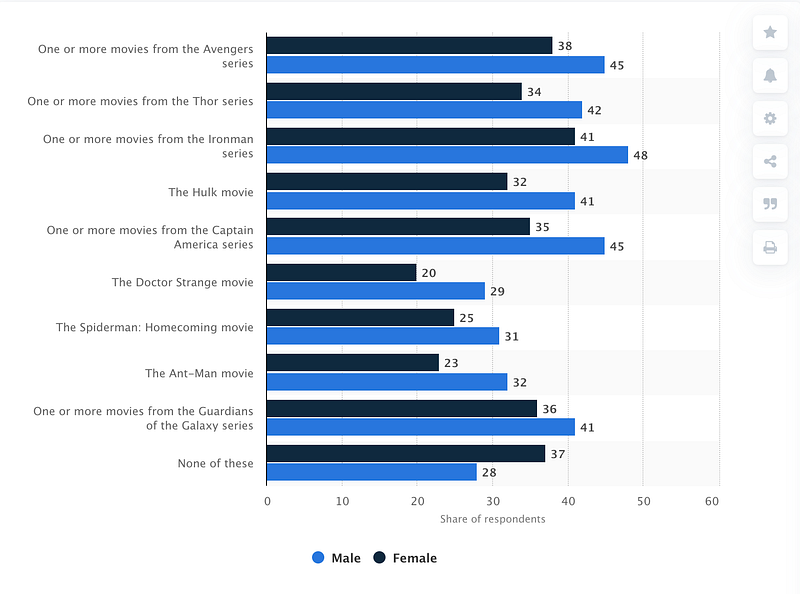
Notice how all of the films, all with plenty of action and explosions and many of them with the word “man” in the title, were watched mostly by men. I guess it’s time to start that barrage of articles admonishing the fairer sex for not digging superhero flicks enough!
Bring out your heaviest artillery and angriest opinions, Men!
Set your typewriters to “scold”, My Brothers!
But wait! A minor contradiction cometh!
In a report from Movio Media on the audience breakdown of Wonder Woman — a female-led film — men made up the majority of viewers, as seen below:
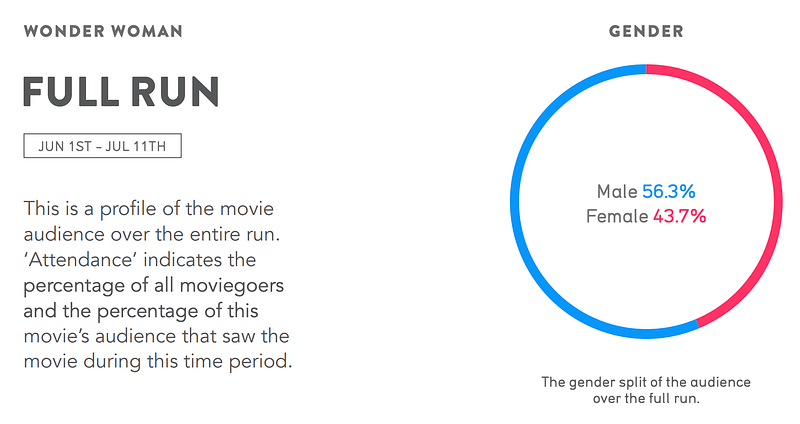
Hmmm. This is a bit of a wrinkle, isn’t it? A movie where the lead is a woman and has the word “woman” in the title that performed better with men, and a film where the leads were women and has the word “women” in the title that performed worse with men. What’s up with that? Sure, Wonder Woman was a superhero movie with a plethora of punches and explosions, but why would that film attract more men than women?
OH, I DON’T KNOW, MAYBE IT HAS TO DO WITH MEN AND WOMEN’S GENERAL DIFFERENCES IN TASTE IN MOVIE GENRES. I’M JUST SPITBALLING HERE.
In a study covered by PsyPost, two groups of German adults (150 in the first group and 160 in the second group) were asked various questions about their preferences for seventeen movie genres given to them. The results are surprisingly unsurprising:
Animation, comedy, drama, heimat [a series of films written and directed by Edgar Reitz about life in Germany from the 1840s to 2000 through the eyes of a family from the Hunsrück area of the Rhineland], and romance were considered “female” genres, while action, adventure, erotic, fantasy, history, horror, science fiction, thriller, war, and Western were considered “male” genres. The men and women in the study had very similar predictions about the movie preferences of each gender.
…
The researchers found that action, adventure, erotic, fantasy, horror, mystery, science fiction, war, and Western genres were more strongly preferred by men than by women. But only romance and drama were more preferred by women. The remaining genres were equally popular among men and women.
I AM SHOCKED. SIMPLY SHOCKED.
Now, I understand that these are merely generalizations, that men and women’s interests overlap quite a bit, and that the public’s tastes in films will change and are hard to predict.
But there’s still plenty of proof that, at least in this case, men and women have different tastes in what appeals to them, something that the sexes have been bickering about since we were nothing but primordial ooze.
I may be harsh in my criticism, but how else can a film buff react to such hysteria than with brutal sarcasm?
Simply look at the high & mighty titles of the articles (some of which I attacked here, as well as others) covering the nonexistent problem of men not wanting to watch “Little Women”:
- Men Are Dismissing ‘Little Women.’ What a Surprise.
- Little Women Has a Little Man Problem
- Men Will Love ‘Little Women’ Too. I Can’t Believe I Have to Say That.
- Dear men who are afraid to see ‘Little Women’: You can do this.
- ‘Little Women’ is an Oscar contender — can it make men care about stories featuring women?
- Men should love Greta Gerwig’s ‘Little Women’
The senseless gall on display here is like that of a comedian who berates his audience for not getting his jokes: “You’re not conveying the reaction I want towards this, so now I’m going to talk down to you since I’m the one with the floor.”
What’s worse about these half-baked societal diagnoses is that they aren’t the ravings of a handful of Twitter-addicted SJWs — they’re the premeditated analyses of writers for distinguished publications, which means they have a fair amount of clout that they continually squander in the service of some misguided sense of activism.
All of these columnists and journalists are tastemakers; it’s their job to examine the validity and effectiveness of a work of art or a piece of entertainment, and to impart their reactions in an accessible manner to a general audience.
But recently, prominent film critics have become drunk on the hollow validation their Twitter followings grant them, and have abused their positions of social influence. Instead of encouraging an appreciation for filmmaking that can be espoused by the common man, they’ve elevated their own duties to that of cultural authoritarians while operating under the pretense that they still have one foot firmly planted in the daily grind of Average Joe.
They believe that they’ve got their fingers on culture’s pulse when they actually have them up their own asses to massage the tightness of their rectums.
I mean, for fucks’ sake, these are the snobby swine who dictate to the hoi polloi what’s hot and what’s not, and they’re all drinking the same woke-flavored Kool Aid, demanding that the rest of us take a swig of their contaminated swill.
And woe unto those who imbibe in the cheap whiskey of reality.
In 2018, while giving her acceptance speech upon receiving the Crystal Award for Excellence in Film, Oscar-winning actress Brie Larson said this:
“Am I saying I hate white dudes? No, I’m not. I don’t want to hear what a white man has to say about ‘A Wrinkle in Time.’ I want to hear what a woman of color, a biracial woman has to say about the film. I want to hear what teenagers think about the film. If you make a movie that is a love letter to women of color, there is a chance that a woman of color does not have access to review and critique your film.”
She was praised at the time by the Hollywood aristocracy for really sticking it to the cis-white-middle-aged-heteronormative patriarchy and speaking on behalf of the marginalized from the luxury comfort of the Beverly Hilton.
Let’s ignore the deserving rage this speech would have received if it were delivered by a straight white man talking about why he doesn’t want to hear the opinions of black women, and focus on something else that protrudes from the morass of Hollywood’s ultra-progressive idolatry:
The sheer and brontosaurus-sized inconsistency of woke orthodoxy.
Some high priests tell us that men’s views are invalid when they concern a film about women. Meanwhile, other high priests preaching from the same rancid gospel, tell us that men need to watch more movies about women.
Huh.
Let me get this straight, Hollywood: you’re saying that men need to watch more films about women, but they’re not allowed to voice their opinions about these films. And you expect men to comply without complaint?
The countless tenets of wokeness are crashing at the intersection of idiocy and Main Street, which makes absolute sense, as it’s not like any of these principles had any clear direction anyway.
Beneath my barbarous remarks is a very real frustration with the current state of film criticism, and the film industry in general.
And yet, I have a dollop of hope for the future of cinema and the pundits who keep the art form alive through their words and ideas.
This trendy puritanism they’re currently signed up with can’t sustain itself. It’ll exhaust its resources of disdain and burn itself out while us commoners stare at the wreckage, shaking our heads and saying “I told you this would happen”. Sure, there’ll be a few holdouts who’ll try to keep the flame of Political Correctness burning, but there won’t be enough fuel to keep it blazing for long.
And then, the once-pious proponents of woke cinema will be forced to reckon with the blunt force realization that most of the rest of the world doesn’t have the patience to watch movies that condemn them, nor the dullness of mind to blindly follow the bossy columns scolding them to watch said movies.
It’ll happen.
It has to.
Check out my other assault on woke cinema below: