
If You Want To Learn Dutch, Don’t Move to Amsterdam
A pitfall of many ex-pat experiences all over the world
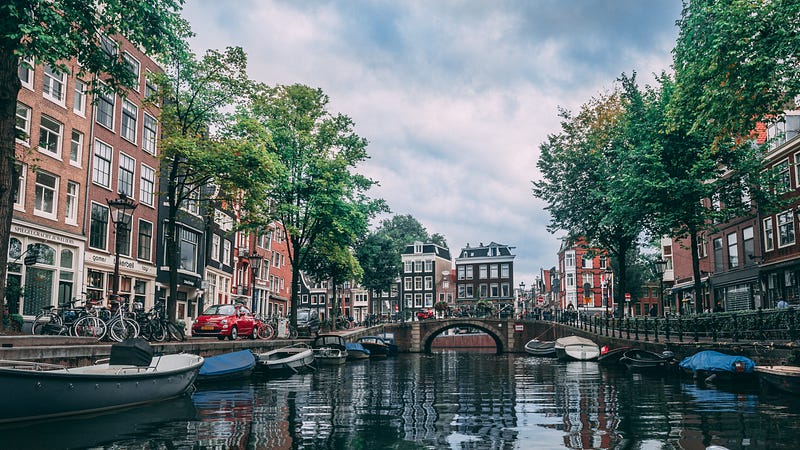
If you are serious about learning the local language of a country, don’t move to the capital city.
I can already hear the outrage from this opening sentence. I see someone reading this and thinking:
“That’s not true! I’ve lived in five global capitals and speak ten languages fluently.”
Okay, okay, I know it is possible to learn languages in these cities. It’s even possible to learn languages from the comfort of your own home. However, I think you have to be a real go-getter to do so or be very naturally gifted in languages. And let’s face it, MOST of us aren’t.
There are also some countries where this may be less true, depending on how many locals know English well or the density of the ex-pat population.
And yes, I admit, sometimes it’s impossible not to move to the capital city. Most of the expat-friendly jobs (a.k.a. the ones where you don’t need to know the local language) are located in those capital cities.
But I stand by what I said. We are hindered in learning the local language by moving to a large, global city.
Why is that?
Well, when we arrive in a foreign country to live in, we are already out of our element. Everything is new. A new home, a new city. Just mastering simple tasks like grocery shopping can be difficult. It’s nice to quickly become friends with other ex-pats so you can converse in your native language or a common language. This becomes a vicious circle though and eventually, you find that you are only speaking your own language.
This exact scenario happened to me when I moved to the Netherlands.
I’m a native English speaker. This fact makes traveling the world nowadays pretty easy. English is widely spoken. It tends to be the common traveler language. The language connects so many people that people default to speaking English together.
But that means that if I want to learn a local language, I need to be really strict with myself. I’ve been in situations where I “wanted” to learn the language, but whoops, I ended up only speaking English most of the time. It happened to me when I was younger in France. It happened to me when I traveled long-term. It happened to me when I moved to the Netherlands.
According to Wikipedia:
“In the Netherlands, the English language can be spoken by the vast majority of the population, with estimates of English proficiency reaching anywhere from 90% to 93% of the Dutch population.”
Well, shit. I guess I should have moved somewhere else if I wanted to learn a foreign language. Dutch kids start to learn English in elementary school.
I’m amazed by the Dutch. Many of them speak flawless English.
In Amsterdam and the major cities (Utrecht, Rotterdam, Eindhoven), life can easily be carried on in English. Expats come from all over the world to work here and sometimes, for only a stint of a few years.
A Dutch colleague said to my American friend:
“Oh, you’re only going to be here for a year? I wouldn’t worry about learning Dutch. We all speak English.”
This was in Amsterdam and, to be honest, it’s kind of true.
We’re not pushed to speak the native language if we are living in a global, cosmopolitan city. The Netherlands might be the extreme, but it is true in many global capitals. It’s easy to be only friends with other ex-pats. They are more accepting of new acquaintances, while locals are sometimes more guarded about letting someone into their social circle if they may move away again soon.
As much as we say, “I want to learn Dutch,” it doesn’t always become a priority. You get into your job and you find a small circle of other ex-pat friends. All the clerks in the stores switch to English when they hear that you struggle with the basic Dutch phrases. And life goes on and years pass…
I’m embarrassed to say that I didn’t learn the local language until living here for five years. Five years?! Yes, it is embarrassing. I just didn’t need it in my daily life. Would it have been convenient to know Dutch? Sure. Could I live without knowing it? Definitely. Between most of the Dutch knowing English and Google Translate, I was golden.
I am happy to say that I’ve finally come out on the other side.
So what eventually forced me to learn the local language? Moving to a smaller town helped the most. I believe this is the tried-and-true way to exit the vicious circle of ex-pat heaven.
The simple fact is that fewer ex-pats live in smaller towns. There are fewer English-speaking jobs and the few ex-pats that have moved to the small towns have usually been in the country for a while and have felt comfortable enough to move out of the big cities to somewhere more affordable.
I moved to a small town without ever thinking about the language. Once I moved, I found that while most of the inhabitants still knew English, they weren’t as comfortable speaking it. There just wasn’t a need to speak it often since there were fewer ex-pats. I would go to the store and when I asked a question in broken Dutch, the clerks no longer switched to English. Oh, the horror!
I finally had no more excuses not to learn the local language.
Because while Dutch wasn’t necessary in the large cities, the truth of the matter was that I had actively chosen not to speak Dutch often, despite taking lessons and saying that I “wanted” to learn the language.
I was out of excuses. The small town forced me out of my comfort zone.
In the new town, my landlords and neighbors didn’t prefer to speak English. Did they speak English better than I speak Dutch? Yes, but it forced me to speak Dutch to them and in doing so, I realized that I had been subconsciously learning Dutch for years. When I started conversing, I found out that I knew more than I thought I did.
I actually knew some Dutch; I just didn’t speak it.
Did I sound like a five-year-old when I did start speaking it? Of course. 100%. Everyone does when they start. It’s something we all have to go through, even in my mid-30s. My experience with languages in the U.S. school system never forced me to go through this embarrassment. Writing and reading were stressed more than speaking in my school and it hindered me for years.
I had just been harboring a fear of speaking. English and ex-pats had been my crutch for years. I’m not one to hold regrets in life, but I realize that I missed out on part of life by keeping to English. I’ve learned from it now and hope I can apply it in the future when I learn another language.
Now, I will say that I love my ex-pat friends. They are truly lifelong friends and the majority of my friends here in the Netherlands are still ex-pats. We share the common bond of seeking experiences out of our home countries. We share the difficulties and the joy of living in another country. They know the burden and the struggle of missing out on family events and what it’s like to feel like a stranger in your homeland.
But if we ONLY have ex-pat friends, then we miss a vital part of the culture and experience of our new home.
The life of an ex-pat can be truly rewarding, but we always walk a fine line between the country being our adopted home and still not fitting in 100%. This is a tightrope that we will never really master, but learning the local language is one way we can assimilate and understand the culture better.
So if you do find yourself living in a capital city, still make an effort to learn the language. While the locals may be able to speak English, talk to them in their local tongue. After all, that’s the experience we came here for.