
If You Want to Be a Better Leader, Think Like a Pilot
Take your seats and prepare for take-off
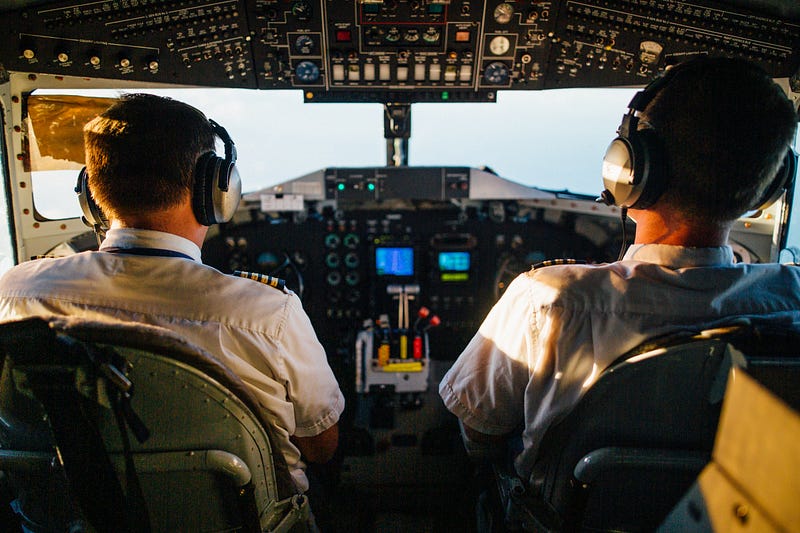
The best pilots are experts in communication, teamwork, prioritization, and adaptability. Sound familiar? It should because the best team leaders are adept at these very same competencies.
So, if you want to be a better leader for your team, you should think like a pilot. Here’s how to do just that.
Share the destination
“Thank you for joining us on today’s non-stop flight to Orlando.”
Pilots tell us where we’re going, but not how we’re going to get there. And, in most cases, the destination is all we really need to know. What they’re doing is setting a vision for us. The weather in Orlando is 68 degrees and sunny, the local time is 11:54 am, and from wheels-up to wheels-down it’ll be about a 3-hour and 9-minute trip.
Leaders select the destination but let their team chart the course.
What it sounds like:
This is what we’re trying to achieve with this project, and this is when we’re trying to achieve it. You decide the best way for us to get to that result.
Set clear expectations
“Air traffic control has confirmed we’re next in line for takeoff, and we should be departing shortly.”
Pilots are in the business of managing passenger expectations in addition to getting us to where we need to go. Some of those expectations are pleasant surprises, like when we arrive earlier than planned. Others are less welcome, like when we have to return to the gate to wait out a storm. Good or bad, they provide us with the information that we need.
Leaders help us understand what ‘good’ looks like. They articulate the results that they’re looking to achieve and provide us feedback when we start to veer off course.
What it sounds like:
We need to come up with a better system for onboarding new hires that integrates them into the overall culture and team in addition to just the job. You tell me the best way to do that. As long as it accomplishes those 3 goals, I’m good with it.
Anticipate turbulence
“We’re expecting to pass through a few bumpy zones of turbulence today.”
Pilots anticipate and warn us about turbulence, but they can’t prevent us from experiencing it. They share the information they have at their disposal and allow each of us to cope with the turbulence however we choose to do so.
The best leaders give us the benefit of sharing the challenges they anticipate we will encounter, but they don’t solve those challenges for us. Why? Because figuring it out as we go is how we develop our learning agility.
What it sounds like:
One thing you should know going into this project is that Michael wanted this assignment and might be a bit resistant to getting you all the information you need. Anticipate some pushback upfront and invest time in building your relationship with him.
Ensure a safe landing
“Flight attendants, prepare for landing.”
Pilots have a keen eye for risk. They are trained to recognize unsafe landing conditions, abort a landing, and go-around when needed.
Similarly, the best leaders keep just enough of an eye on us that they don’t allow us to crash and burn. They evaluate our strengths and weaknesses and don’t set us up to fail by asking us to publicly use a skill we haven’t yet developed.
What it sounds like:
I’m worried that your delivery of this presentation isn’t as confident as I’d like it to be. Let’s run through it one more time together before you present it to the executives.
So, there you have it — to be a better leader, think like a pilot.
Not a member of Medium yet?
Join here to directly support my work and get access to every story on Medium. You can also subscribe to my free newsletter or connect with me on Linkedin.


