avatarDirk Dittmer

Free AI web copilot to create summaries, insights and extended knowledge, download it at here

867

Abstract

ich is a letdown after seeing the expressivity and artistry of a 21mm wide angle lens.</p><p id="3dd8">Any 21 mm lens distorts perspective, and there is no way around it and no AI gimigy to adjust it. A 21 mm captured picture is not supposed to look normal but like a painting. You use a wide angle precisely to capture that particular viewpoint.</p><p id="bf4e">You use the Foveon sensor precisely to capture a color gamut that is otherwise accessible with a normal Bayer filter/ CMOS sensor. <a href="https://en.wikipedia.org/wiki/Foveon_X3_sensor">Wikipedia</a> has an explanation of the details. The image below shows an example. You cannot get similarly deep blues with a CMOS sensor (you can also not see the true colors in the sRGB space used by internet JPEGs).</p><p id="3d80">The Foveon sensor has about 30 Megapixels. That allows you to make very large pri

Options

nts. I printed this one at 10 x 20 inches at 300 dpi for my bedroom.</p><p id="91c0">The Foveon sensor does not lend itself to point and shoot. It is too slow. At the golden hour, a tripod is required, even though the camera itself is much smaller and lighter than any DSLR.</p><p id="686e">To summarize, the Foveon sensor is no ordinary sensor (now available in Sigmas <a href="https://www.sigma-global.com/en/cameras/series/sd-series/">interchangeable lens camera</a>). Together with a wide-angle lens, it will produce one-of-a-kind landscape printing. People will constantly ask: “how did you do this.” To this so may require more than ordinary effort on your part.</p><figure id="1812"><img src="https://cdn-images-1.readmedium.com/v2/resize:fit:800/1*k7lB7jyDypcMdtPyreBESA.jpeg"><figcaption>Sanssouci in Potsdam, 21 mm dp0</figcaption></figure></article></body>

If you want extraordinary landscapes…
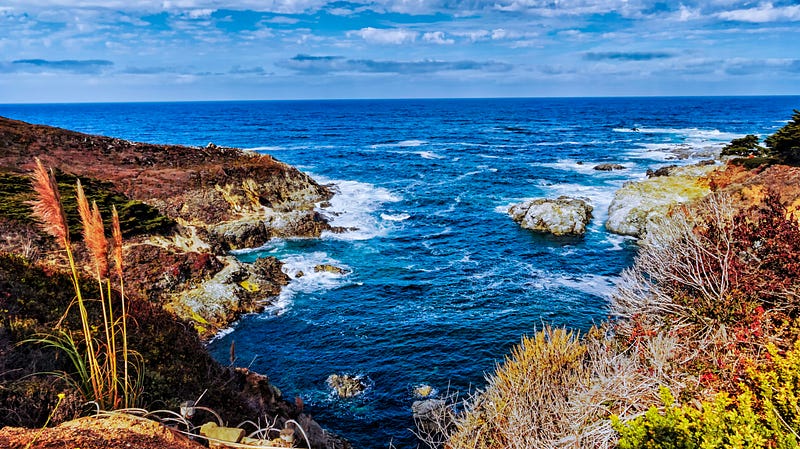
Monterey, California Sigma dp0 (21 mm)

The Sigma dp0 Quattro with Foveon sensor yields truly unique images. First off, this is a 21 mm full frame equivalent lens, which is the classic landscape setup. That application is what it was built for — nothing else. It goes to f22 but is barely usable above ISO 200. No wonder it is discontinued.

Anyone shopping by numbers would think, what were they thinking. The Sigma business department probably thought the same and killed the product. You can still get the Foveon sensor, but only in the 28 mm, which is a letdown after seeing the expressivity and artistry of a 21mm wide angle lens.

Any 21 mm lens distorts perspective, and there is no way around it and no AI gimigy to adjust it. A 21 mm captured picture is not supposed to look normal but like a painting. You use a wide angle precisely to capture that particular viewpoint.

You use the Foveon sensor precisely to capture a color gamut that is otherwise accessible with a normal Bayer filter/ CMOS sensor. Wikipedia has an explanation of the details. The image below shows an example. You cannot get similarly deep blues with a CMOS sensor (you can also not see the true colors in the sRGB space used by internet JPEGs).

The Foveon sensor has about 30 Megapixels. That allows you to make very large prints. I printed this one at 10 x 20 inches at 300 dpi for my bedroom.

The Foveon sensor does not lend itself to point and shoot. It is too slow. At the golden hour, a tripod is required, even though the camera itself is much smaller and lighter than any DSLR.

To summarize, the Foveon sensor is no ordinary sensor (now available in Sigmas interchangeable lens camera). Together with a wide-angle lens, it will produce one-of-a-kind landscape printing. People will constantly ask: “how did you do this.” To this so may require more than ordinary effort on your part.
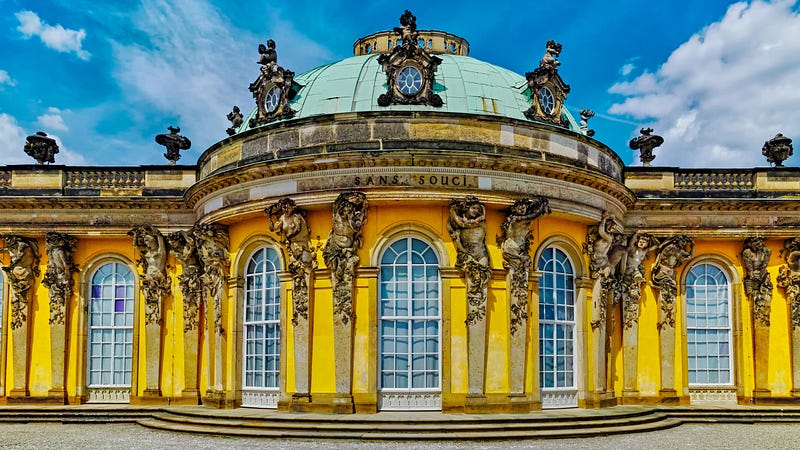
Sanssouci in Potsdam, 21 mm dp0
Photography
Foveon
Sigma
Landscape
Recommended from ReadMedium