
TRAVEL SOUTH AMERICA. TRAVEL WRITING PROMPT.
If You Knew Iguazu Like I Knew Iguazu
The world’s largest waterfalls are one of the world’s greatest natural wonders.
We tracked the pale strangers for three days. Despite the heat, they wore tunics and hats of metal and had hair on their faces. They rode on the backs of large beautiful animals and carried heavy sticks made of metal and wood.
They arrived at the Big Water and dismounted; we guessed they’d been drawn by the roar that can be heard from a great distance. I emerged from the undergrowth and the pale strangers’ bodies stiffened; they lifted their sticks and swords towards me.
I raised my arms in peace to show I carried no weapons. I wore only braids of hair around my legs and red paint on my body. I was otherwise naked. This was a far more sensible approach to clothing in this stifling humidity than that of these pale weirdos.
On the other hand, I suppose they don’t get stung in delicate places by nettles or run the risk of an amorous snake getting confused.
They lowered their sticks and relaxed, seeing no threat from a nudist with a nasty insect bite where no man wouldn’t ever want one.
I pointed to my chest, “Guarani.” My tribe. I pointed at The Falls, “Y (water) uasú (big). A tall man stepped forward, the leader. He pointed to his chest. “I am Alvar Nuñez Cabeza de Vaca and it’s the year of our Lord 1541, mi amigo.”
That’s a mouthful of a name and, as I found out once I’d learnt their Spanish language, Cabeza de Vaca means cow’s head. We call our leader Marangatu which means noble in Guarani. These pale strangers were indeed weird.
Size matters
Earlier that week, I’d sent a message to my Native American colleagues, the Iroquois. They live around Niagara Falls. It said, “My Falls are bigger than your Falls.” Three times bigger actually but I didn’t want to rub it in.
I also sent a message to my Southern African colleagues to remind them Iguazu is wider than Victoria Falls by a whole kilometre. They replied saying they called them Mosi-oa-Tunya or Shungu Namutitima if you don’t mind, and their waterfall is 80ft taller and carries more water. Bit of a spikey reply for a falls with three different names.
Gateways to The Falls
Since the arrival of Señor Cow’s Head, the pale strangers have built two airports and two towns near The Falls, Puerto Iguazu in Argentina and Foz do Iguaçu in Brazil. They supported around 1.6M visitors a year pre-pandemic
These places haven’t exactly added much to the area’s outstanding natural beauty but I suppose it’s preferable to travelling through the jungle for two weeks wearing metal clothes.
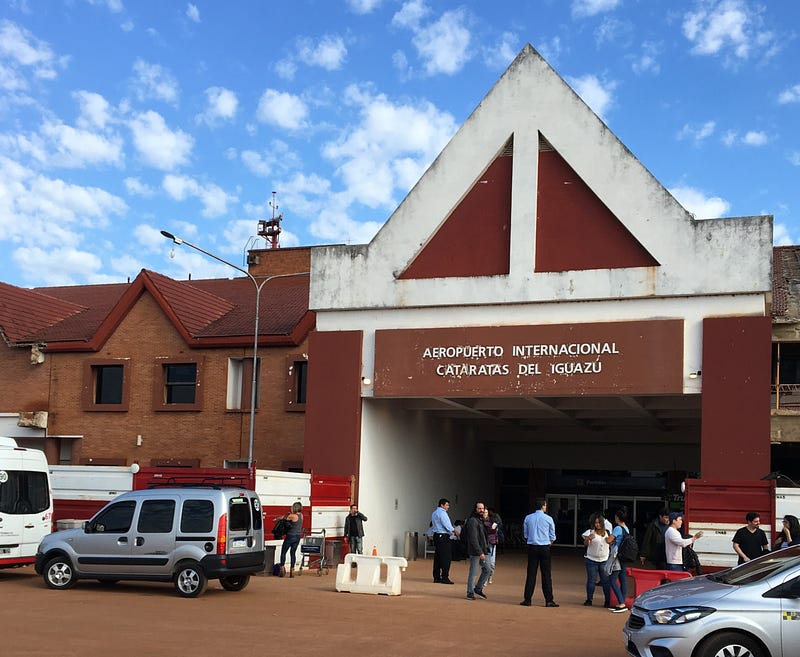
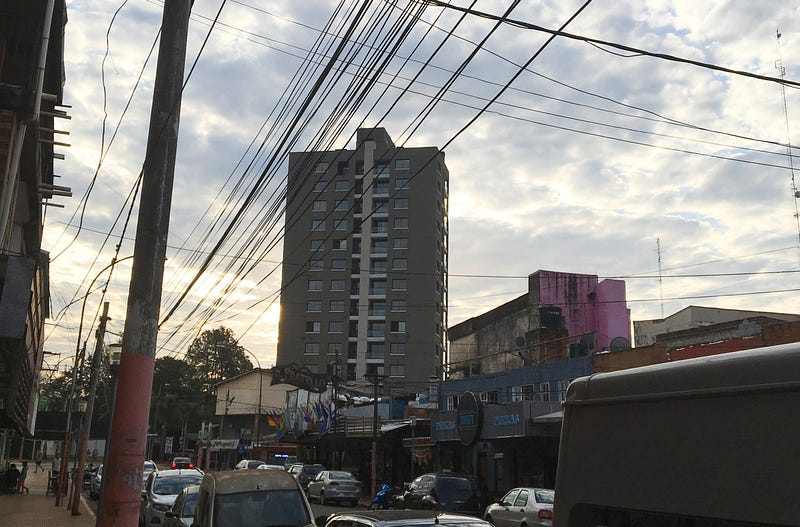
Las Cataratus de Iguazu — Iguazu Falls
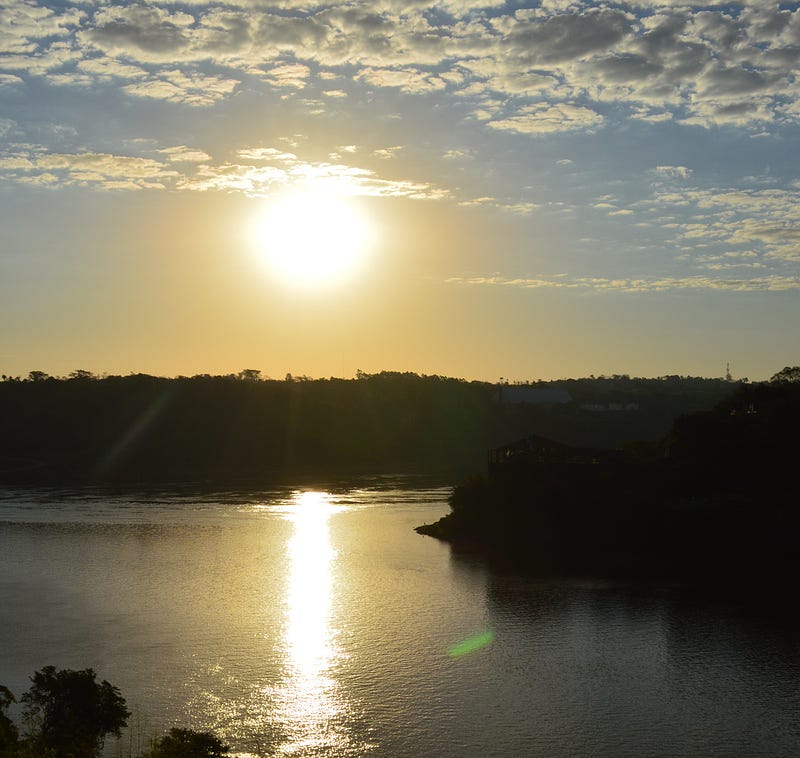
The pale strangers have split The Falls between two countries, 80% to Argentina and the rest to Brazil. Although Paraguay forms one of the Three Frontiers that converge on the Iguazu River, they didn’t get anything.
Iguazu Falls are a collection of around 270 falls that make up the entire natural wonder.
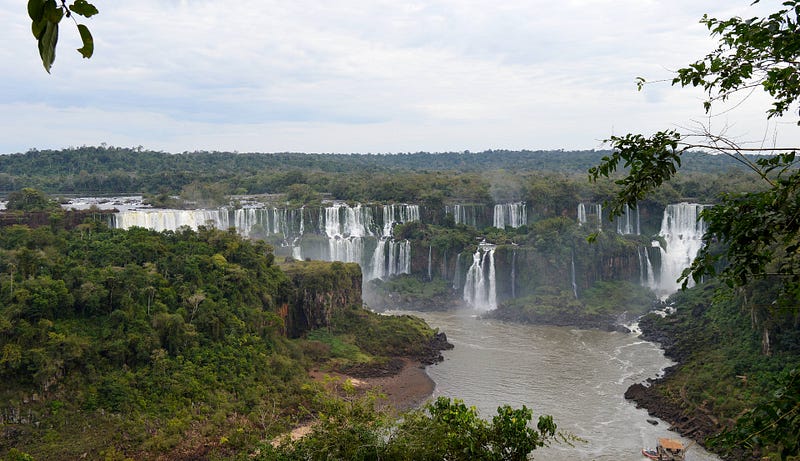
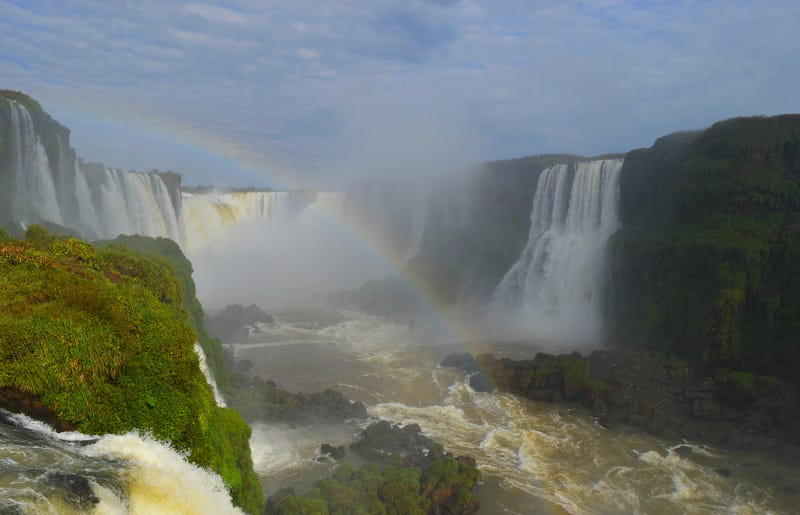
About two-thirds of the Falls are in view in the picture above. Brazil is on the left and Argentina ahead and on the right.
The pale strangers did one thing well, they added raised walkways so we could view The Falls from close up and from the top without getting wet feet or swept away.
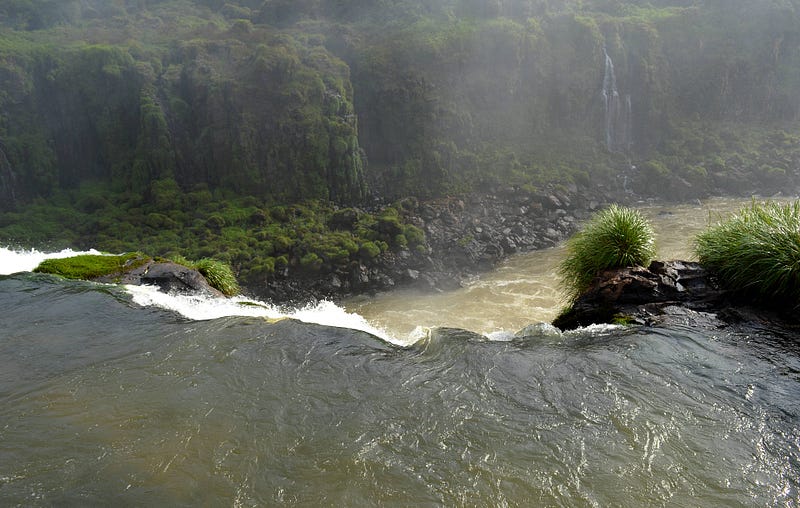
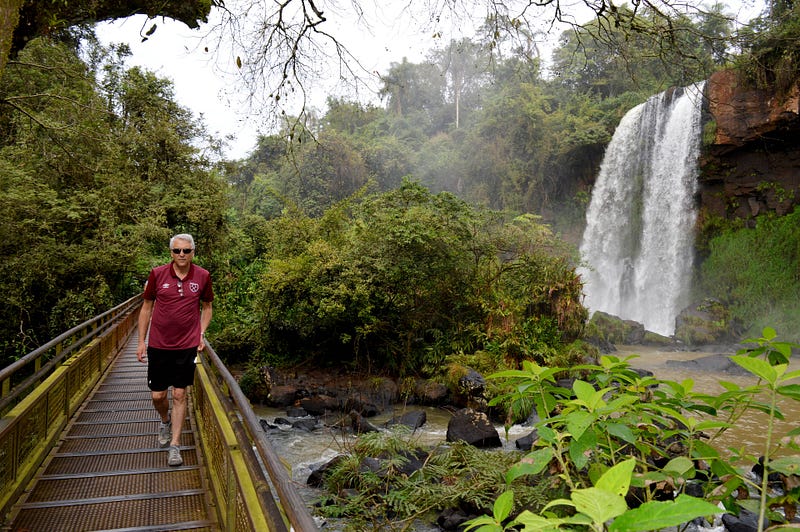
Iguazu, A UNESCO protected national park
After the arrival of Señor Cow’s Head, the pale strangers lost interest in The Falls. Apart from the Jesuit missions, they left the Guarani to get on with their lives, leaving the area largely inaccessible.
It was only after a businessman, Domingo Ayarragaray, acquired the land in 1907 and built a hotel and roads that tourism finally took off.
These days, although The Falls are the main attraction, they are surrounded by 253,000 hectares / 625,000 acres of protected national parkland. And these days, the locals wear clothes.
#naturalwonders

Sign up for our newsletter to stay informed with up-to-date curations from our editors:👇
We now offer exclusive writing services for our members. Discover how you can take advantage of our editing services and more.


