
If You Are Neurodivergent, Beware of Taking Productivity Advice From & For Neurotypicals at Face Value!
Introduction
I am not a ‘neurotypical’ person. In fact, I am not even remotely close account of my having been diagnosed with the common trifecta of Attention Deficit Hyperactivity Disorder (ADHD), Obsessive-compulsive disorder (OCD), and Tourette Syndrome at the same time by my child neurologist (who has ADHD herself by the way) when I was in the 2nd grade.
She also diagnosed me with some strangely severe version of dysgraphia that has gotten worse and become much more general than just writing (forget the official name(s), my hands barely work, it even hurts to tie my shoes sometimes) as an adult and has confused three different neurologists (so far). Then later on, as a young adult, I was diagnosed Generalized Anxiety Disorder (GAD), Major Depressive Disorder (MDD), and “Specific Learning Disability: Reading” (and according to Chat GPT 4, that means dyslexic) as well. So, now that I have my neurodivergent qualifications out of the way, I shall proceed to the crux of the matter!
I really really like learning
I thirst for knowledge, and I also want to be at least mildly successful in this life. Back when I first began college at age 18, during my first semester, I took a course called “College Success.” I wanted to make sure I was really learning and retaining as much as possible. This course was meant to teach the students at my community college general strategies for studying, learning, reading, and remembering material in our courses.
Much of what we were taught in that course were notetaking systems and/or notes consolidation approaches to make study guides for exams from lecture notes. One note taking example I still remember was the Cornell notetaking system, and the note consolidation approach we learned was mind maps.
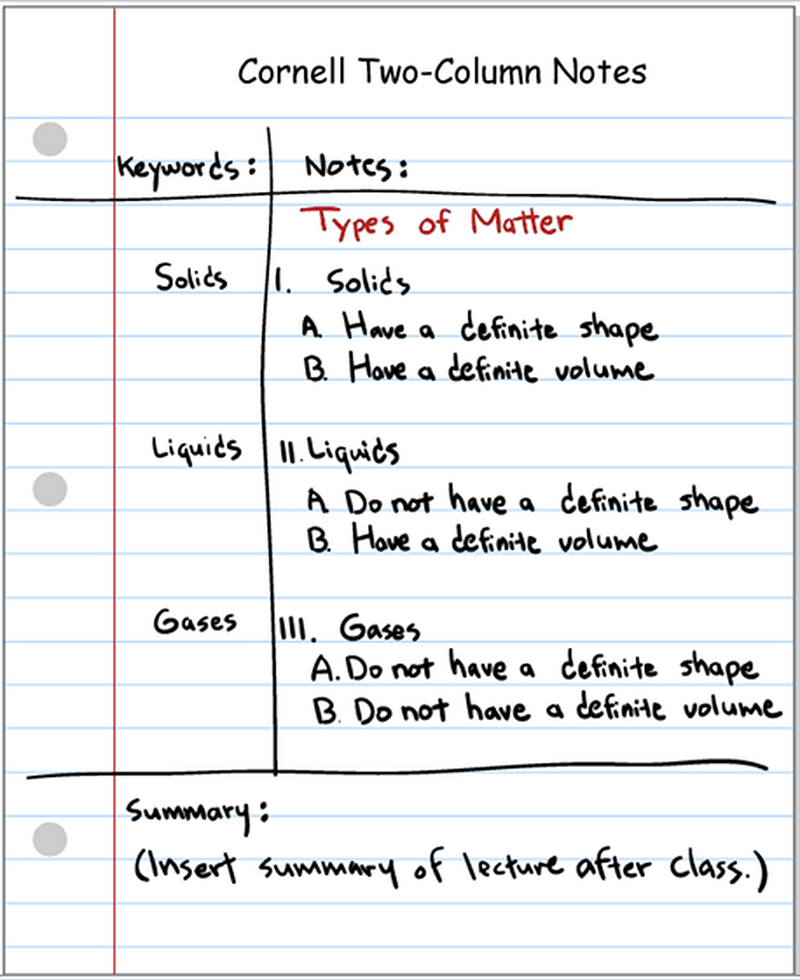
The Cornell approach to structuring the notes you write down during a lecture looks like it might be quite useful, but I wouldn’t know because I cannot write my own lecture notes due to my severe dysgraphia, so it is entirely irrelevant for me. This is likely the most straightforward example of a neurotypical tool in terms of how quickly I was able to realize it did not apply to me, because it this case, it could not. I didn’t waste any more time fortunately, but I was not so lucky in most cases.
I ended up getting an A in that College Success course, but felt quite underwhelmed in terms of practical skills or strategies I could implement going forward. Afterwards, I would always keep an eye out for learning how to learn tutorials, which sometimes would be included by an instructor at in the syllabus as an optional thing to help us out in his or her course. Several of the people who made these boosting your studying efficiency or productivity tutorials (that I so eagerly consumed with great zest) recommended that I should watch these tutorials (or others that I use to supplement my textbooks and lectures) at 1.5x or 2.0x speed so I could get through them faster. I also heard elsewhere the same advice for audiobooks, and I was (and still am) a big consumer of audiobooks.
Neurotypical Advice To and For Neurotypical People
So, I took their advice and began to listen to my books on Audible at 1.5x or 2.0x speed for well over a year, learning absolutely nothing from any of them. I would do the same thing with YouTube tutorials. For example, calculus-based physics lectures with the ones on the same few topics from Yale. But I was not learning anything and ended up getting a D+ in that course.
How was this happening? Why was my being proactive, more so than most other students, somehow backfiring on me?! Simple, the advice in most learning-how-to-learn and/or study tips tutorials is given by neurotypical people to and for neurotypical people. This is not a bad thing which you should get mad at them for but we as neurodivergent people can only hope for the best while doing these methods.
Neuropsychological Testing
Some of you reading (or listening) to this article might ask yourselves; “How could this guy not have noticed he wasn’t understanding the audiobooks he was listening to for more than a year?”
Well, I thought I was practicing or acclimating to the faster pace. I just wanted to be a more efficient learner so badly. My counterproductive hope was not fully derailed until after transferring from my community college in Central California to UC Irvine, the disability services center there required me to go through a full battery of neuropsychological tests to confirm my ADHD & dysgraphia diagnoses while simultaneously ruling out a low IQ as the cause of any academic difficulties.
Sidenote: Their stated reason for requiring this evaluation was because I had gotten diagnosed in a small town where all my child neurologist went off of when she diagnosed me with the common trifecta of ADHD, OCD, Tourette’s Syndrome, and Dysgraphia was symptoms via rating scales, the oral history, and the fact that one of my older brothers already had been diagnosed with the trifecta. I found out about a year later whilst listening to audiobooks about ADHD testing, the research actually shows that rating scales are the better tool and the oral history is essential.
After finishing all of the tests, which were quite intense for the record, my neuropsychologist broke it into three 60 or 90 minute sessions, if I remember right. All of my prior diagnoses had been replicated, plus the others included in the first paragraph of this article. However, there were specific aspects of my cognition which were quantified, and one of them was that my mental processing speed is below the 8th percentile! This means that among a random sample of 100 Americans my age, I think slower than 92 of them (this is not the same thing as being stupid, in fact, my IQ score was quite high).
Knowing Your Brain
This instantly explained why I was not able to understand the audiobooks and YouTube tutorials when played at faster than normal speeds, so I stopped and never went back. Nowadays, I adjust depending on the video, podcast, or audiobook, but I play almost all of them below 1.0x speed. For this reason, the fact that the results include quantitative estimates of how your mind works, I highly encourage anyone reading this to get evaluated.
Anyone with ADHD, dyslexia, Sluggish Cognitive Tempo, Asperger's Syndrome, or some combination of them would benefit from a full battery of neuropsychological tests to uncover some specific idiosyncrasies in how they think and learn. For instance, I also learned that I have impaired aspects of my memory besides just the “working memory,” which is standard for ADHDers, so now I use the Anki flash card app to help me remember things.
Quantifying Your Productivity is the Key
This part of the article is the most important, and after realizing it myself, I have been shocked that I have never come across this point elsewhere. As I briefly mentioned toward the beginning of this article, I have a titanic passion for the field of economics. My dream was to obtain a doctorate in the discipline and become an economist.
Starting at the age of 16, I was watching economics lectures on YouTube in my spare time and listening to economics podcasts while driving around and doing my laundry.
Unfortunately, although I did not realize it at the time, it is not possible for me to obtain a PhD in economics because of my specific combination of disorders, conditions, and learning disabilities, regardless of my 99.9th percentile level of interest and my high IQ.
How so? Simple, let’s start with reading, when you have Dyslexia and ADHD, one thing you should do is time how many words per minute you read. Ideally, you would do this using several different read speeding tests online (here, here, here, etc.) and then calculate the average. Do this for normal light reading, then do it all again for technical/mathy material if you have physical reading materials on technical topics handy using the test described here. Let’s call that your OWPM (optimal words per minute).
From there, if you have ADHD, you need to know how many minutes each hour you will actually spend reading. So, you need to factor in how often you need your ADHD study breaks every hour and how many minutes for each on average. Then, you add them all up, in terms of minutes, to get typical minutes not studying per hour you are devoting to studying.
Once you have calculated that estimate, subtract it from 60 to get an estimate of how many minutes per hour you can study realistically and consistently, then divide that amount by 60 to get the proportion of the hour actively studying. Let’s call this your SE (studying efficiency).
Now, multiply that proportion (SE) by your reading speed in words per minute (OWPM) to get your actual words per minute reading time, so SE * OWPM = AWPM. If you are anything like me, you will find that there are not nearly enough hours in a day to read the number of pages from textbooks and academic papers which are required in most graduate programs in almost any field.
This process of crudely calculating how efficiently you are able to read is absolutely necessary for folks with more than one diagnosed form of neurodivergence which often or usually slows one’s productivity. Furthermore, it is a general guestimation guideline, meaning, it is not just for reading. So, whenever you are trying out new productivity advice from and/or everybody (i.e., neurotypical people), after giving it whatever you think is a reasonable trial period, attempt to quantify your productivity beforehand, and after. And even if you don’t have the patience to actually do a rough back-of-the-envelope calculation, just remember to really try to remain vigilant for any noticeable changes in your productivity.
To take an example other than effective reading speed (meaning with comprehension and ADHD study breaks), if I had thought of this approach back when I first heard the advice to speed up any audio or video material, I could have listened to consecutive segments in an audiobook of similar or identical lengths at varying speeds, and at the end of each one, tried to see how much information I could recall (I only listen to nonfiction audiobooks) and/or if I could summarize when I had just heard. I would have figured out very quickly that I couldn’t recall a single piece of information if the playback speed was at or above 1.5x, which would have saved me over a year of wasted time.
