
If We Don’t Speak Out Now We Have Only Ourselves to Blame
Having opinions without the courage to speak up about what we believe will lead to devastating consequences.
I read an article this morning by Cheney Meaghan called, Medium Has Pissed Off Thousands of Users. The subheading is And I couldn’t love them more for it. The piece is about Medium’s new rainbow logo celebrating National Pride Month which, the author asserts, likely upset a number of those who belong to the site or who read articles posted here.
I couldn’t help but agree with what the article says, specifically, “They are taking the chance at alienating thousands of potential users who DON’T support Queer culture.” The post got me thinking about what it was like for those who were gay when I was growing up and to some extent even now.
I basically grew up in the ballet so most of my male friends and role models throughout my childhood were gay. While we were in the studio or the theater, it wasn’t an issue, I can remember other times when it was. Whenever we went out as a group, while heterosexual couples would hold hands or sometimes kiss, gay couples rarely if ever would.
While gay couples would be affectionate with each other when we were on the bus during a tour, when we stepped off the bus, this would often stop cold. I can remember taking breaks in small towns, where people would make comments either under their breath or overtly, when gay couples would show any affection for each other.
On one occasion, we stopped at a diner and two male dancers who had just started dating casually linked their arms around each others waists. To be fair, dancers are very physical and it’s not unusual for them to touch even when not dating so there were plenty of others who were casually touching and a few holding hands. But other than the gay couple the touching was between men and women not two men. The person seating us seemed uncomfortable and went to get the manager who came out and promptly told the gay couple, “We don’t serve your kind here.” Needless to say, we all left.
I was taken aback, not just out of offense at such treatment but because it perfectly mirrored another situation I was familiar with, down to the wording.
When my parents moved from Connecticut to Georgia they were traveling with a black woman who was helping to care for my brother who was an infant. When they stopped for lunch somewhere south of the Mason Dixon line, the person seating them in the diner said almost the exact same thing that we heard so many years later, “We don’t serve her kind here.” My parents left after my father gave him an earful. That was at least 35 years before what happened with us.
I think the reason these memories were called to mind when I was reading Cheney Meaghan’s article was that initially, I thought, “Thousands? That has to be an exaggeration. Maybe a few people would be less than happy, but surely there aren’t still that many people who are so ignorant as to get in a huff over Medium changing their logo for the month of June.”
Then I realized. It was definitely possible. And I also realized, to some extent many of us who support diversity and the rights of all people to be who they are without being forced to face prejudice and discrimination, have some responsibility for this state of affairs.
While we have come a long way in terms of Civil Rights, we still have a long way to go. And I fear that we haven’t just slowed down in this regard, we may be beginning to go backwards. I can’t help but think, that to some degree, that is because although many people may be supportive of diversity, we don’t stand up and say it often enough. We may be outraged at discrimination, but saying it to our friends who feel similarly isn’t enough.
We have to be willing to verbally express our feelings about how people are treated, do everything we can to stop harassment and unfair treatment practices to prevent groups from being marginalized and made to feel as if their rights don’t matter. The second we allow someone to say anyone’s civil rights don’t matter, none of ours will.
It was a long battle for blacks and women to win the right to vote. It was an even longer battle for same sex marriage to become legalized. Now, reproductive rights are being threatened, as are the rights of those with disabilities and there is concern over calls to have the legality of same sex marriage overturned.
It is understandable to some degree why we remain silent or at least don’t express our beliefs around those who don’t believe similarly. In some cases we might be afraid of being too closely associated with the group we are defending. For example, we might fail to express support for same sex marriage for fear some may think we are homosexual. Or we fear we will be ostracized, ridiculed or harassed for our opinions.
The most basic reason, I think, is that we want to be liked and accepted by as many people as possible. Even when others believe things we find morally objectionable, we are hesitant to speak up and risk them attacking our views and rejecting us.
For all these reasons, when the less tolerant minority dominates public discourse, even when there is a much larger majority who support diversity and oppose what are seen as clear human rights violations, this majority keeps their head down.
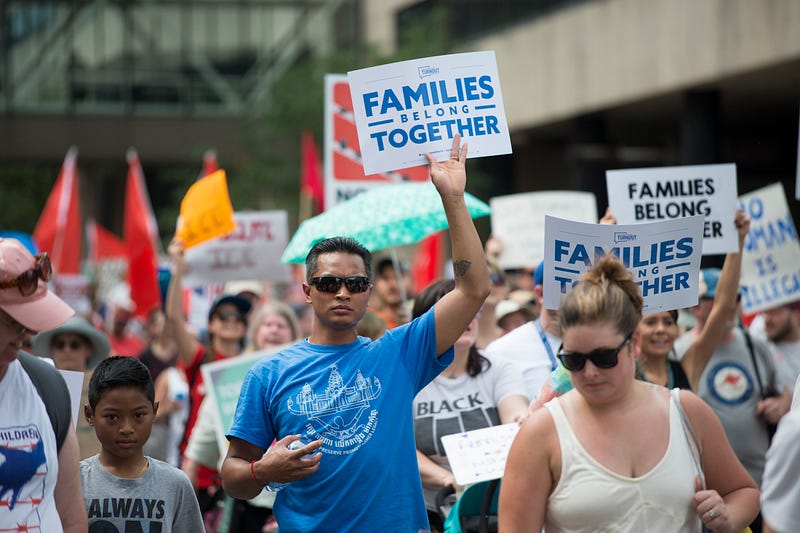
Having moral beliefs and opinions that support the rights of all people is a start but it isn’t enough. It isn’t opinion that shapes public policy. It is how willing we are to voice our opinions in a way that makes a difference that is the deciding factor.
If we are only willing to voice our opinion in a safest environment among those who already believe as we do, we aren’t likely to change anything. It isn’t necessarily always the majority who establishes the path we will take. It is whoever is the loudest and the most visible.
It also isn’t enough to just stand up for our own interests. We need to have each other’s backs. We need to support all those who are disenfranchised and whose rights are being violated or in jeopardy of being violated.
If we refuse to speak up, nothing will change. If we refuse to speak up while others rights are being threatened or abused by those who are speaking up, everything will change. Believing something while saying nothing is still saying something. We all need to decide how much we truly believe in the rights of all people and what we’re willing to do to protect these rights.

If you enjoyed reading this article, you might also like these:
You can find links to my other work on Medium and follow me here. Thanks for reading!
Thanks to Cheney Meaghan for the inspiration for this story.


