
if the top of my head were taken off . . .
Emily Dickinson on poetry. (The Commonplace Book Project)
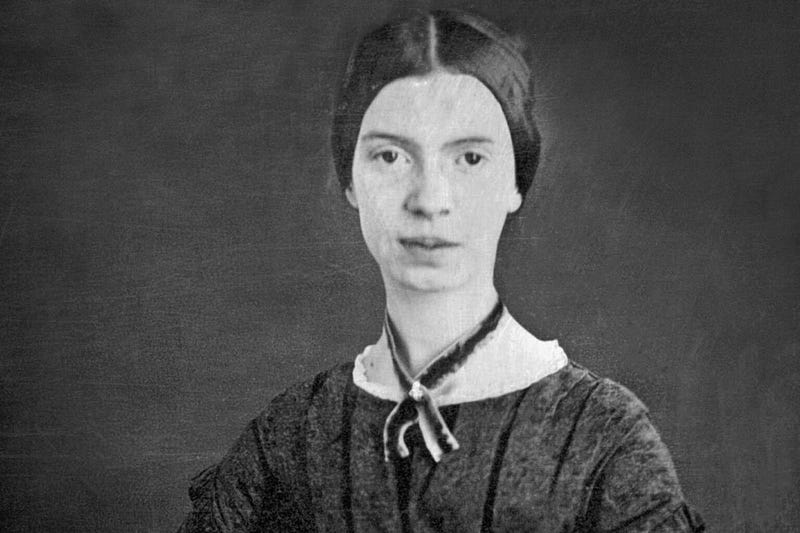
“If I read a book [and] it makes my whole body so cold no fire can ever warm me, I know that is poetry. If I feel physically as if the top of my head were taken off, I know that is poetry. These are the only ways I know it. Is there any other way?” — Emily Dickinson, Letter to Thomas Wentworth Higginson (1870) in The Letters of Emily Dickinson
I appreciate that the quote above says ‘book’ and not ‘poem.’ Because it implies that words can be poetry even if they’re not called poems. I want poetry to do this to me. Make me so cold no fire can warm me or take t he top off my head. But it doesn’t.
Through years and years of undergraduate and then graduate study of creative writing, I’ve sat through many, many poetry readings. My brain knows that the words are pretty. But I struggle, often, to understand. And then there’s this poetry reading sound that passes around the room and I end up feeling stupid.
Too stupid to feel the way that Emily Dickinson does about poetry.
I did love it once, though. When I was in high school, I kept a tiny notebook filled with lines of Dickinson and Shakespeare and Hughs and Frost. I have a kind of muscle memory of having the top of my head blown off.
I don’t know what’s happened to me in the last thirty years to diminish my love of poetry. I’d like to take it back through. So, I’m going to start linking to a poem a day in each of these Commonplace Book Project posts.
After all, Ray Bradbury did say to read an essay, a poem, and a short story every day for a 1000 days. Maybe I’ll even start keeping a poetry notebook again. We’ll see.
So, back to Emily Dickinson.
She had a long correspondence with the minister Thomas Wentworth Higginson who, when he finally met her in person, wrote that he felt that he never was “with any one who drained my nerve power so much. Without touching her, she drew from me. I am glad not to live near her.”
She was extraordinarily well educated for a girl in the Victorian age and just as extraordinarily sensitive to the deaths of anyone around her.
I enjoyed this essay in the New Yorker about her unusual love of writing poetry on scrap paper.
The envelope poems suggest the current exhilarating paradox of Dickinson’s work: her unique actions of mind are bound in unusually dramatic ways to slips of paper a hundred and fifty years old or more, rarities whose near-perfect reproductions are nevertheless now widely and freely available online.
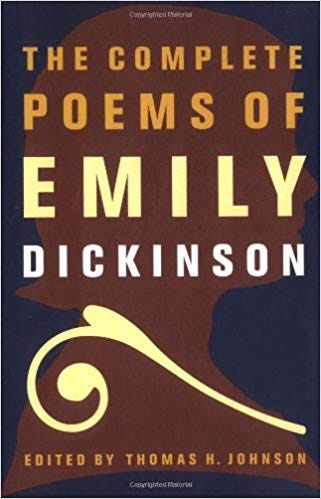
Only ten of her poems were published during her lifetime. She instructed her sister, Lavinia, to burn her papers upon her death — but Lavinia took that to only mean her letters. Many letters survived, but many were burned as well. She saw the value in the poetry and spent the rest of her life obsessed with seeing it published.
Many of her poems were first published heavily edited. Between that and family feuds, it took nearly half a century for a book of her poetry to be published mostly the way she’d written it.
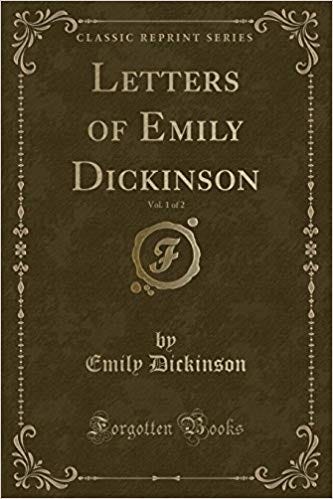
Spending some time tonight thinking about Emily Dickinson, and Johnny Cash and his copious love letters the other day, has made me wish that I was more of a letter writer. Maybe I’ll start writing letters — even if it’s just so that someday someone can collect them.
I’ve added Letters of Emily Dickinson to my reading list for 2019.
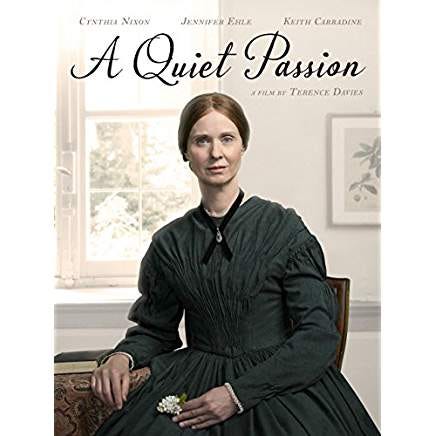
I watched A Quiet Passion, a 2017 biopic about Dickinson starring Cynthia Dixon, while I worked on this post.
I found it very interesting, as I read about Dickinson tonight, to learn that her own refusal to organize and categorize her own work left her virtually unknown during her life and made publishing her work very difficult for a long time.
Dickinson seemed to write for the pleasure and sake of writing. She was prolific and incredibly creative. And seemed to have almost no desire to be published.
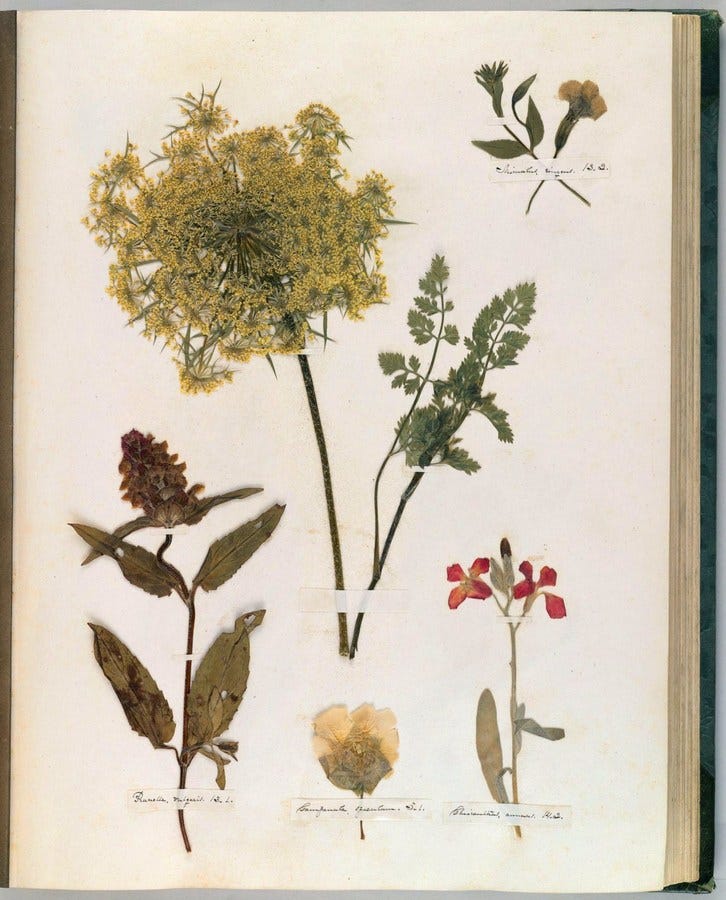
She was known, when she lived, as a gardener more than a poet. The gardens she kept at her father’s house were well known in Amherst. While her gardens do not survive (efforts are underway to revive them) she wrote about them so often that it’s not difficult to imagine how wonderful they were.
She kept an herbarium — an album with over 400 pressed samples of flowers and plants. It’s kept at the Houghton Library at Harvard. It’s so delicate that no one is allowed to actually look at it, however.
You can, however, see the book in it’s entirety in digital form. I’m sure there is some poetry, somewhere, in that.
Today’s Poem: Hope, by Emily Dickinson.
Today’s Writing Prompt: Emily Dickinson was known as a gardener, more than a writer, while she lived. What are you known for?
Here’s my secret weapon for sticking with whatever your thing is.
Shaunta Grimes is a writer and teacher. She is an out-of-place Nevadan living in Northwestern PA with her husband, three superstar kids, two dementia patients, a good friend, Alfred the cat, and a yellow rescue dog named Maybelline Scout. She’s on Twitter @shauntagrimes and is the author of Viral Nation and Rebel Nation and the upcoming novel The Astonishing Maybe. She is the original Ninja Writer.


