
If Sleep Isn’t One of Your Top Three Life Priorities, You’re Doing It Wrong
New rule: If you’re too busy for sleep, you’re too busy.
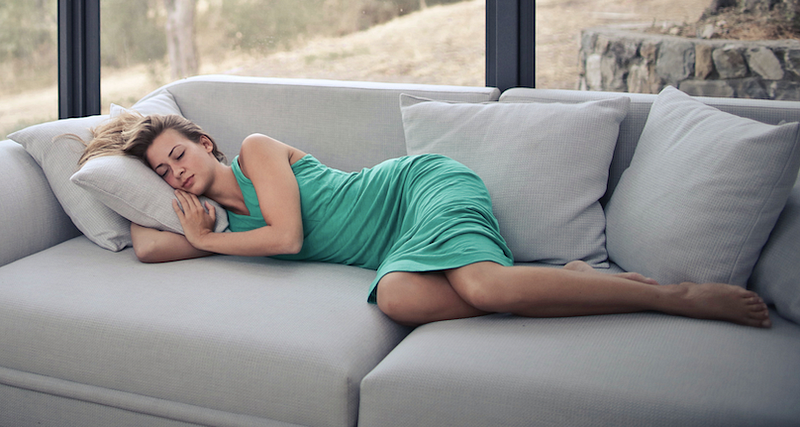
It’s very telling that prior to the invention of Edison’s incandescent bulb, Americans slept an average of ten hours per night. In medieval times, people slept so long they did it in two shifts. Yet today, more than 130 million Americans get less than seven hours per night… and it’s killing our health.
The stark reality is that the bodies of homo sapiens are clearly adapted for far more sleep than we’re currently giving ourselves. We are in no way adapted to a life of artificial light, and probably won’t be for a hundred generations.
So I’ll be completely upfront in telling you the purpose of this article:
I want the entire world to start sleeping nine-plus hours per night again.
I made sleep my #1 physical priority starting two years ago and it’s easily the best health decision I’ve ever made.
Since then, I’ve managed to convince a number of friends and family members to start sleeping more hours each night — glorious, unapologetic, unmetered hours — and none of them have suffered materially in any way, shape, or form. More sleep may have subtracted a few hours from their day, but it’s added life to their days and likely years to their lives.
In addition to feeling great, the benefits of sleep are wide-ranging:
- Sleep helps our brains learn new motor tasks.
- Getting sufficient rest drops our stress levels.
- Rest protects against inflammation and heart disease.
- Consistent sleep is linked to low body fat levels.
- We flush brain toxins 10X faster while we sleep.
I don’t know about you, but I reject the toxic notion of “hustle culture.”
I am not in any way impressed when I hear absurd (and likely apocryphal) stories about Elon Musk sleeping three hours per night on the Tesla factory floor or Gary Vee basically living in his office with his bros so he can “crush it.” It’s just embarrassing.
What impresses me is when people sleep a full night and still crush it. It shows they’re using their whole brain, that they understand human biology, that they know how to manage their time and can delegate efficiently, that they understand their core priorities, and that they take a longest-term approach to life and success.

Because the flip side — not getting enough sleep — is absolutely terrifying:
- 4X greater stroke risk
- Increased risk of cancer
- 48% higher risk of heart disease
- Sleep deprivation is linked to insulin resistance
- Leads to brain degeneration and permanent memory loss
- Micro-napping causes 100,000 car accidents per year
- Lack of sleep even damages your bones.
Yet sleep averages certainly keep dropping for decades. Maybe that’s why America seems to be falling apart…
1910: 9 hours 1942: 7.9 hours 2013: 6.8 hours 2019: 5.5 hours
Sleep is one of the cornerstones of human flourishing, and it’s time we place it back in the position of priority where it belongs.
Sleep is more important than making more money
Let’s face it: the top reason we’re all sleeping so little is money. Either we’re busy selling (our jobs), or busy working so we can buy (via shopping online/etc), or we’re sitting around being sold to (via social media and scrolling.)
A lack of sleep can end up costing you a lot of money. You make poorer spending decisions. A weakened immune system can cause more sick days, nevermind cutting years off your career. Spending money on coffee and energy drinks isn’t cheap. Your work performance will drop significantly. Get no sleep and you’ll eventually get fired (or perhaps get a hefty severance like Edward Norton’s character in Fight Club.)
It’s also worth noting that countries like China and Australia sleep longer than anywhere else on earth, and their economies certainly aren’t suffering for it.
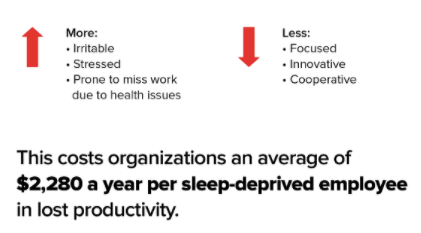
This is what happens when you don’t sleep:
Sleep costs employers and self-employed entrepreneurs:
Sleep is more important than working out
Exercise without proper sleep effectively offsets all your gains. Sleep helps injuries heal, and muscles require deep rest to recover and grow. Meanwhile, sleep deprivation leads to late-night snacking, gravitating to larger portions, making poorer food choices and more high-calorie impulse buys, and worst of all, it increases hunger. No amount of treadmill time can offset a lack of sleepy time.
Sleep is more important than scrolling social media, bingeing sports and streamers, and keeping up with the news and politics.
The sun produces the most blue diodes at sunrise as a natural cue to wake us up. Guess what our phones and TV screens blast into our eyes late into the night? Blue diodes.
Not only does the content we consume keep us up (think: election night), but the medium itself is interfering with our physical ability to fall asleep.

Sleep is more important than brunch, coffee, and late-night drinks.
So many people (pre-Covid) were prioritizing low-quality social gatherings over high-quality sleep. Instead, decline most invitations and only attend the life-giving gatherings. High-quality sleep creates a high-quality social life.
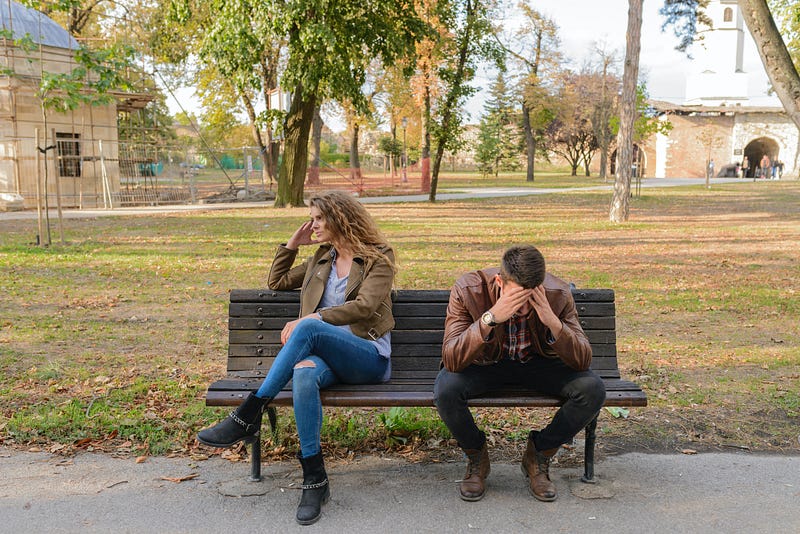
Spouses who don’t sleep treat each other like garbage
When my wife or I burn the midnight oil on a project, it’s easy to fall into annoyance, bickering, anger, resentment, or worse. We’ve both encouraged each other to nap it off, or to give each other space, or to promise to pick our discussion back up in the morning. Give your spouse space to sleep and you’ll both be better for it.
Parents who don’t sleep are suboptimal parents
Anyone who’s ever had a newborn knows: sleep deprivation leads to fatigue, irritability, anxiety, depression, and mood swings. What’s really crazy is that post-baby sleep hours don’t return to normal for six years for some people.
Screaming babies, hungry toddlers, rambunctious grade-schoolers, and moody teens all need loving, caring, alert parents. The best parents I know are the best-rested, and the only way this happens is by prioritizing sleep as a family unit. While I know some families who live in bliss after 9–12 hours per night, others soldier-suffer through life on seven or less and are clearly paying for it every single day and night.
People who don’t sleep die younger
Not getting enough sleep is linked to premature death from all causes.
Also:
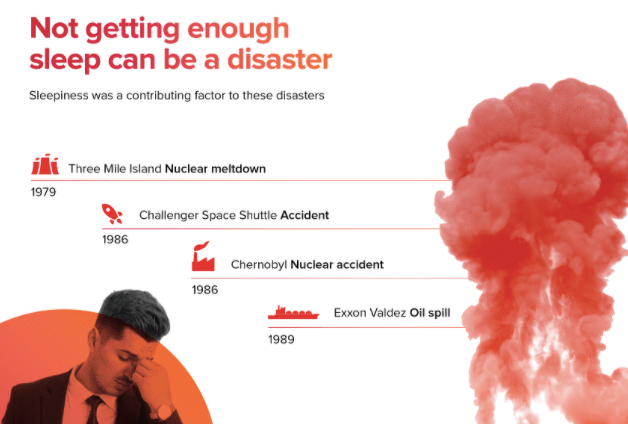
Clearly, sleep is a top-three priority.
I’m not saying we should avoid exercising, making money, or spending time with friends and family. Certainly not! I’m simply saying that to prioritize these things over sleep actually produces suboptimal outcomes in all other areas.
It seems counterintuitive, but if you want to prioritize your health, relationships, and finances, prioritize your sleep instead. Invest in rest and you’ll experience a cascading-gains effect.
The best thing you can do for your career is sleep your way to the top.
At least we can blame it on Edison, right?
Thomas Edison — patent-thief, elephant electrocutor, and inventor of sleep deprivation — was by all accounts a staunch anti-sleep campaigner. After all, he was trying to make a market for his bestselling product. What better way to sell light bulbs than to stigmatize sleep?
According to Alan Derickson, author of Dangerously Sleepy: Overworked Americans and the Cult of Manly Wakefulness, “Edison spent considerable amounts of his own and his staff’s energy on in publicizing the idea that success depended in no small part in staying awake to stay ahead of the technological and economic competition.”
As the Elon Musk of his day, Edison bragged he slept no more than four hours per day. He encouraged newspapers to flaunt his willingness to work “at all hours, night or day,” and bullied his overworked staff to live by his grueling personal schedule. There are other words for this sort of behavior: stupidity and cruelty.
It’s just silly that society should continue to believe a marketer’s lie. We’re stumbling through life, sleep-drunk, and wondering why our best-laid plans keep falling apart, both individually and collectively.
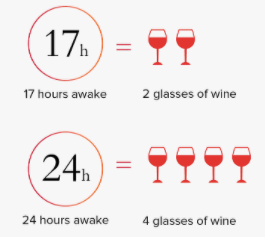
So what the heck should we do?
Revolutionize the world. Take back the night. Make America sleep again.
And if we can’t change the world, we should at least change our world.
New rule: If you’re too busy for sleep, you’re too busy.
Big rocks go first
When I was a kid my dad taught me the “Big Rocks” analogy. Life is a jar. If you fill it with water and pebbles and sand, you’ll never fit in the big rocks. But if you put in the big rocks first, you can fit in a whole bunch of pebbles and sand and water around them.
Sleep is our biggest rock. Block out ten hours per night — one for getting ready and falling asleep, nine for sleeping — and then schedule the rest of life around it. My three biggest rocks are sleep, work, and relationships, all infused with faith. These are the three big blocks in my schedule — they’re all non-negotiable — and everything starts with nine hours of sleep.
Can you imagine how much culture would transform if we re-engineered the global economy to fall in line with our hardwired physiology? It would be revolutionary. (They call it civil unrest for a reason. )We’d all be better mothers and fathers, brothers and sisters, friends and colleagues, employees and employers.
Best of all: we’d actually remember our lives because sleep consolidates our memories. Without it, life is just a vapor.

My guess is that some people will have stopped reading by now.
To them, the idea of prioritizing nine hours of sleep per night is crazy. They’d rather play the money game than live the full, rested, and wakeful natural life that humans have enjoyed since the dawn of time.
What they fail to understand is that the Information+Attention Economy is built on brainpower, not muscle-power or time-duration.
They don’t realize that the world already belongs to the sleepers:
- CEOs: Jeff Bezos. Warren Buffett. Bill Gates. Sheryl Sandberg.
- Thought leaders: The Dalai Lama. Arianna Huffington.
- Athletes: Lebron James. Roger Federer. Michelle Wei.
- Entertainers: Jennifer Lopez. Matthew McConaughey. Halley Berry.
While those who sleep longer clearly have the long-term advantage in every area of life, I’m not suggesting we adopt this plan just for the sake of money: we should do it because it’s natural and hardwired into our DNA.
We should do it because a full night’s sleep is part of what makes us human.
So let’s make sleep the new status symbol.
Unfortunately, this let’s-all-get-nine-hours-and-love-our-lives proposal is undoubtedly “radical” to most modern people… in the same way that our great-great-grandparents would look at our stressed-out, hectic, busy, indebted, stressed, medicated, over-stimulated, sleep-deprived world and think we are all absolutely bat$#!t insane.
Maybe we are.


