
If Only They Had Known
My parents wouldn’t have dared play genetic roulette
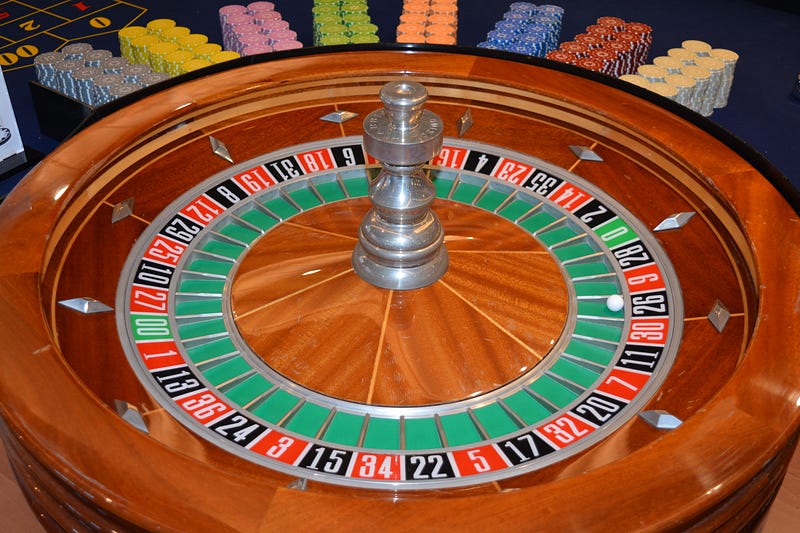
Backstory
In the summer of 1985, my cousin Martha called to share the good news: Genetic testing had confirmed that her unborn daughter would not have Tay-Sachs Disease.
Digression
Tay-Sachs Disease is devastating. It manifests in an infant at about six months, as the apparently normal child becomes increasingly lethargic and unresponsive. The inexorable four-year death march strews seizures, blindness, and dementia en route to its agonizing end.
In the general population, the gene for Tay-Sachs Disease occurs once per three hundred; in Ashkenazi Jews and French Canadians, the gene frequency is one in twenty-five to thirty.
Having undergone testing early in their marriage on account of their ethnicity — the former above — Martha and her husband had been aware they were both (unaffected) carriers of Tay-Sachs Disease.
Chances were one-in-four that a child of theirs would inherit the TSD gene from both of them. Absent its normal counterpart — which would counterbalance the deleterious results of the defective gene — their child would develop TSD.
Though neither Martha nor her husband suffered from TSD themselves, they surely would have suffered along with their daughter had she been destined to develop TSD — they’d been prepared to abort an affected fetus.
Back to the backstory
After her happy announcement, Martha suggested that I get tested for the TSD gene. Like her, I was five months pregnant. My then-husband was not of high-risk ancestry; nonetheless, if I turned out to be a carrier, for the sake of my unborn child I’d want to confirm that daddy “Dick” wasn’t that unlucky one-in-three hundred.
Testing: take one
I had blood drawn at the local hospital. For reasons that remain unfathomable, the sample — rather than being directed to a specialized in-state (Massachusetts) testing site — was shipped to the Mayo Clinic in Minnesota.
Given that a priori odds were low that my husband was a TSD carrier, I wasn’t especially concerned about my status. I was more irritated than anxious when the report was not forthcoming.
One week into my wait, I was informed that the results were inconclusive; I needed to provide another blood sample.
Testing: take two
On the Friday afternoon of a three-day Fourth-of-July weekend, I placed a call to the lab. Being savvy as to the likelihood I’d be stonewalled, I impersonated a nurse, purportedly phoning on behalf of my doctor.
The ruse worked. The technician I spoke to was forthcoming. He explained that the blood analysis showed an extremely low level of the enzyme HEX-A (the lack of which is the hallmark of TSD). He speculated that the patient had a variant form of TSD.
I replied that this wasn’t possible; “the patient” was a healthy, 28-year-old woman —thus, 25 years post TSD life expectancy.
The ruse backfires
The technician said he was referring to Adult-Onset TSD.
Straining to maintain my pseudo-professional demeanor, I inquired as to the specifics.
I shall never unhear his rhetorical words: You must be familiar with Huntington’s Disease.
Having studied genetics, I most certainly was familiar with Huntington’s Disease. I’ll spare you the details; suffice it to say Huntington’s Disease is horrendous.
I lose it
Dropping the facade, I confessed that I was “the patient” under discussion and demanded to speak to a genetics counselor.
No dice. The upshot was, I had to wait it out yet another week whilst the local lab performed the specialized test — as should have been done in the first place. In sum: Mayo had messed up.
Meantime, my parents had flown up from New York to get tested alongside me. I’d been assured that unless both of them proved to be carriers of TSD there was no way I could have any form of the disease.
Testing: take three
Once again, on a Friday — hands trembling, knees knocking — I phoned for the test results.
After an agonizing interlude — prefaced by buck-passing from flustered technician to evasive lab director to The Doctor — I got the verdict.
I — like my cousin Martha — was a carrier. Presumably, we’d inherited the TSD gene from our common maternal grandfather. The doctor confirmed that my mother’s test showed her to be a carrier.
Case closed?
Not quite: My father proved to be a carrier as well.
Had my parents known this back then they would certainly not have chanced to have children.
It is to their merciful state of ignorance that my sister and I owe our lives.